



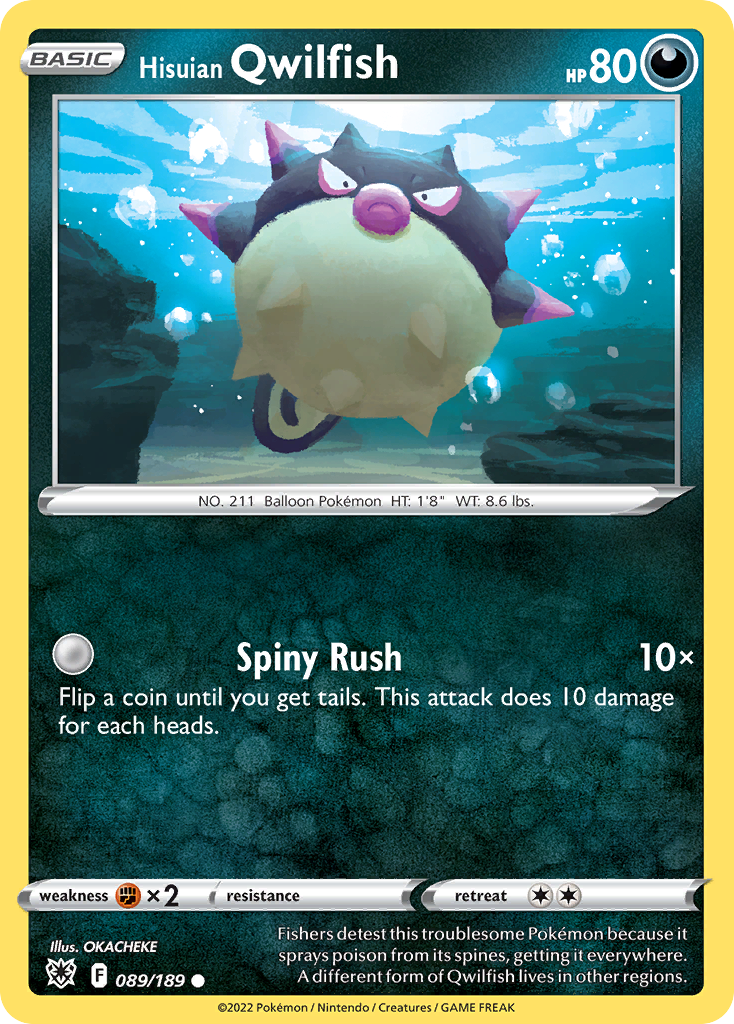
Hisuian Qwilfish
Fishers detest this troublesome Pokémon because it sprays poison from its spines, getting it everywhere. A different form of Qwilfish lives in other regions.
Flip a coin until you get tails. This attack does 10 damage for each heads.
| Supertype | Pokémon |
|---|---|
| Subtype | Basic |
| HP | 80 |
| Types | Darkness |
| Attack | Spiny Rush |
| Artist | OKACHEKE |
| Rarity | Common |
| Pokédex | 211 |
Vendor Information
- Store Name: DutchGem
- Vendor: DutchGem
-
Address:
gekkestraat
179
2345GT Utrecht
Sword & Shield
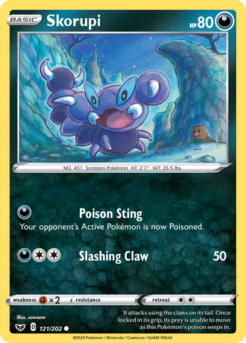
It attacks using the claws on its tail. Once locked in its grip, its prey is unable to move as this Pokémon's poison seeps in.
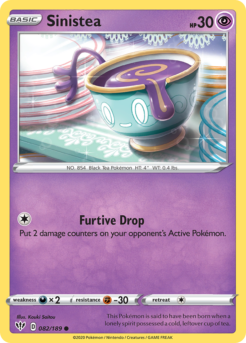
Darkness Ablaze
This Pokémon is said to have been born when a lonely spirit possessed a cold, leftover cup of tea.
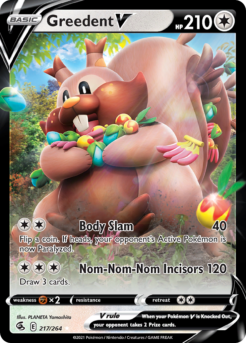
Produtos Relacionados
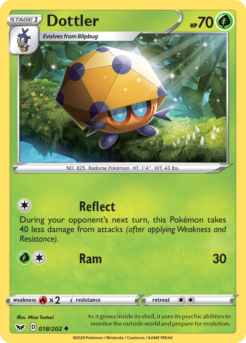
Sword & Shield
As it grows inside its shell, it uses its psychic abilities to monitor the outside world and prepare for evolution.
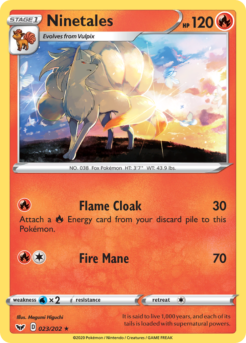
Sword & Shield
It is said to live 1,000 years, and each of its tails is loaded with supernatural powers.
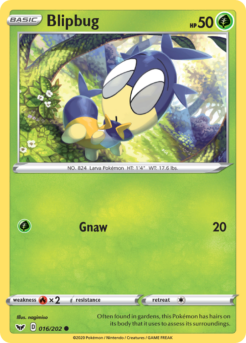
Sword & Shield
Often found in gardens, this Pokémon has hairs on its body that it uses to assess its surroundings.
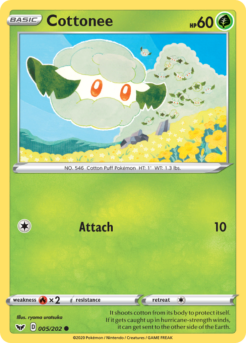
Sword & Shield
It shoots cotton from its body to protect itself. If it gets caught up in hurricane-strength winds, it can get sent to the other side of the Earth.
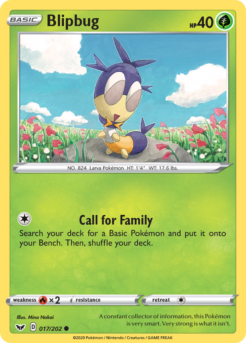
Sword & Shield
A constant collector of information, this Pokémon is very smart. Very strong is what it isn't.
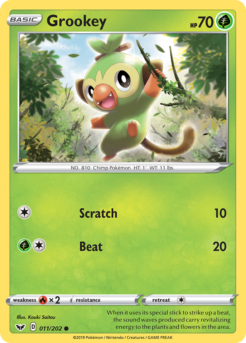
Sword & Shield
When it uses its special stick to strike up a beat, the sound waves produced carry revitalizing energy to the plants and flowers in the area.
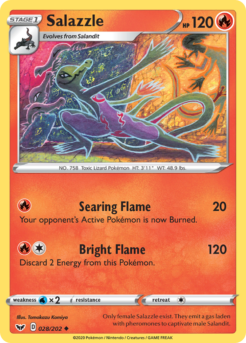
Sword & Shield
Only female Salazzle exist. They emit a gas laden with pheromones to captivate male Salandit.
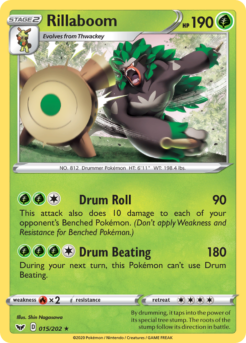
Sword & Shield
By drumming, it taps into the power of its special tree stump. The roots of the stump follow its direction in battle.