



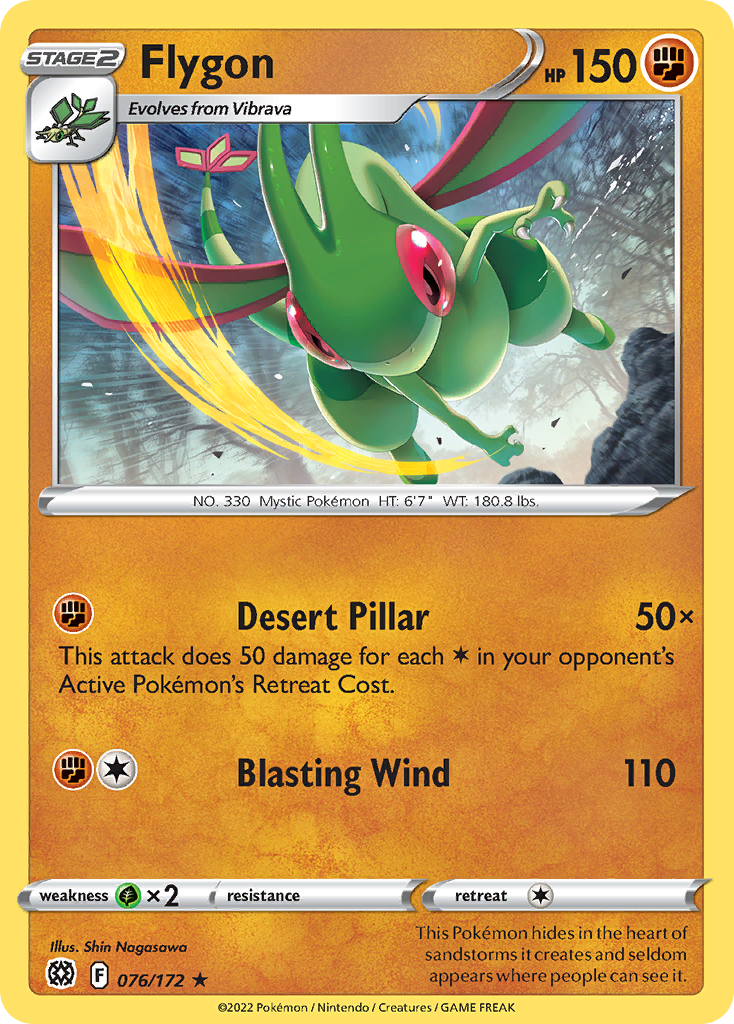
Flygon
This Pokémon hides in the heart of sandstorms it creates and seldom appears where people can see it.

This attack does 50 damage for each Colorless in your opponent’s Active Pokémon’s Retreat Cost.
| Supertype | Pokémon |
|---|---|
| Subtype | Stage 2 |
| HP | 150 |
| Types | Fighting |
| Attack | Desert Pillar |
| Attack cost | Fighting |
| Artist | Shin Nagasawa |
| Rarity | Rare |
| Pokédex | 330 |
| Evolves from | Vibrava |
Vendor Information
- Store Name: DutchGem
- Vendor: DutchGem
-
Address:
gekkestraat
179
2345GT Utrecht
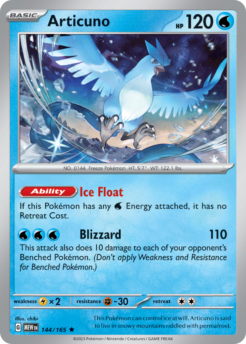
151
This Pokémon can control ice at will. Articuno is said to live in snowy mountains riddled with permafrost.

Cosmic Eclipse
It lives alone, away from others. Apparently, every one of them believes it is the most important.
Phantom Forces
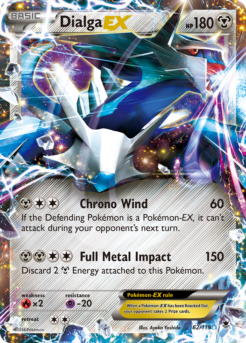
If the Defending Pokémon is a Pokémon-EX, it can’t attack during your opponent’s next turn.
Sun & Moon
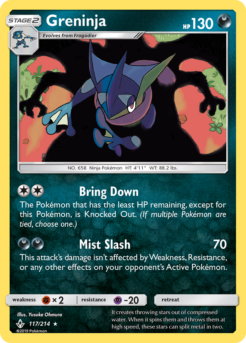
It creates throwing stars out of compressed water. When it spins them and throws them at high speed, these stars can split metal in two.

Paldean Fates
This Pokémon's pincers, which contain steel, can crush any hard object they get ahold of into bits.

Produtos Relacionados
Sword & Shield
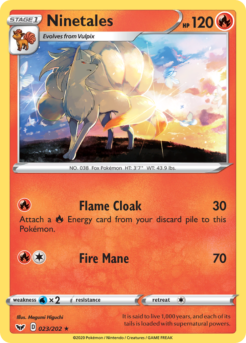
It is said to live 1,000 years, and each of its tails is loaded with supernatural powers.
Sword & Shield
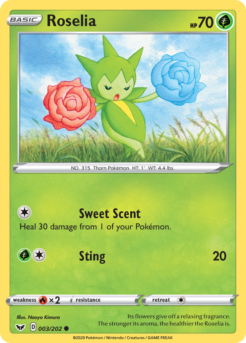
Its flowers give off a relaxing fragrance. The stronger its aroma, the healthier the Roselia is.
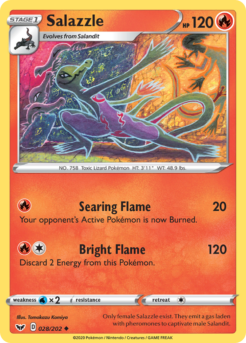
Sword & Shield
Only female Salazzle exist. They emit a gas laden with pheromones to captivate male Salandit.
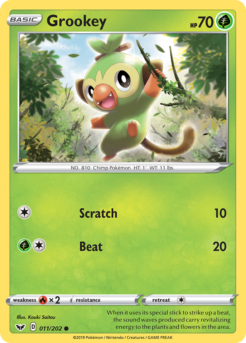
Sword & Shield
When it uses its special stick to strike up a beat, the sound waves produced carry revitalizing energy to the plants and flowers in the area.
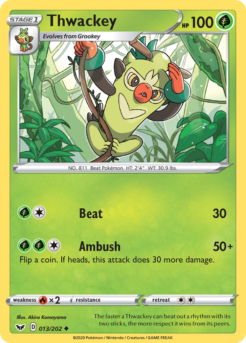
Sword & Shield
The faster a Thwackey can beat out a rhythm with its two sticks, the more respect it wins from its peers.
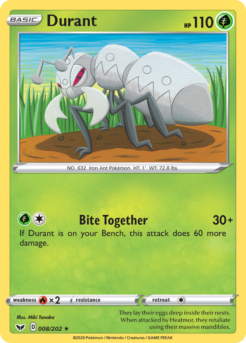
Sword & Shield
They lay their eggs deep inside their nests. When attacked by Heatmor, they retaliate using their massive mandibles.
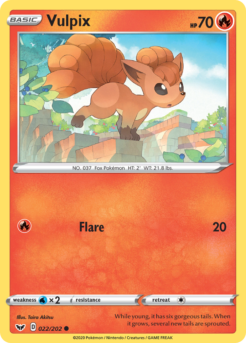
Sword & Shield
While young, it has six gorgeous tails. When it grows, several new tails are sprouted.
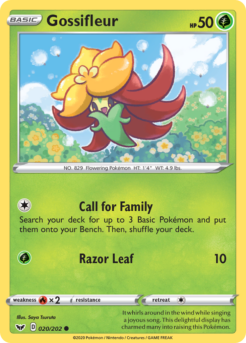
Sword & Shield
It whirls around in the wind while singing a joyous song. This delightful display has charmed many into raising this Pokémon.