




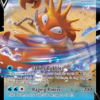

Search your deck for up to 5 Water Energy cards and attach them to your Pokémon in any way you like. Then, shuffle your deck.
| Supertype | Pokémon |
|---|---|
| Subtype | VMAX |
| HP | 330 |
| Types | Water |
| Attack | Bubbles Galore |
| Attack cost | Water |
| Artist | 5ban Graphics |
| Rarity | Rare Holo VMAX |
| Pokédex | 99 |
| Evolves from | Kingler V |
Vendor Information
- Store Name: DutchGem
- Vendor: DutchGem
-
Address:
gekkestraat
179
2345GT Utrecht

Ancient Origins
This attack does 20 damage times the amount of Energy attached to both Active Pokémon.

Obsidian Flames
It is said that this Pokémon was born when an unknown poison Pokémon entered and inspirited an engine left at a scrap-processing factory.
Scarlet & Violet
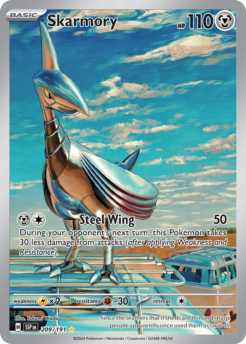
During your opponent’s next turn, this Pokémon takes 30 less damage from attacks (after applying Weakness and Resistance).
Silver Tempest
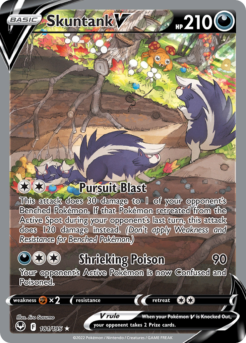
This attack does 30 damage to 1 of your opponent’s Benched Pokémon. If that Pokémon retreated from the Active Spot during your opponent’s last turn, this attack does 120 damage instead. (Don’t apply Weakness and Resistance for Benched Pokémon.)

Produtos Relacionados
Sword & Shield
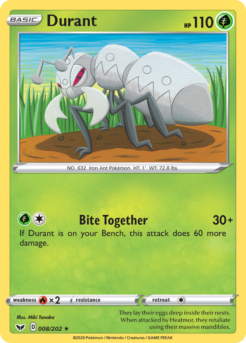
They lay their eggs deep inside their nests. When attacked by Heatmor, they retaliate using their massive mandibles.

Sword & Shield
Search your deck for up to 2 Pokémon, reveal them, and put them into your hand. Then, shuffle your deck.
Sword & Shield
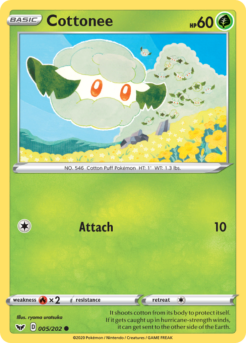
It shoots cotton from its body to protect itself. If it gets caught up in hurricane-strength winds, it can get sent to the other side of the Earth.
Sword & Shield
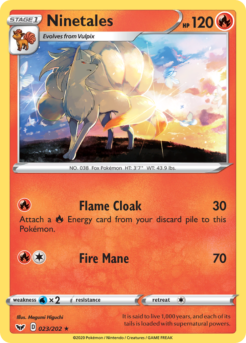
It is said to live 1,000 years, and each of its tails is loaded with supernatural powers.
Sword & Shield
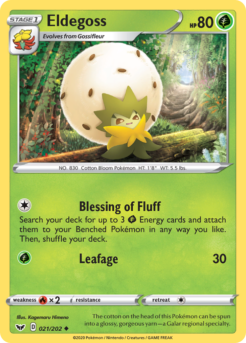
The cotton on the head of this Pokémon can be spun into a glossy, gorgeous yarn—a Galar regional specialty.
Sword & Shield
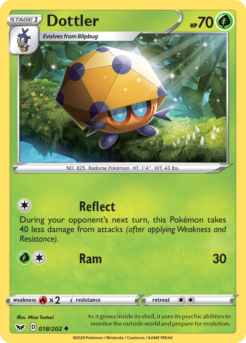
As it grows inside its shell, it uses its psychic abilities to monitor the outside world and prepare for evolution.

Sword & Shield
When it uses its special stick to strike up a beat, the sound waves produced carry revitalizing energy to the plants and flowers in the area.
Sword & Shield
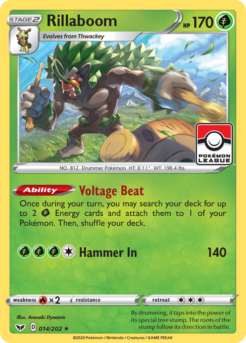
By drumming, it taps into the power of its special tree stump. The roots of the stump follow its direction in battle.