



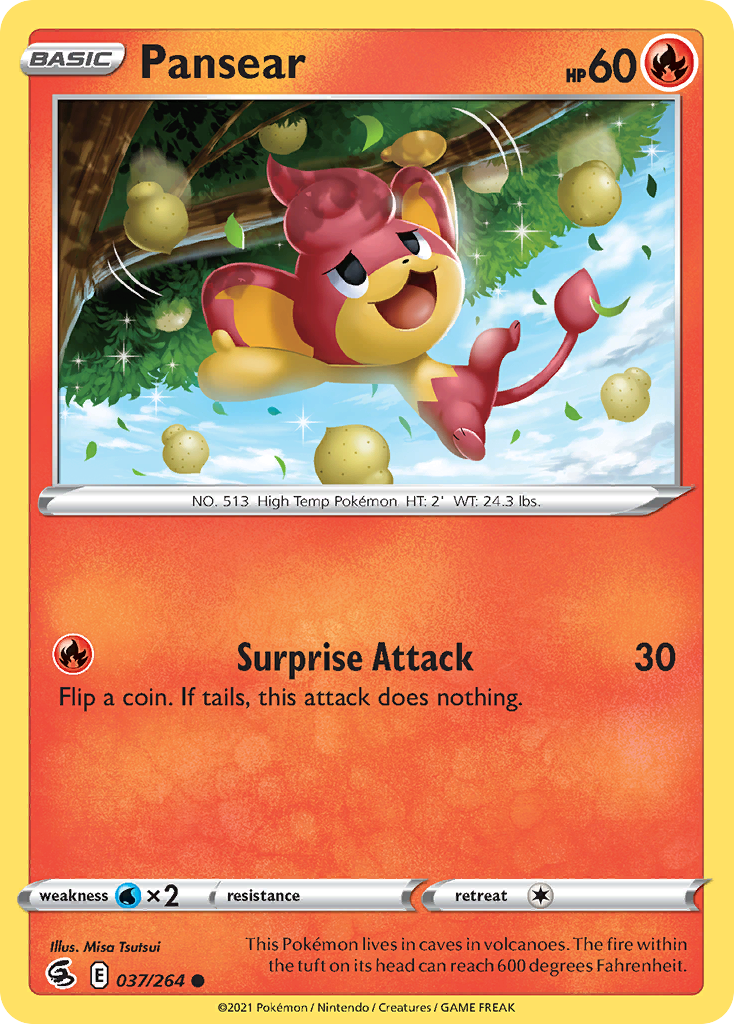
Pansear

This Pokémon lives in caves in volcanoes. The fire within the tuft on its head can reach 600 degrees Fahrenheit.
Flip a coin. If tails, this attack does nothing.
| Supertype | Pokémon |
|---|---|
| Subtype | Basic |
| HP | 60 |
| Types | Fire |
| Attack | Surprise Attack |
| Attack cost | Fire |
| Artist | Misa Tsutsui |
| Rarity | Common |
| Pokédex | 513 |
| Evolves to | Simisear |
Vendor Information
- Store Name: DutchGem
- Vendor: DutchGem
-
Address:
gekkestraat
179
2345GT Utrecht
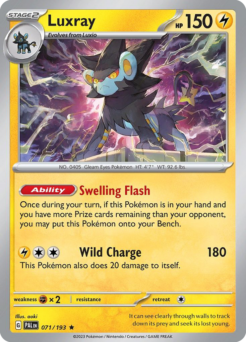
Paldea Evolved
It can see clearly through walls to track down its prey and seek its lost young.

Chilling Reign
Search your deck for up to 2 cards and put them into your hand. Then, shuffle your deck.

Sun & Moon
It knows how people and Pokémon feel by looking at their auras. It doesn't approach dangerous opponents.

Rebel Clash
It's so strong that it can knock out some opponents in a single hit, but it also may forget what it's battling midfight.
Scarlet & Violet
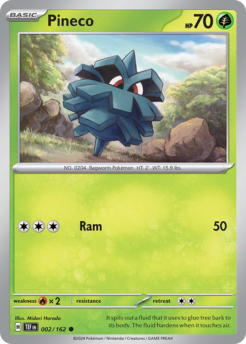
It spits out a fluid that it uses to glue tree bark to its body. The fluid hardens when it touches air.

Darkness Ablaze
The water stored inside the tuft on its head is full of nutrients. Plants that receive its water grow large.
Produtos Relacionados
Sword & Shield
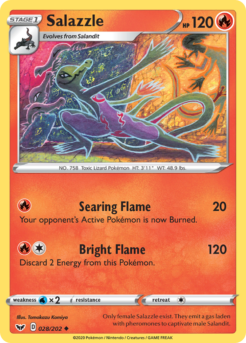
Only female Salazzle exist. They emit a gas laden with pheromones to captivate male Salandit.
Sword & Shield
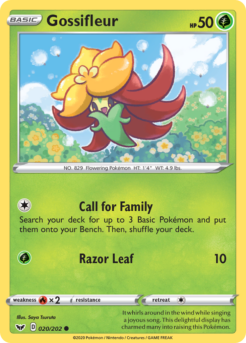
It whirls around in the wind while singing a joyous song. This delightful display has charmed many into raising this Pokémon.

Sword & Shield
Search your deck for up to 2 Pokémon, reveal them, and put them into your hand. Then, shuffle your deck.

Sword & Shield
Discard the top card of your deck. If that card is a Fire Energy card, this attack does 90 more damage.
Sword & Shield
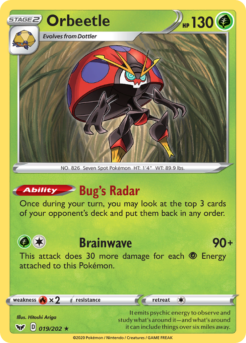
It emits psychic energy to observe and study what's around it—and what's around it can include things over six miles away.
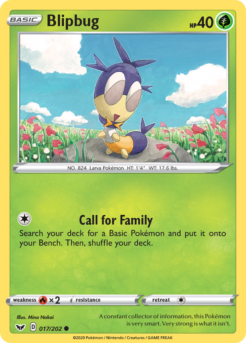
Sword & Shield
A constant collector of information, this Pokémon is very smart. Very strong is what it isn't.
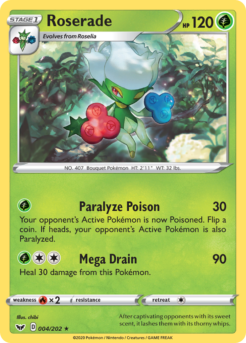
Sword & Shield
After captivating opponents with its sweet scent, it lashes them with its thorny whips.
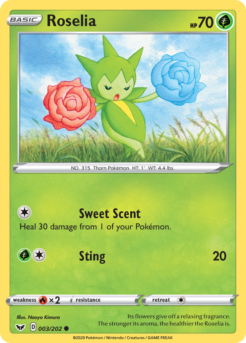
Sword & Shield
Its flowers give off a relaxing fragrance. The stronger its aroma, the healthier the Roselia is.