



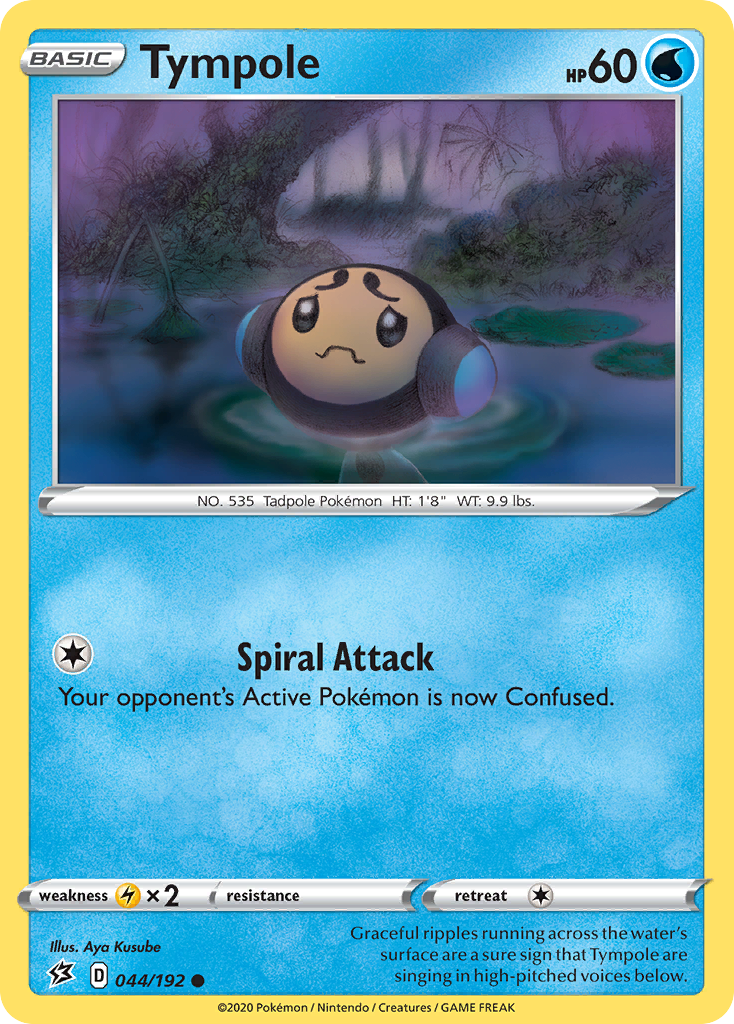
Tympole
Graceful ripples running across the water’s surface are a sure sign that Tympole are singing in high-pitched voices below.
Your opponent’s Active Pokémon is now Confused.
| Supertype | Pokémon |
|---|---|
| Subtype | Basic |
| HP | 60 |
| Types | Water |
| Attack | Spiral Attack |
| Attack cost | Colorless |
| Artist | Aya Kusube |
| Rarity | Common |
| Pokédex | 535 |
| Evolves to | Palpitoad |
Vendor Information
- Store Name: DutchGem
- Vendor: DutchGem
-
Address:
gekkestraat
179
2345GT Utrecht
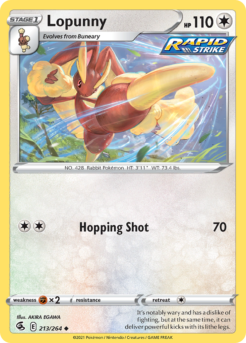
Fusion Strike
It's notably wary and has a dislike of fighting, but at the same time, it can deliver powerful kicks with its lithe legs.
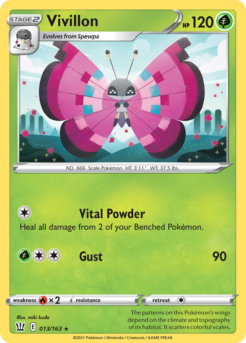
Battle Styles
The patterns on this Pokémon's wings depend on the climate and topography of its habitat. It scatters colorful scales.
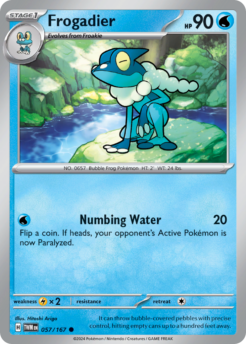
Scarlet & Violet
It can throw bubble-covered pebbles with precise control, hitting empty cans up to a hundred feet away.
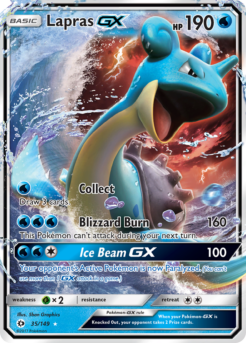
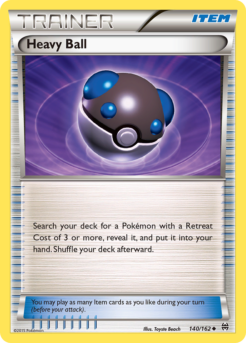
Sword & Shield
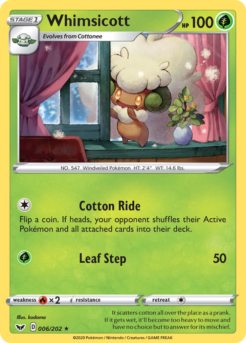
It scatters cotton all over the place as a prank. If it gets wet, it'll become too heavy to move and have no choice but to answer for its mischief.
Related products
Sword & Shield
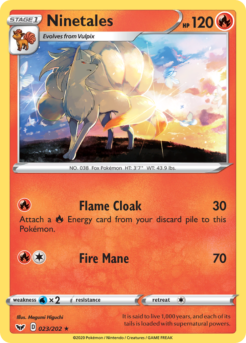
It is said to live 1,000 years, and each of its tails is loaded with supernatural powers.

Sword & Shield
Search your deck for up to 2 Pokémon, reveal them, and put them into your hand. Then, shuffle your deck.
Sword & Shield
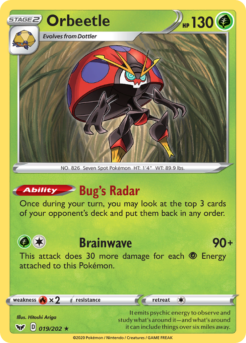
It emits psychic energy to observe and study what's around it—and what's around it can include things over six miles away.
Sword & Shield
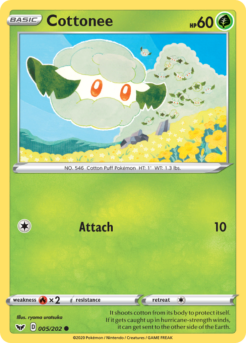
It shoots cotton from its body to protect itself. If it gets caught up in hurricane-strength winds, it can get sent to the other side of the Earth.
Sword & Shield
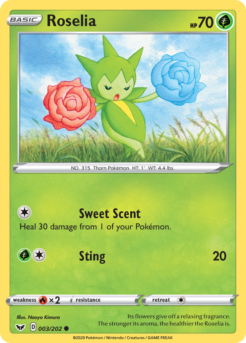
Its flowers give off a relaxing fragrance. The stronger its aroma, the healthier the Roselia is.
Sword & Shield
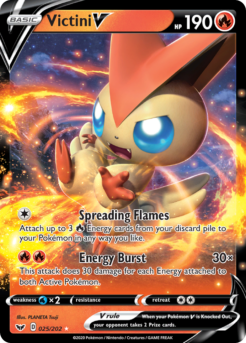
Attach up to 3 Fire Energy cards from your discard pile to your Pokémon in any way you like.
Sword & Shield
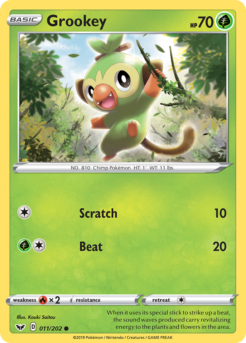
When it uses its special stick to strike up a beat, the sound waves produced carry revitalizing energy to the plants and flowers in the area.
Sword & Shield
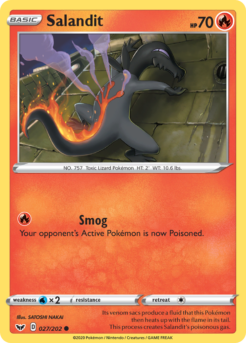
Its venom sacs produce a fluid that this Pokémon then heats up with the flame in its tail. This process creates Salandit's poisonous gas.