



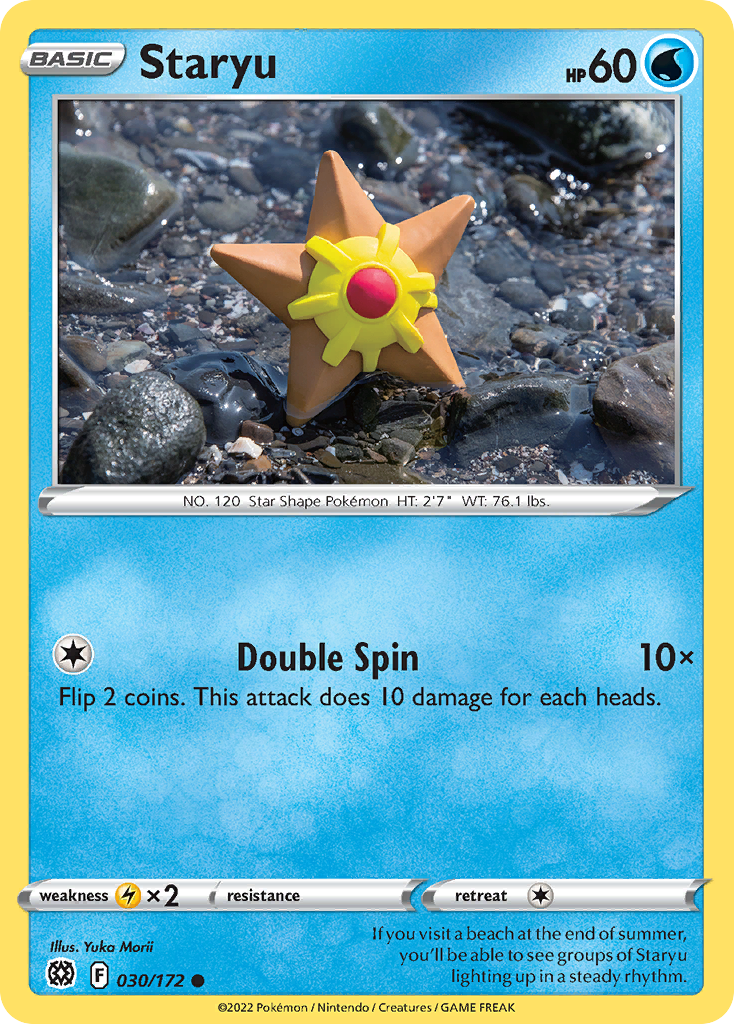
Staryu

If you visit a beach at the end of summer, you’ll be able to see groups of Staryu lighting up in a steady rhythm.

Flip 2 coins. This attack does 10 damage for each heads.
| Supertype | Pokémon |
|---|---|
| Subtype | Basic |
| HP | 60 |
| Types | Water |
| Attack | Double Spin |
| Attack cost | Colorless |
| Artist | Yuka Morii |
| Rarity | Common |
| Pokédex | 120 |
| Evolves to | Starmie |
Vendor Information
- Store Name: DutchGem
- Vendor: DutchGem
-
Address:
gekkestraat
179
2345GT Utrecht
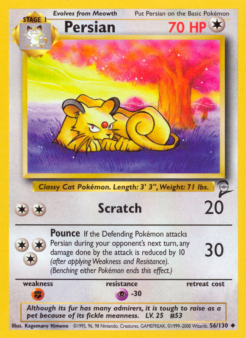
Base
Although its fur has many admirers, it is tough to raise as a pet because of its fickle meanness.
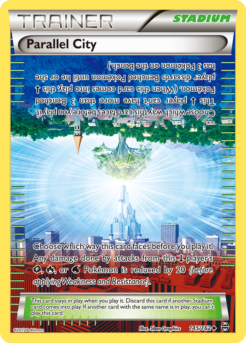
Base
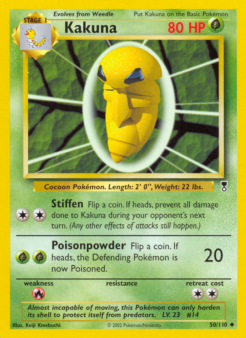
Almost incapable of moving, this Pokémon can only harden its shell to protect itself from predators.
Darkness Ablaze
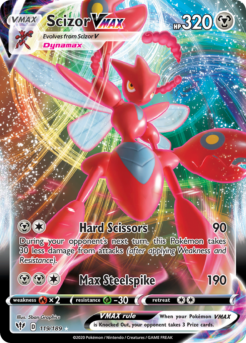
During your opponent’s next turn, this Pokémon takes 30 less damage from attacks (after applying Weakness and Resistance).

Astral Radiance
They say that it will appear before kindhearted, caring people and shower them with happiness.
Sun & Moon
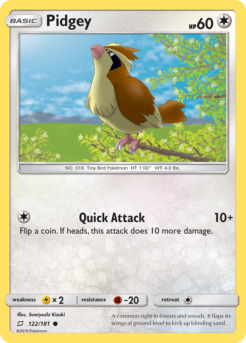
A common sight in forests and woods. It flaps its wings at ground level to kick up blinding sand.
Related products
Sword & Shield
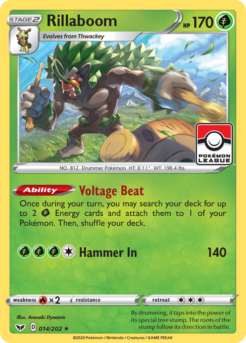
By drumming, it taps into the power of its special tree stump. The roots of the stump follow its direction in battle.
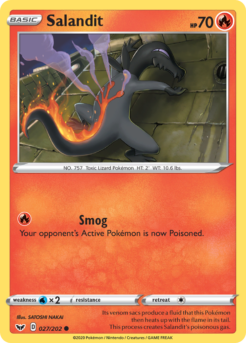
Sword & Shield
Its venom sacs produce a fluid that this Pokémon then heats up with the flame in its tail. This process creates Salandit's poisonous gas.
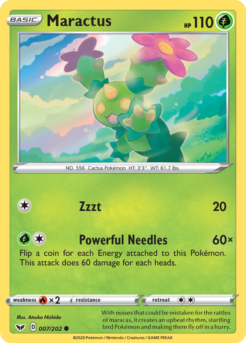
Sword & Shield
With noises that could be mistaken for the rattles of maracas, it creates an upbeat rhythm, startling bird Pokémon and making them fly off in a hurry.
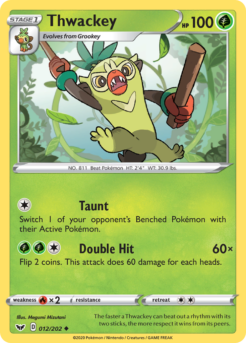
Sword & Shield
The faster a Thwackey can beat out a rhythm with its two sticks, the more respect it wins from its peers.
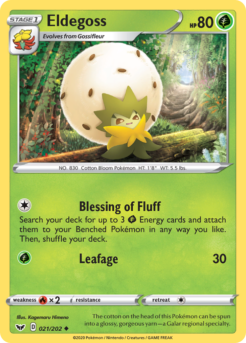
Sword & Shield
The cotton on the head of this Pokémon can be spun into a glossy, gorgeous yarn—a Galar regional specialty.
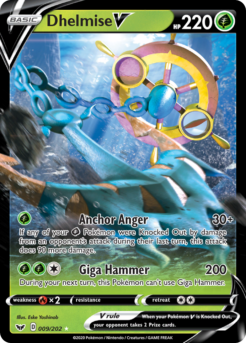
Sword & Shield
If any of your Grass Pokémon were Knocked Out by damage from an opponent’s attack during their last turn, this attack does 90 more damage.
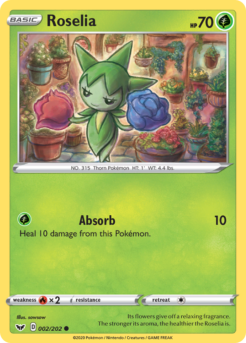
Sword & Shield
Its flowers give off a relaxing fragrance. The stronger its aroma, the healthier the Roselia is.
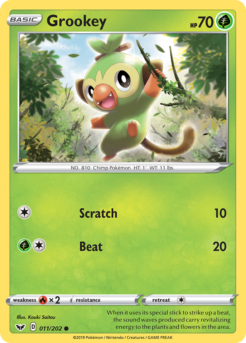
Sword & Shield
When it uses its special stick to strike up a beat, the sound waves produced carry revitalizing energy to the plants and flowers in the area.