



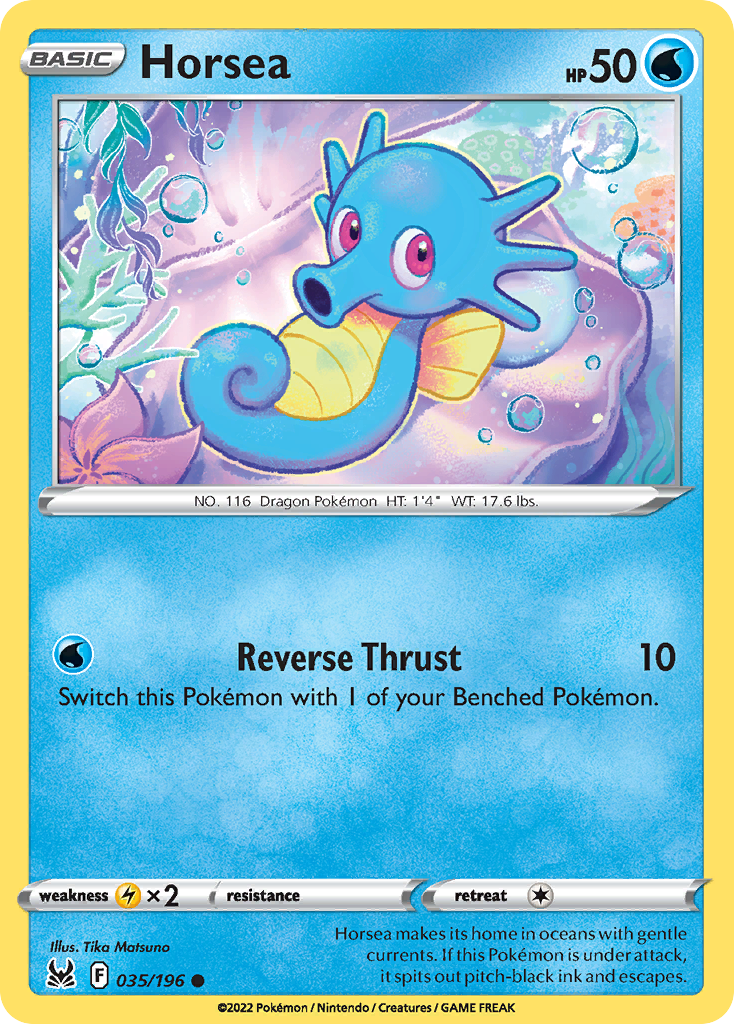
Horsea
Horsea makes its home in oceans with gentle currents. If this Pokémon is under attack, it spits out pitch-black ink and escapes.
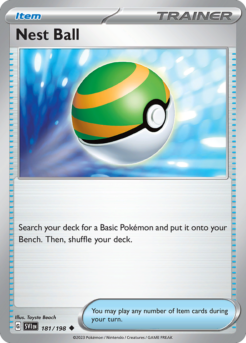
Switch this Pokémon with 1 of your Benched Pokémon.
| Supertype | Pokémon |
|---|---|
| Subtype | Basic |
| HP | 50 |
| Types | Water |
| Attack | Reverse Thrust |
| Attack cost | Water |
| Artist | Tika Matsuno |
| Rarity | Common |
| Pokédex | 116 |
| Evolves to | Seadra |
Vendor Information
- Store Name: DutchGem
- Vendor: DutchGem
-
Address:
gekkestraat
179
2345GT Utrecht
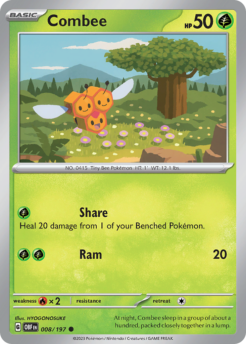
Obsidian Flames
At night, Combee sleep in a group of about a hundred, packed closely together in a lump.
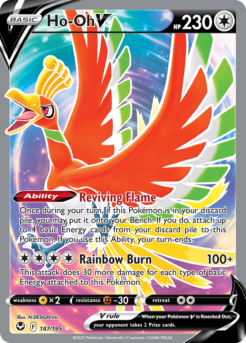
Silver Tempest
This attack does 30 more damage for each type of basic Energy attached to this Pokémon.
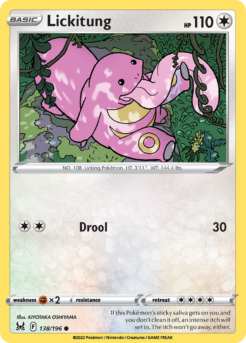
Lost Origin
If this Pokémon's sticky saliva gets on you and you don't clean it off, an intense itch will set in. The itch won't go away, either.
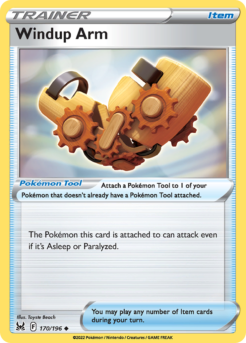
Astral Radiance
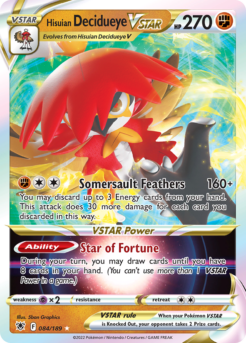
You may discard up to 3 Energy cards from your hand. This attack does 30 more damage for each card you discarded in this way.
Related products
Sword & Shield
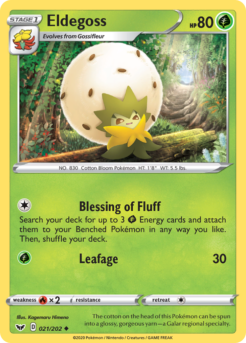
The cotton on the head of this Pokémon can be spun into a glossy, gorgeous yarn—a Galar regional specialty.
Sword & Shield
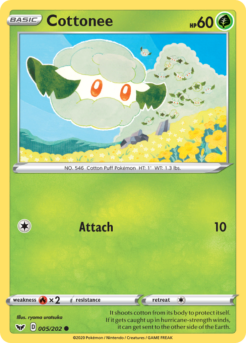
It shoots cotton from its body to protect itself. If it gets caught up in hurricane-strength winds, it can get sent to the other side of the Earth.
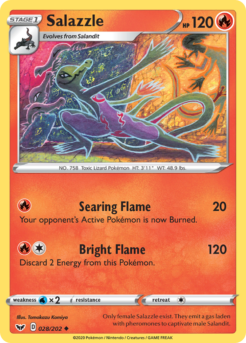
Sword & Shield
Only female Salazzle exist. They emit a gas laden with pheromones to captivate male Salandit.
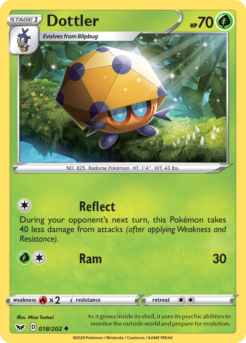
Sword & Shield
As it grows inside its shell, it uses its psychic abilities to monitor the outside world and prepare for evolution.
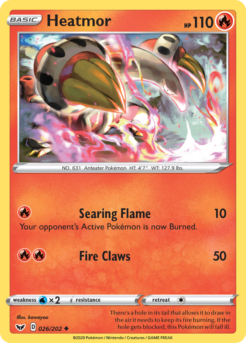
Sword & Shield
There's a hole in its tail that allows it to draw in the air it needs to keep its fire burning. If the hole gets blocked, this Pokémon will fall ill.
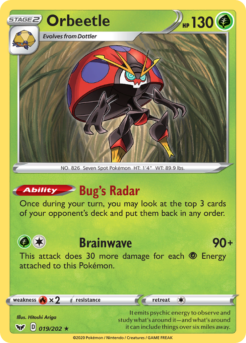
Sword & Shield
It emits psychic energy to observe and study what's around it—and what's around it can include things over six miles away.
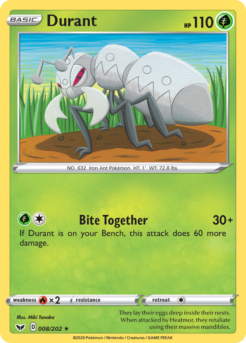
Sword & Shield
They lay their eggs deep inside their nests. When attacked by Heatmor, they retaliate using their massive mandibles.
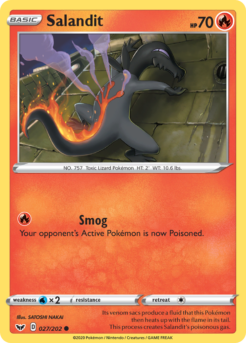
Sword & Shield
Its venom sacs produce a fluid that this Pokémon then heats up with the flame in its tail. This process creates Salandit's poisonous gas.