



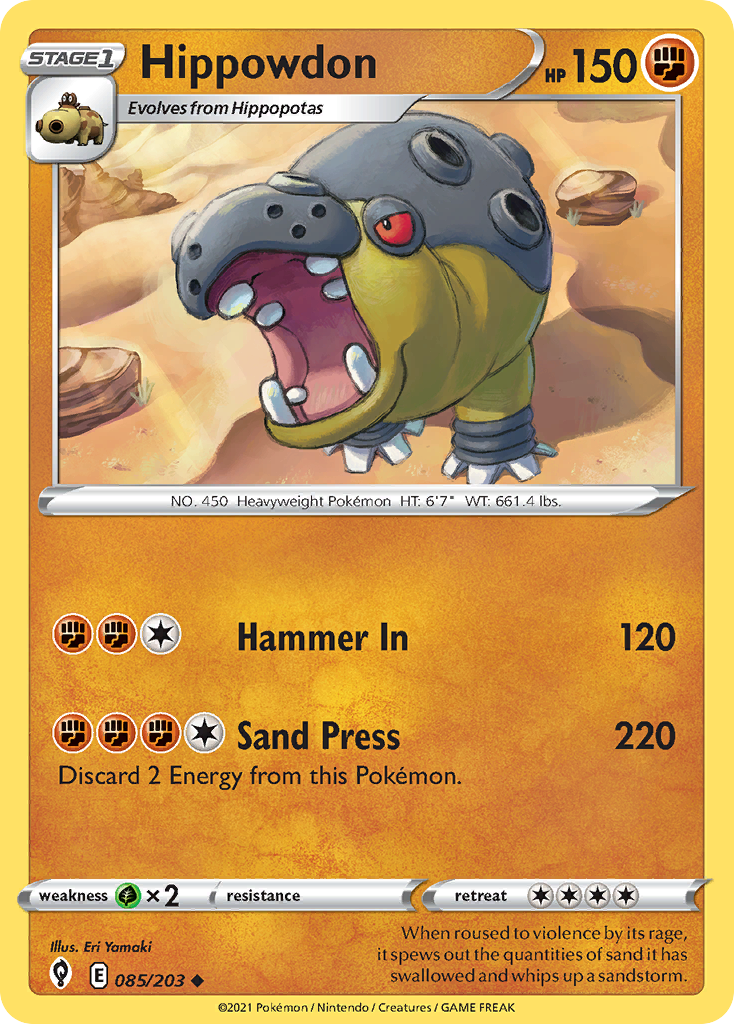
Hippowdon
When roused to violence by its rage, it spews out the quantities of sand it has swallowed and whips up a sandstorm.
| Supertype | Pokémon |
|---|---|
| Subtype | Stage 1 |
| HP | 150 |
| Types | Fighting |
| Attack | Hammer In |
| Attack cost | Fighting |
| Artist | Eri Yamaki |
| Rarity | Uncommon |
| Pokédex | 450 |
| Evolves from | Hippopotas |
Vendor Information
- Store Name: DutchGem
- Vendor: DutchGem
-
Address:
gekkestraat
179
2345GT Utrecht
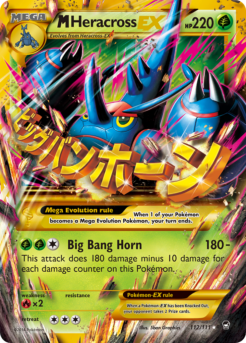
Furious Fists
This attack does 180 damage minus 10 damage for each damage counter on this Pokémon.
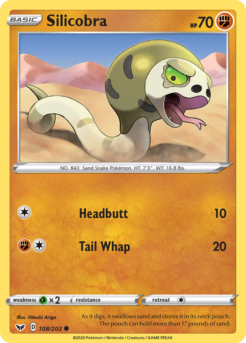
Sword & Shield
As it digs, it swallows sand and stores it in its neck pouch. The pouch can hold more than 17 pounds of sand.
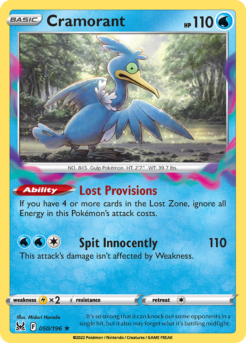
Lost Origin
It's so strong that it can knock out some opponents in a single hit, but it also may forget what it's battling midfight.
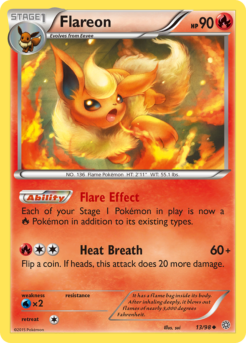
Ancient Origins
It has a flame bag inside its body. After inhaling deeply, it blows out flames of nearly 3,000 degrees Fahrenheit.
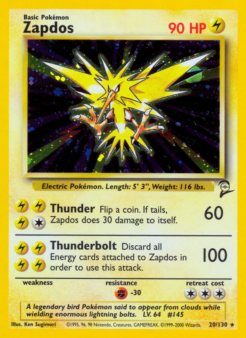
Base
A legendary bird Pokémon said to appear from clouds while wielding enormous lightning bolts.
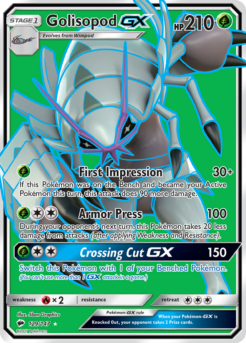
Burning Shadows
If this Pokémon was on the Bench and became your Active Pokémon this turn, this attack does 90 more damage.
Related products
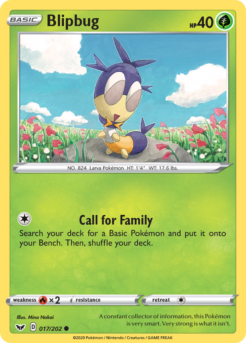
Sword & Shield
A constant collector of information, this Pokémon is very smart. Very strong is what it isn't.
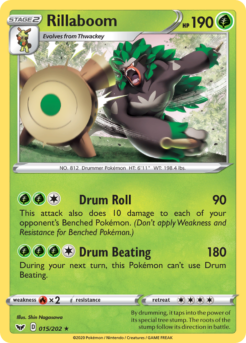
Sword & Shield
By drumming, it taps into the power of its special tree stump. The roots of the stump follow its direction in battle.
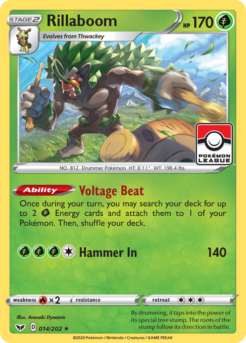
Sword & Shield
By drumming, it taps into the power of its special tree stump. The roots of the stump follow its direction in battle.
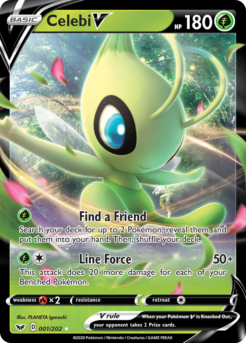
Sword & Shield
Search your deck for up to 2 Pokémon, reveal them, and put them into your hand. Then, shuffle your deck.
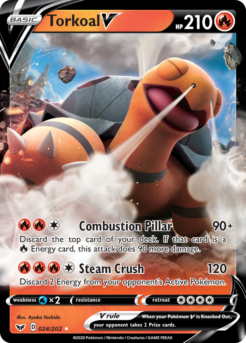
Sword & Shield
Discard the top card of your deck. If that card is a Fire Energy card, this attack does 90 more damage.
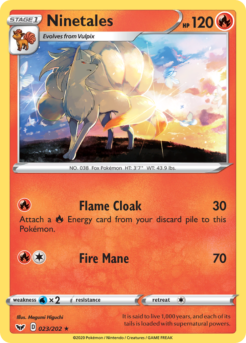
Sword & Shield
It is said to live 1,000 years, and each of its tails is loaded with supernatural powers.
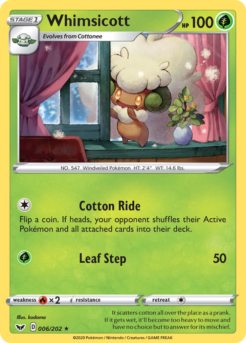
Sword & Shield
It scatters cotton all over the place as a prank. If it gets wet, it'll become too heavy to move and have no choice but to answer for its mischief.
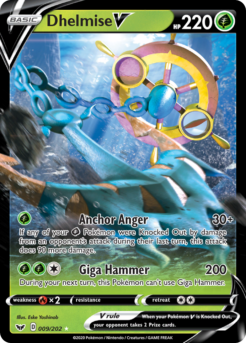
Sword & Shield
If any of your Grass Pokémon were Knocked Out by damage from an opponent’s attack during their last turn, this attack does 90 more damage.