





This attack does 50 more damage for each extra Darkness Energy attached to this Pokémon (in addition to this attack’s cost). You can’t add more than 100 damage in this way.
| Supertype | Pokémon |
|---|---|
| Subtype | VMAX |
| HP | 330 |
| Types | Darkness |
| Attack | G-Max Drill |
| Attack cost | Darkness |
| Artist | 5ban Graphics |
| Rarity | Rare Holo VMAX |
| Pokédex | 861 |
| Evolves from | Grimmsnarl V |
Vendor Information
- Store Name: DutchGem
- Vendor: DutchGem
-
Address:
gekkestraat
179
2345GT Utrecht
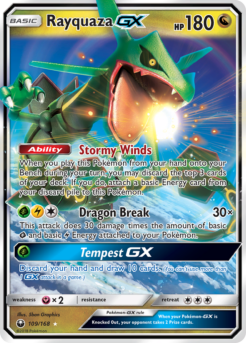
Celestial Storm
This attack does 30 damage times the amount of basic Grass and basic Lightning Energy attached to your Pokémon.
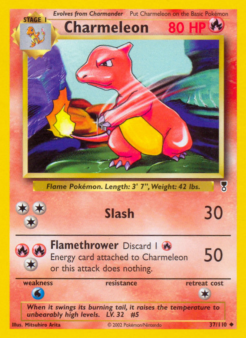
Base
When it swings its burning tail, it raises the temperature to unbearably high levels.

Sun & Moon
If this Pokémon has at least 1 extra Energy attached to it (in addition to this attack’s cost), heal all damage from all of your Pokémon. (You can’t use more than 1 GX attack in a game.)
Evolutions
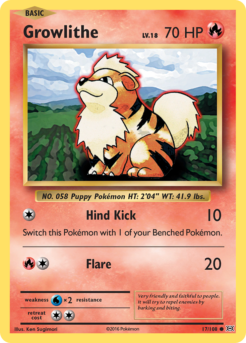
Very friendly and faithful to people. It will try to repel enemies by barking and biting.
Celestial Storm
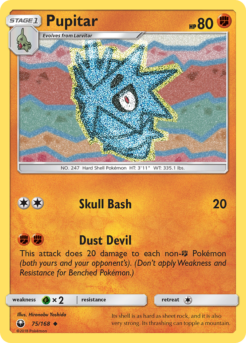
Its shell is as hard as sheet rock, and it is also very strong. Its thrashing can topple a mountain.

Paradox Rift
It resembles a mysterious object mentioned in an old book. There are only two reported sightings of this Pokémon.
Related products
Sword & Shield
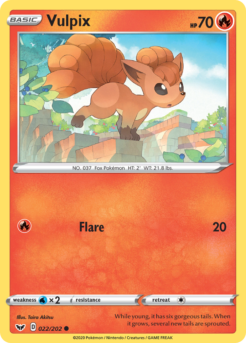
While young, it has six gorgeous tails. When it grows, several new tails are sprouted.
Sword & Shield
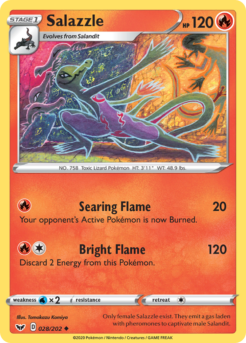
Only female Salazzle exist. They emit a gas laden with pheromones to captivate male Salandit.
Sword & Shield
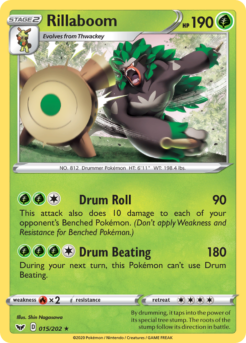
By drumming, it taps into the power of its special tree stump. The roots of the stump follow its direction in battle.
Sword & Shield
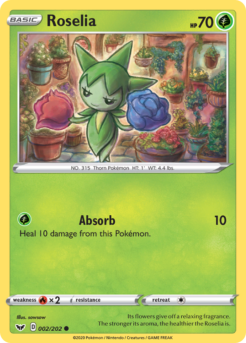
Its flowers give off a relaxing fragrance. The stronger its aroma, the healthier the Roselia is.
Sword & Shield
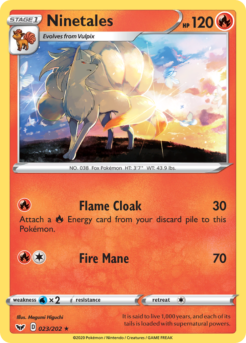
It is said to live 1,000 years, and each of its tails is loaded with supernatural powers.
Sword & Shield
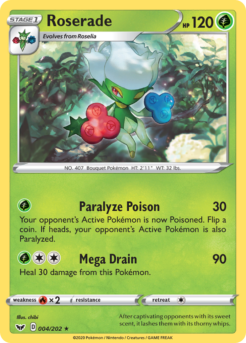
After captivating opponents with its sweet scent, it lashes them with its thorny whips.
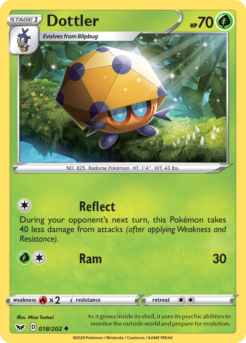
Sword & Shield
As it grows inside its shell, it uses its psychic abilities to monitor the outside world and prepare for evolution.
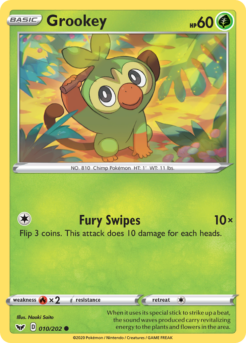
Sword & Shield
When it uses its special stick to strike up a beat, the sound waves produced carry revitalizing energy to the plants and flowers in the area.