



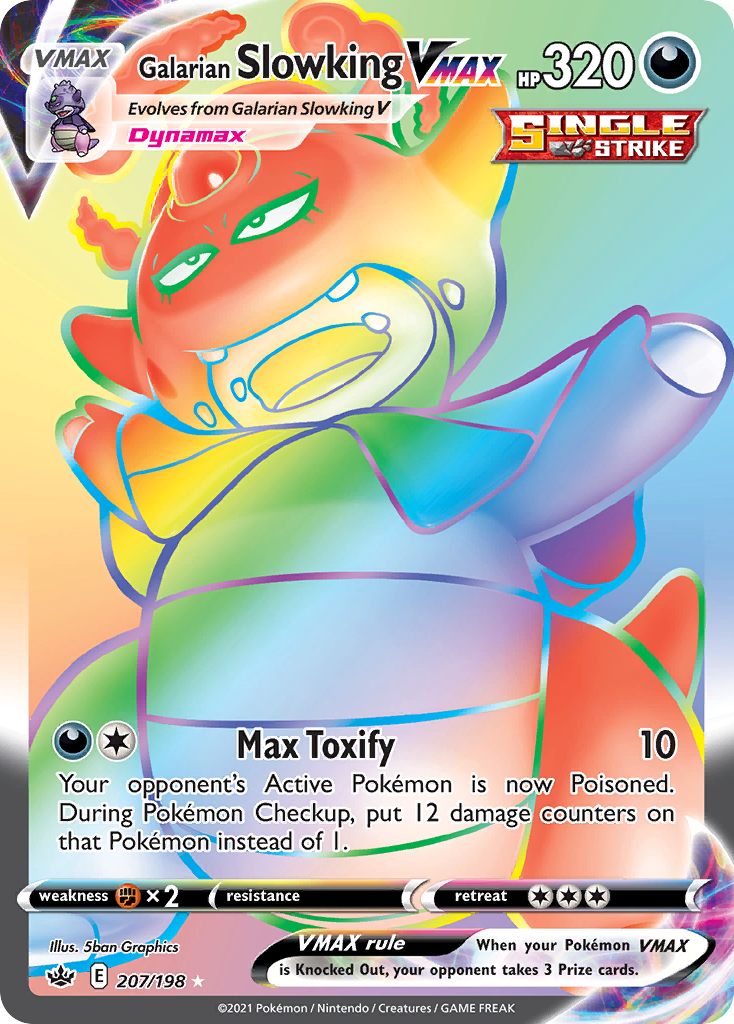

Your opponent’s Active Pokémon is now Poisoned. During Pokémon Checkup, put 12 damage counters on that Pokémon instead of 1.
| Supertype | Pokémon |
|---|---|
| Subtype | VMAX |
| HP | 320 |
| Types | Darkness |
| Attack | Max Toxify |
| Attack cost | Darkness |
| Artist | 5ban Graphics |
| Rarity | Rare Rainbow |
| Pokédex | 199 |
| Evolves from | Galarian Slowking V |
Vendor Information
- Store Name: DutchGem
- Vendor: DutchGem
-
Address:
gekkestraat
179
2345GT Utrecht
Sword & Shield
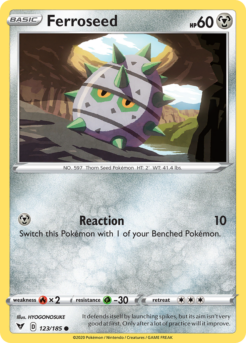
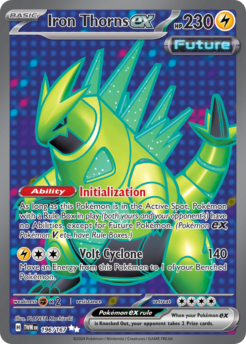
It defends itself by launching spikes, but its aim isn't very good at first. Only after a lot of practice will it improve.
Paradox Rift
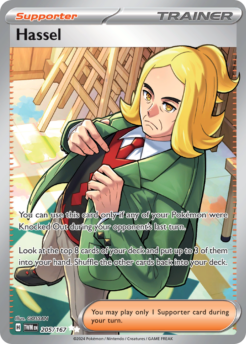
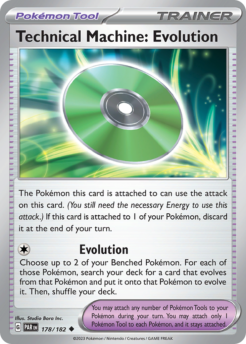
Choose up to 2 of your Benched Pokémon. For each of those Pokémon, search your deck for a card that evolves from that Pokémon and put it onto that Pokémon to evolve it. Then, shuffle your deck.
Darkness Ablaze
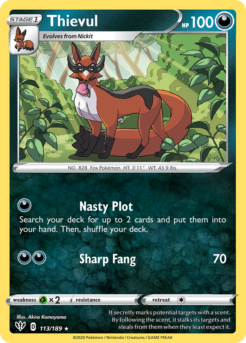
It secretly marks potential targets with a scent. By following the scent, it stalks its targets and steals from them when they least expect it.
Related products
Sword & Shield
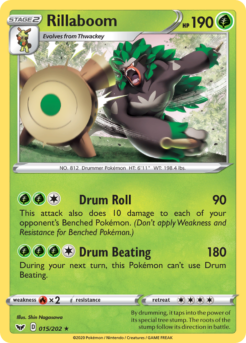
By drumming, it taps into the power of its special tree stump. The roots of the stump follow its direction in battle.
Sword & Shield
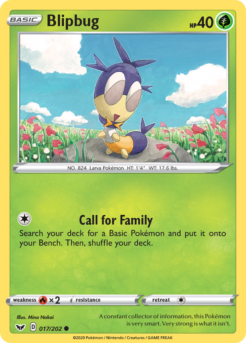
A constant collector of information, this Pokémon is very smart. Very strong is what it isn't.
Sword & Shield
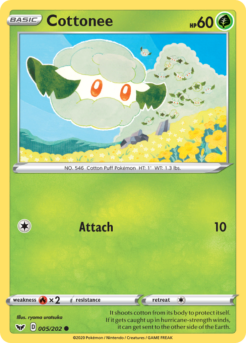
It shoots cotton from its body to protect itself. If it gets caught up in hurricane-strength winds, it can get sent to the other side of the Earth.
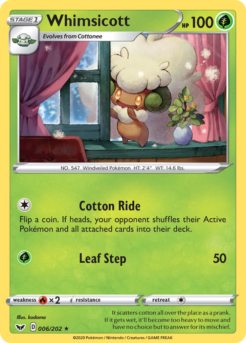
Sword & Shield
It scatters cotton all over the place as a prank. If it gets wet, it'll become too heavy to move and have no choice but to answer for its mischief.
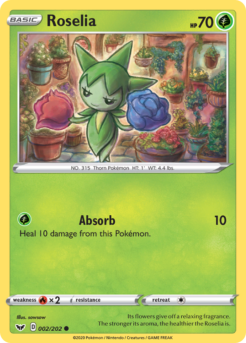
Sword & Shield
Its flowers give off a relaxing fragrance. The stronger its aroma, the healthier the Roselia is.
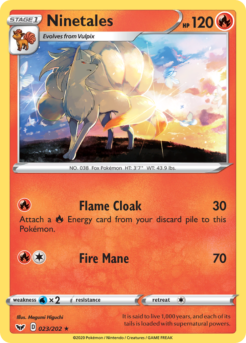
Sword & Shield
It is said to live 1,000 years, and each of its tails is loaded with supernatural powers.
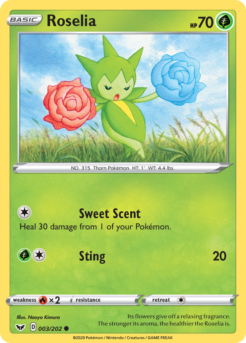
Sword & Shield
Its flowers give off a relaxing fragrance. The stronger its aroma, the healthier the Roselia is.
Sword & Shield
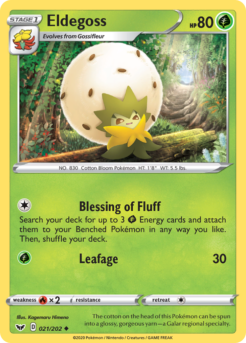
The cotton on the head of this Pokémon can be spun into a glossy, gorgeous yarn—a Galar regional specialty.