



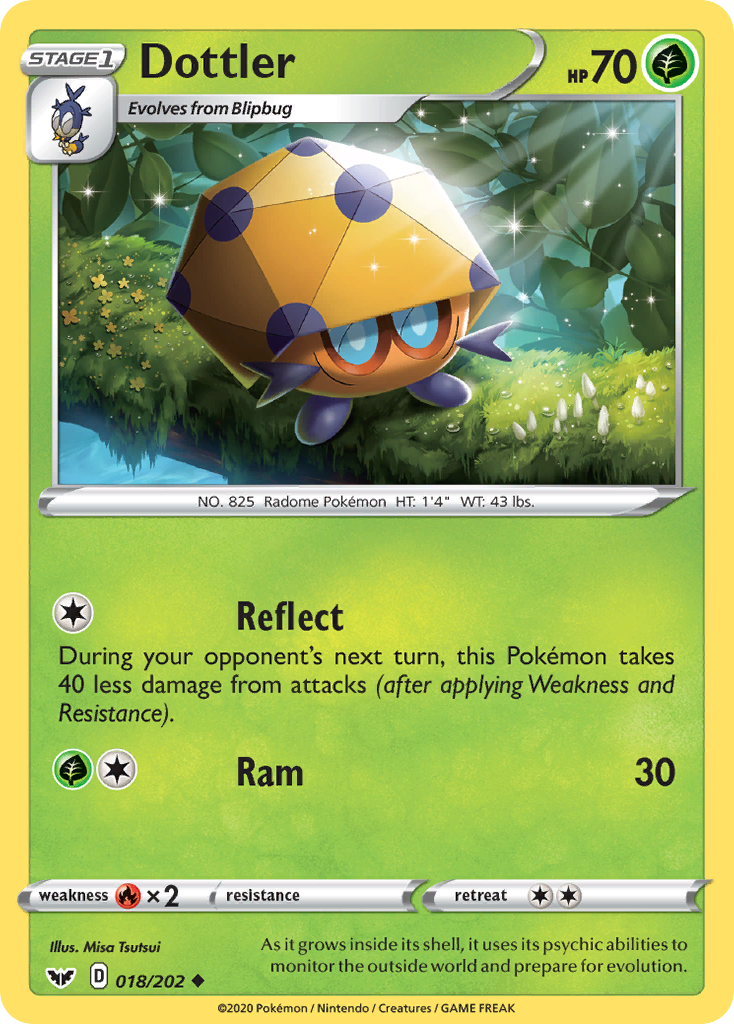
Dottler

As it grows inside its shell, it uses its psychic abilities to monitor the outside world and prepare for evolution.
During your opponent’s next turn, this Pokémon takes 40 less damage from attacks (after applying Weakness and Resistance).
| Supertype | Pokémon |
|---|---|
| Subtype | Stage 1 |
| HP | 70 |
| Types | Grass |
| Attack | Reflect |
| Attack cost | Colorless |
| Artist | Misa Tsutsui |
| Rarity | Uncommon |
| Pokédex | 825 |
| Evolves from | Blipbug |
| Evolves to | Orbeetle |
Vendor Information
- Store Name: DutchGem
- Vendor: DutchGem
-
Address:
gekkestraat
179
2345GT Utrecht
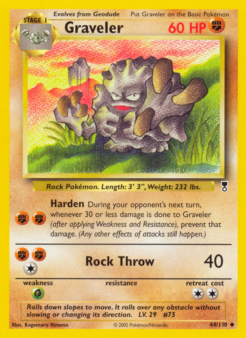
Base
Rolls down slopes to move. It rolls over any obstacle without slowing or changing its direction.

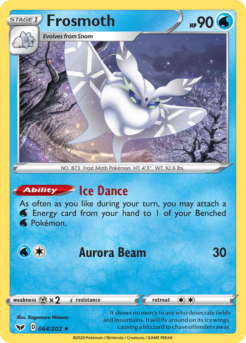
Sword & Shield
It shows no mercy to any who desecrate fields and mountains. It will fly around on its icy wings, causing a blizzard to chase offenders away.
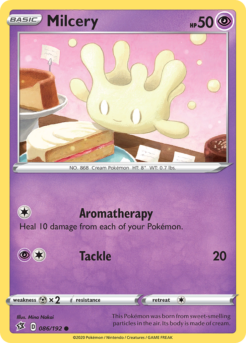
Rebel Clash
This Pokémon was born from sweet-smelling particles in the air. Its body is made of cream.
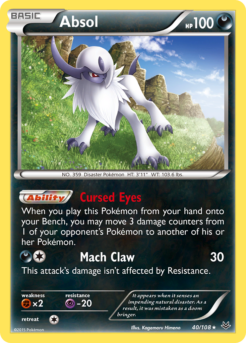
Roaring Skies
It appears when it senses an impending natural disaster. As a result, it was mistaken as a doom bringer.
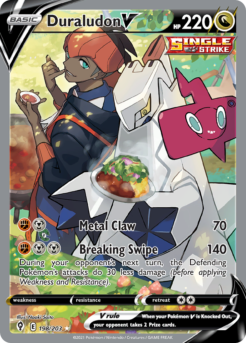
Related products
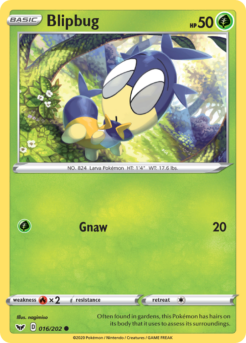
Sword & Shield
Often found in gardens, this Pokémon has hairs on its body that it uses to assess its surroundings.
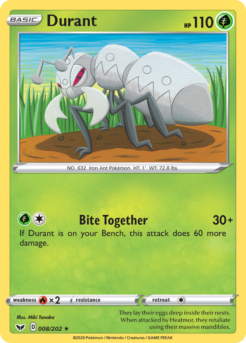
Sword & Shield
They lay their eggs deep inside their nests. When attacked by Heatmor, they retaliate using their massive mandibles.
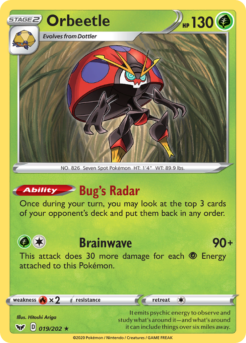
Sword & Shield
It emits psychic energy to observe and study what's around it—and what's around it can include things over six miles away.
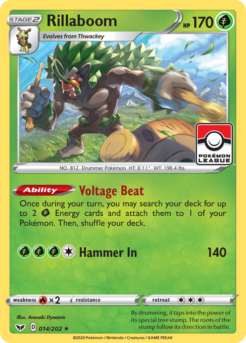
Sword & Shield
By drumming, it taps into the power of its special tree stump. The roots of the stump follow its direction in battle.
Sword & Shield
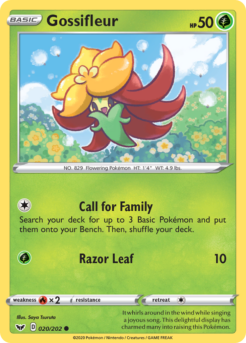
It whirls around in the wind while singing a joyous song. This delightful display has charmed many into raising this Pokémon.
Sword & Shield
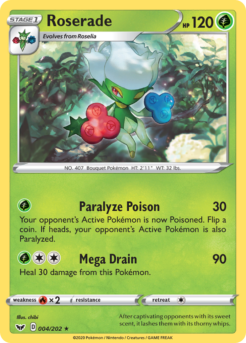
After captivating opponents with its sweet scent, it lashes them with its thorny whips.
Sword & Shield
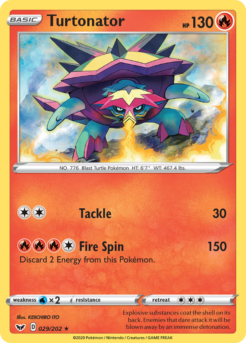
Explosive substances coat the shell on its back. Enemies that dare attack it will be blown away by an immense detonation.
Sword & Shield
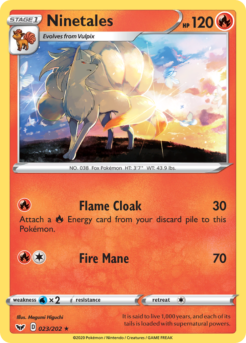
It is said to live 1,000 years, and each of its tails is loaded with supernatural powers.