



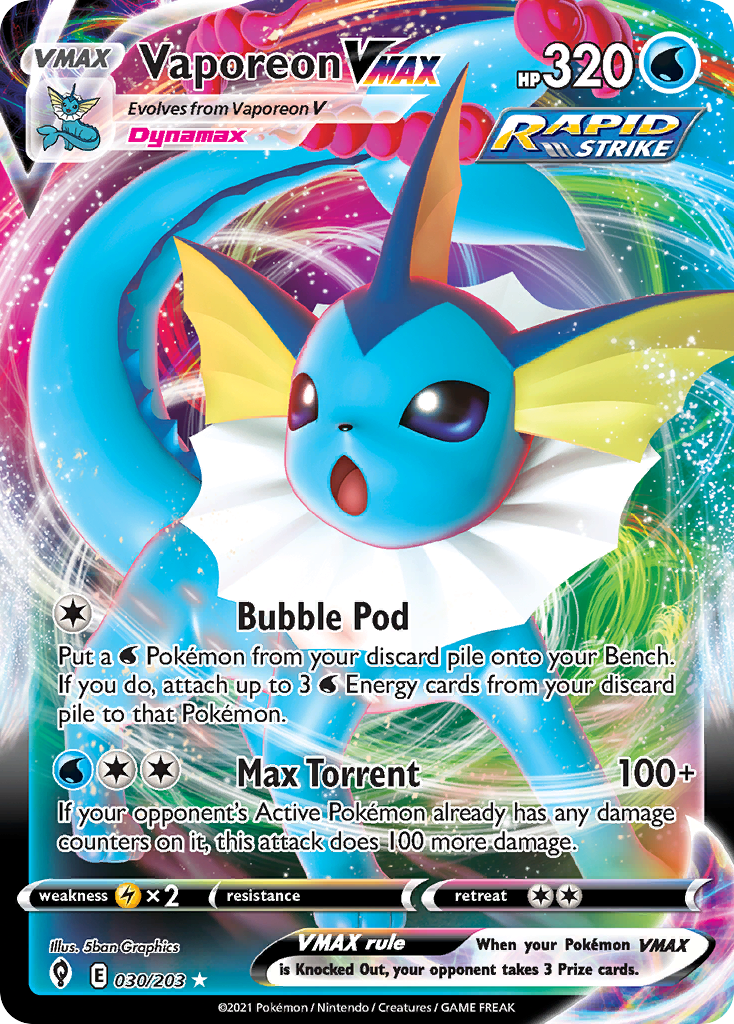
Put a Water Pokémon from your discard pile onto your Bench. If you do, attach up to 3 Water Energy cards from your discard pile to that Pokémon.
| Supertype | Pokémon |
|---|---|
| Subtype | VMAX |
| HP | 320 |
| Types | Water |
| Attack | Bubble Pod |
| Attack cost | Colorless |
| Artist | 5ban Graphics |
| Rarity | Rare Holo VMAX |
| Pokédex | 134 |
| Evolves from | Vaporeon V |
Vendor Information
- Store Name: DutchGem
- Vendor: DutchGem
-
Address:
gekkestraat
179
2345GT Utrecht
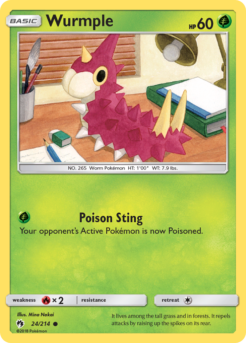
Lost Thunder
It lives among the tall grass and in forests. It repels attacks by raising up the spikes on its rear.
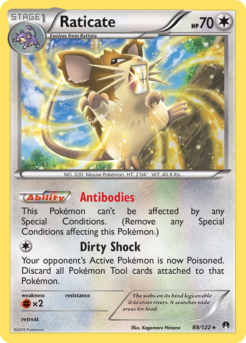
BREAKpoint
The webs on its hind legs enable it to cross rivers. It searches wide areas for food.
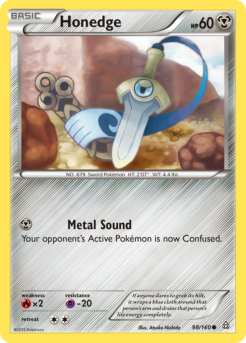
Primal Clash
If anyone dares to grab its hilt, it wraps a blue cloth around that person's arm and drains that person's life energy completely.
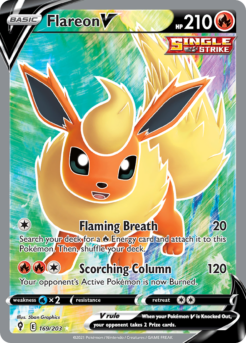
Evolving Skies
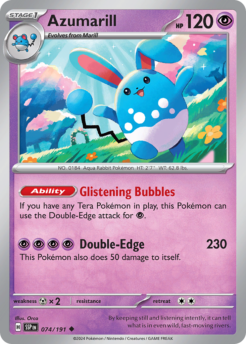
Search your deck for a Fire Energy card and attach it to this Pokémon. Then, shuffle your deck.
Darkness Ablaze
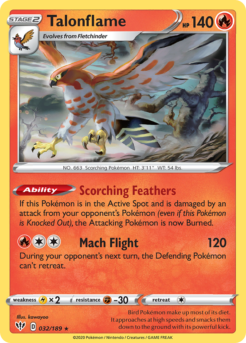
Bird Pokémon make up most of its diet. It approaches at high speeds and smacks them down to the ground with its powerful kick.
Related products
Sword & Shield
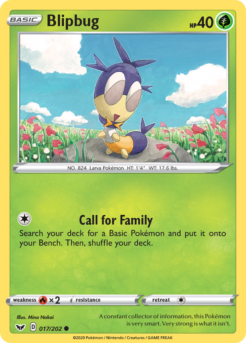
A constant collector of information, this Pokémon is very smart. Very strong is what it isn't.
Sword & Shield
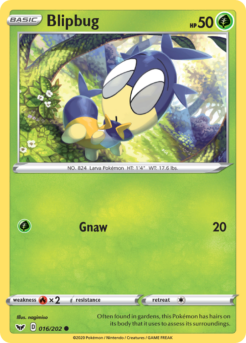
Often found in gardens, this Pokémon has hairs on its body that it uses to assess its surroundings.
Sword & Shield
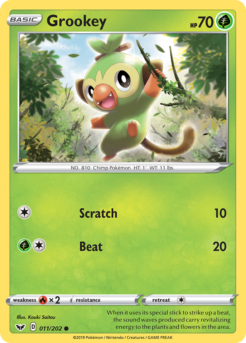
When it uses its special stick to strike up a beat, the sound waves produced carry revitalizing energy to the plants and flowers in the area.
Sword & Shield
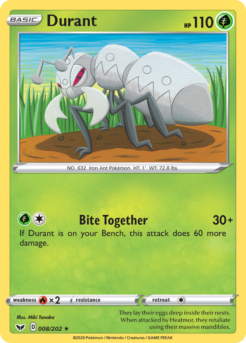
They lay their eggs deep inside their nests. When attacked by Heatmor, they retaliate using their massive mandibles.
Sword & Shield
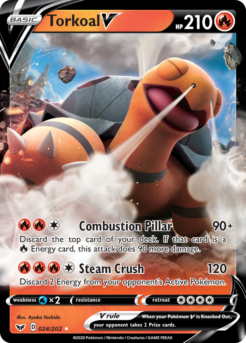
Discard the top card of your deck. If that card is a Fire Energy card, this attack does 90 more damage.
Sword & Shield
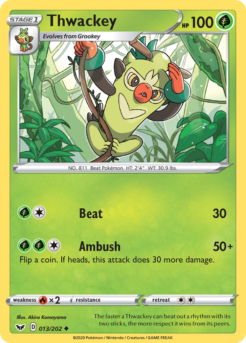
The faster a Thwackey can beat out a rhythm with its two sticks, the more respect it wins from its peers.

Sword & Shield
Search your deck for up to 2 Pokémon, reveal them, and put them into your hand. Then, shuffle your deck.
Sword & Shield
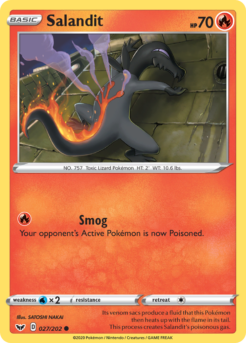
Its venom sacs produce a fluid that this Pokémon then heats up with the flame in its tail. This process creates Salandit's poisonous gas.