



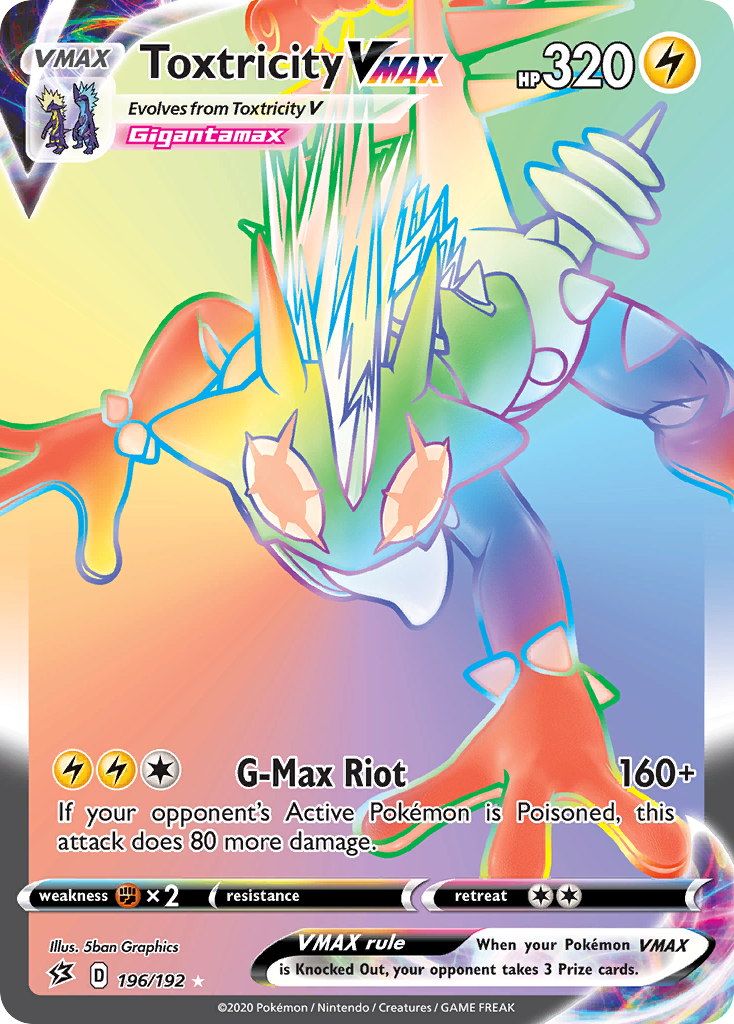

If your opponent’s Active Pokémon is Poisoned, this attack does 80 more damage.
| Supertype | Pokémon |
|---|---|
| Subtype | VMAX |
| HP | 320 |
| Types | Lightning |
| Attack | G-Max Riot |
| Attack cost | Lightning |
| Artist | 5ban Graphics |
| Rarity | Rare Rainbow |
| Pokédex | 849 |
| Evolves from | Toxtricity V |
Vendor Information
- Store Name: DutchGem
- Vendor: DutchGem
-
Address:
gekkestraat
179
2345GT Utrecht
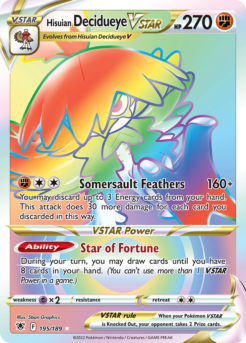
Astral Radiance
You may discard up to 3 Energy cards from your hand. This attack does 30 more damage for each card you discarded in this way.
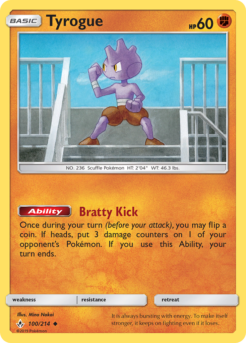
Sun & Moon
It is always bursting with energy. To make itself stronger, it keeps on fighting even if it loses.
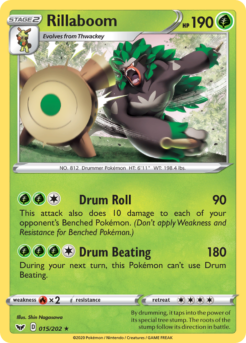
Sword & Shield
By drumming, it taps into the power of its special tree stump. The roots of the stump follow its direction in battle.
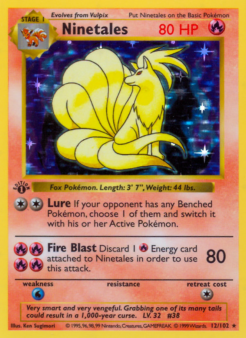
Base
Very smart and very vengeful. Grabbing one of its many tails could result in a 1,000-year curse.
Paradox Rift
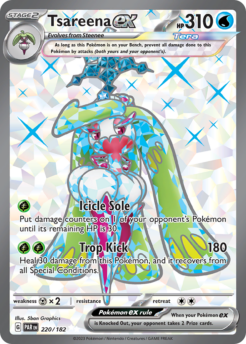
Put damage counters on 1 of your opponent’s Pokémon until its remaining HP is 30.
Related products
Sword & Shield
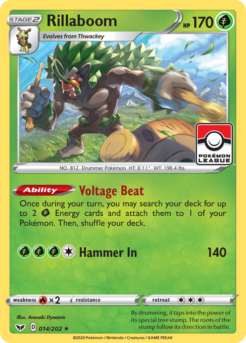
By drumming, it taps into the power of its special tree stump. The roots of the stump follow its direction in battle.
Sword & Shield
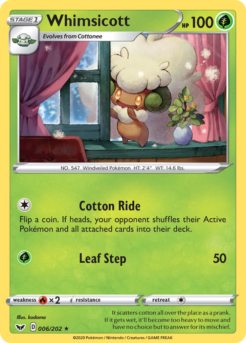
It scatters cotton all over the place as a prank. If it gets wet, it'll become too heavy to move and have no choice but to answer for its mischief.
Sword & Shield
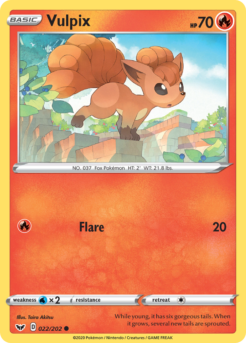
While young, it has six gorgeous tails. When it grows, several new tails are sprouted.
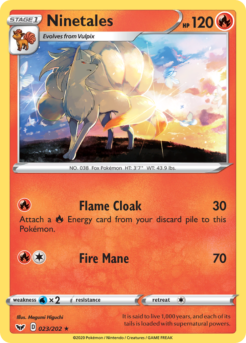
Sword & Shield
It is said to live 1,000 years, and each of its tails is loaded with supernatural powers.
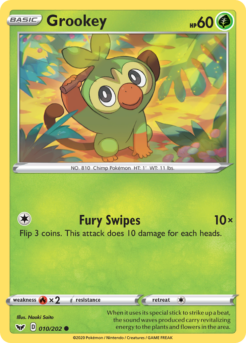
Sword & Shield
When it uses its special stick to strike up a beat, the sound waves produced carry revitalizing energy to the plants and flowers in the area.
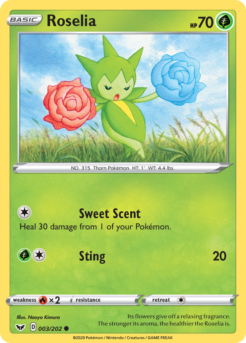
Sword & Shield
Its flowers give off a relaxing fragrance. The stronger its aroma, the healthier the Roselia is.
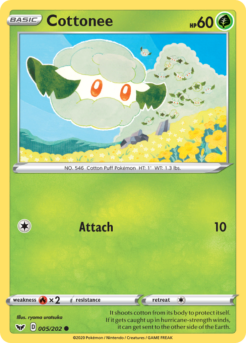
Sword & Shield
It shoots cotton from its body to protect itself. If it gets caught up in hurricane-strength winds, it can get sent to the other side of the Earth.
Sword & Shield
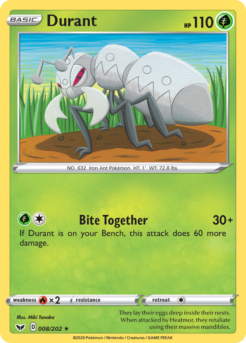
They lay their eggs deep inside their nests. When attacked by Heatmor, they retaliate using their massive mandibles.