



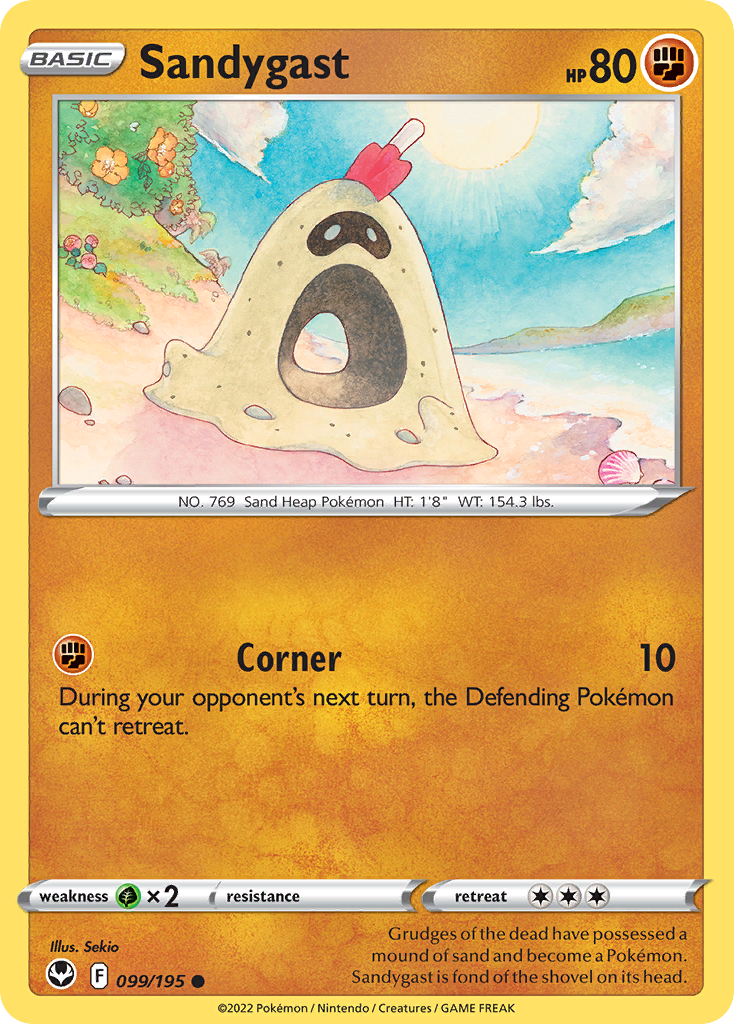
Sandygast
Grudges of the dead have possessed a mound of sand and become a Pokémon. Sandygast is fond of the shovel on its head.
During your opponent’s next turn, the Defending Pokémon can’t retreat.
| Supertype | Pokémon |
|---|---|
| Subtype | Basic |
| HP | 80 |
| Types | Fighting |
| Attack | Corner |
| Attack cost | Fighting |
| Artist | Sekio |
| Rarity | Common |
| Pokédex | 769 |
| Evolves to | Palossand |
Vendor Information
- Store Name: DutchGem
- Vendor: DutchGem
-
Address:
gekkestraat
179
2345GT Utrecht
Base
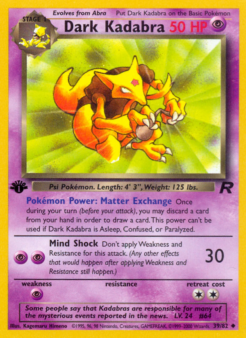
Some people say that Kadabras are responsible for many of the mysterious events reported in the news.
Brilliant Stars
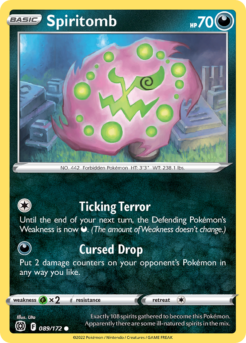
Exactly 108 spirits gathered to become this Pokémon. Apparently there are some ill-natured spirits in the mix.
Lost Thunder
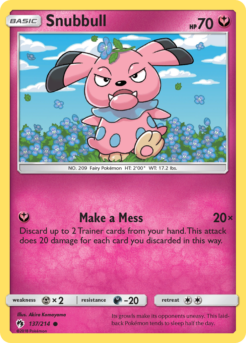
Its growls make its opponents uneasy. This laid-back Pokémon tends to sleep half the day.
Obsidian Flames
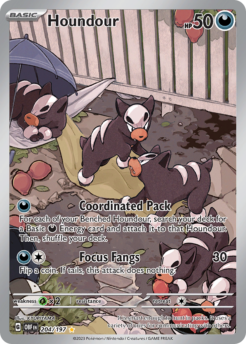
It is smart enough to hunt in packs. It uses a variety of cries for communicating with others.
Fates Collide
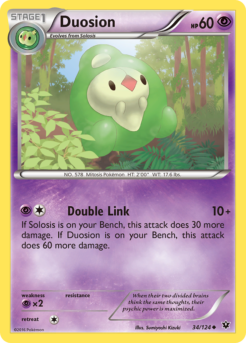
When their two divided brains think the same thoughts, their psychic power is maximized.
Related products
Sword & Shield
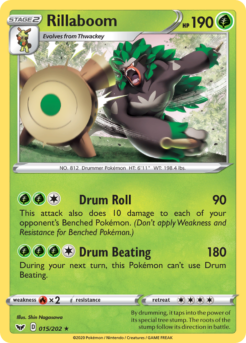
By drumming, it taps into the power of its special tree stump. The roots of the stump follow its direction in battle.
Sword & Shield
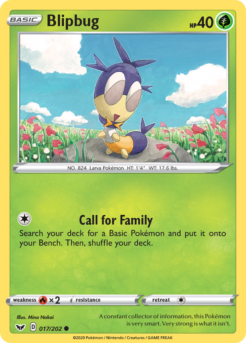
A constant collector of information, this Pokémon is very smart. Very strong is what it isn't.
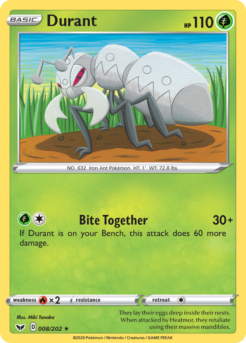
Sword & Shield
They lay their eggs deep inside their nests. When attacked by Heatmor, they retaliate using their massive mandibles.
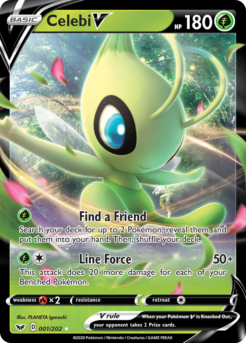
Sword & Shield
Search your deck for up to 2 Pokémon, reveal them, and put them into your hand. Then, shuffle your deck.
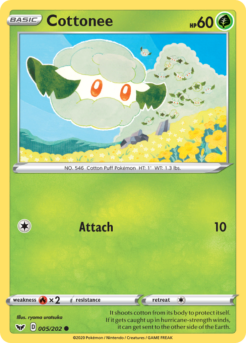
Sword & Shield
It shoots cotton from its body to protect itself. If it gets caught up in hurricane-strength winds, it can get sent to the other side of the Earth.
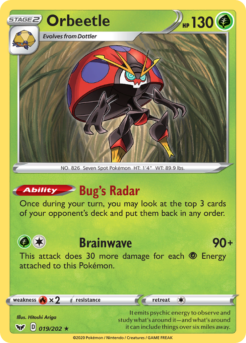
Sword & Shield
It emits psychic energy to observe and study what's around it—and what's around it can include things over six miles away.
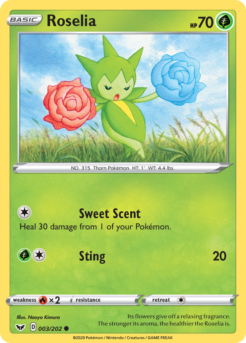
Sword & Shield
Its flowers give off a relaxing fragrance. The stronger its aroma, the healthier the Roselia is.
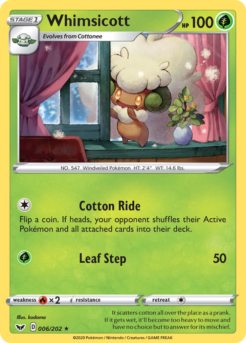
Sword & Shield
It scatters cotton all over the place as a prank. If it gets wet, it'll become too heavy to move and have no choice but to answer for its mischief.