



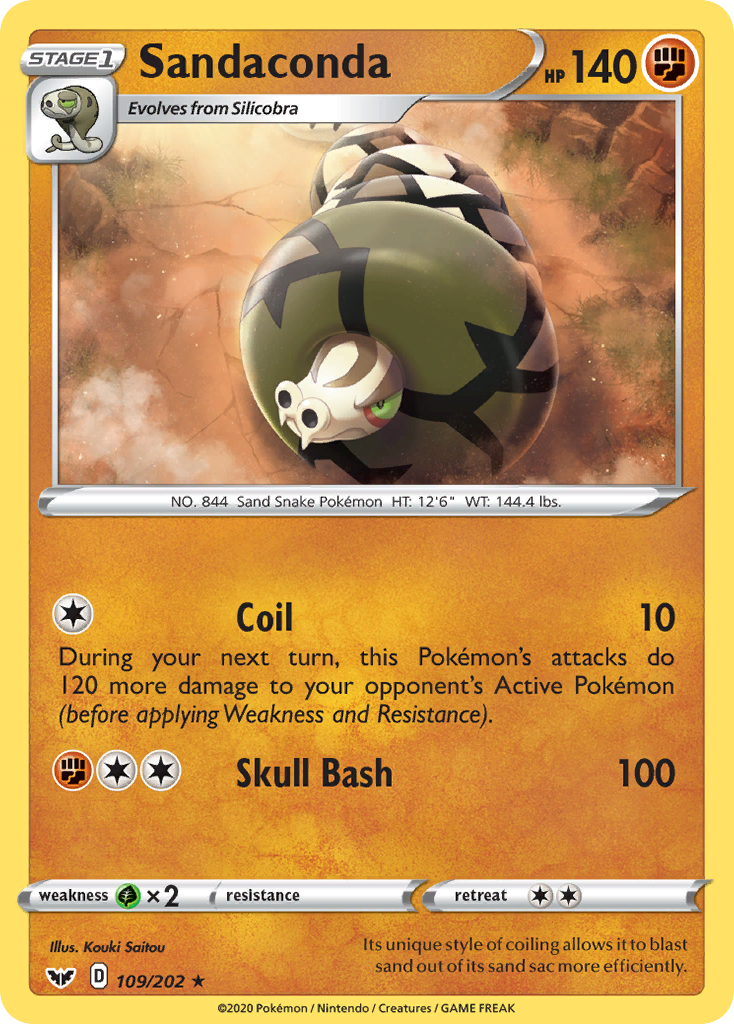
Sandaconda
Its unique style of coiling allows it to blast sand out of its sand sac more efficiently.
During your next turn, this Pokémon’s attacks do 120 more damage to your opponent’s Active Pokémon (before applying Weakness and Resistance).
| Supertype | Pokémon |
|---|---|
| Subtype | Stage 1 |
| HP | 140 |
| Types | Fighting |
| Attack | Coil |
| Attack cost | Colorless |
| Artist | Kouki Saitou |
| Rarity | Rare |
| Pokédex | 844 |
| Evolves from | Silicobra |
Vendor Information
- Store Name: DutchGem
- Vendor: DutchGem
-
Address:
gekkestraat
179
2345GT Utrecht
Scarlet & Violet
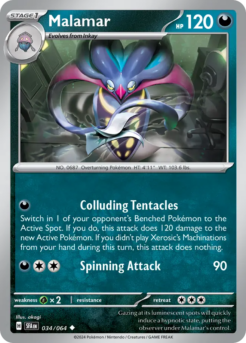
Switch in 1 of your opponent’s Benched Pokémon to the Active Spot. If you do, this attack does 120 damage to the new Active Pokémon. If you didn’t play Xerosic’s Machinations from your hand during this turn, this attack does nothing.
Cosmic Eclipse
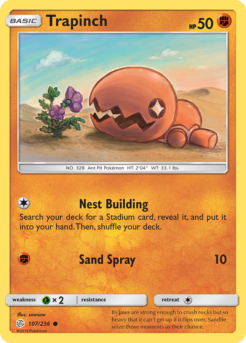
Its jaws are strong enough to crush rocks but so heavy that it can't get up if it flips over. Sandile seize those moments as their chance.

Paradox Rift
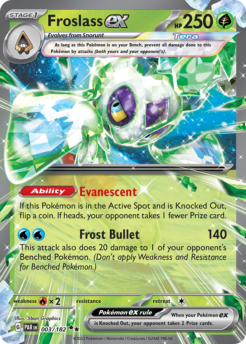
This attack also does 20 damage to 1 of your opponent’s Benched Pokémon. (Don’t apply Weakness and Resistance for Benched Pokémon.)
Related products
Sword & Shield
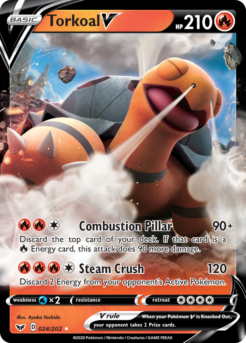
Discard the top card of your deck. If that card is a Fire Energy card, this attack does 90 more damage.
Sword & Shield
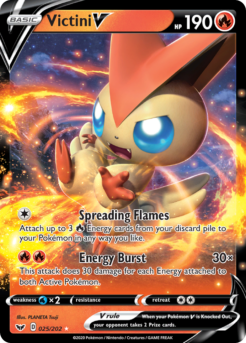
Attach up to 3 Fire Energy cards from your discard pile to your Pokémon in any way you like.

Sword & Shield
Search your deck for up to 2 Pokémon, reveal them, and put them into your hand. Then, shuffle your deck.
Sword & Shield
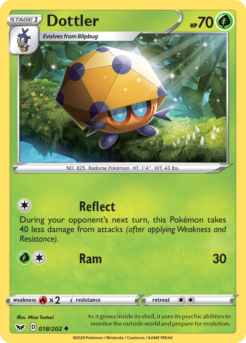
As it grows inside its shell, it uses its psychic abilities to monitor the outside world and prepare for evolution.
Sword & Shield
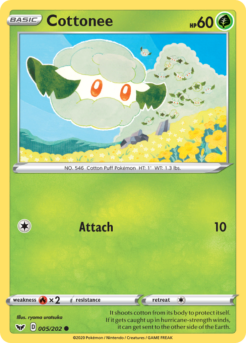
It shoots cotton from its body to protect itself. If it gets caught up in hurricane-strength winds, it can get sent to the other side of the Earth.
Sword & Shield
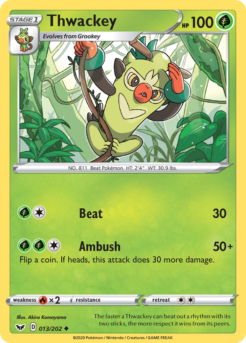
The faster a Thwackey can beat out a rhythm with its two sticks, the more respect it wins from its peers.
Sword & Shield
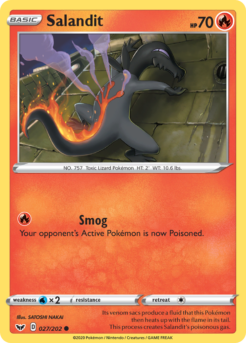
Its venom sacs produce a fluid that this Pokémon then heats up with the flame in its tail. This process creates Salandit's poisonous gas.
Sword & Shield
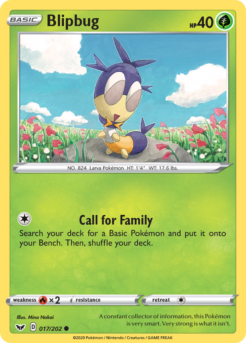
A constant collector of information, this Pokémon is very smart. Very strong is what it isn't.