



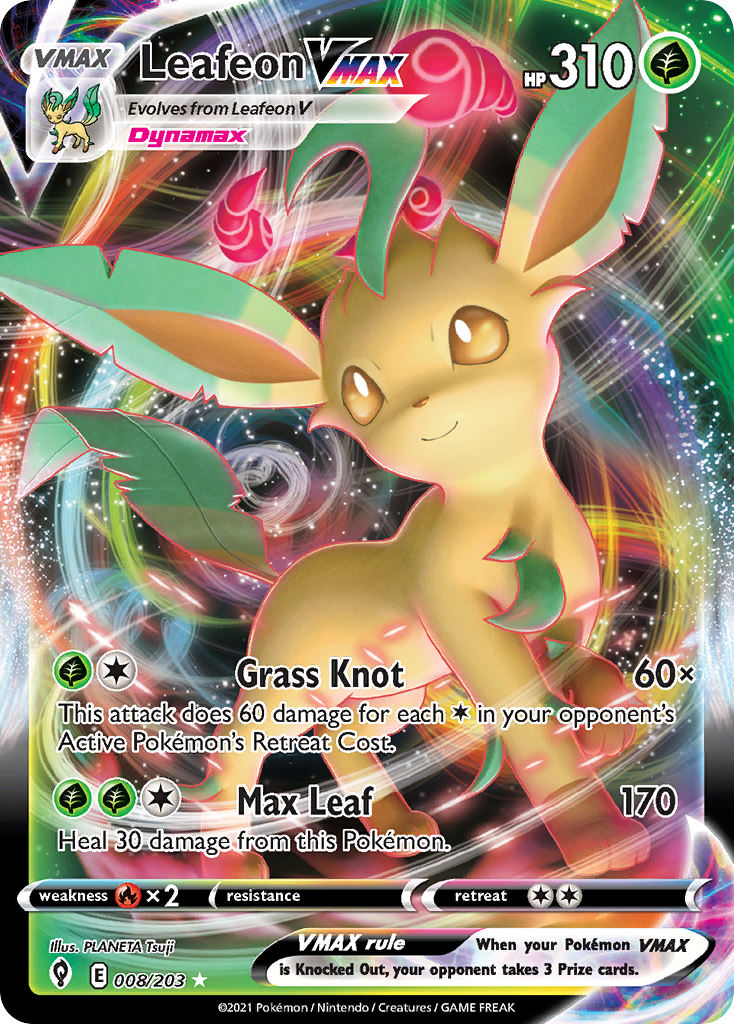

This attack does 60 damage for each Colorless in your opponent’s Active Pokémon’s Retreat Cost.
| Supertype | Pokémon |
|---|---|
| Subtype | VMAX |
| HP | 310 |
| Types | Grass |
| Attack | Grass Knot |
| Attack cost | Grass |
| Artist | PLANETA Tsuji |
| Rarity | Rare Holo VMAX |
| Pokédex | 470 |
| Evolves from | Leafeon V |
Vendor Information
- Store Name: DutchGem
- Vendor: DutchGem
-
Address:
gekkestraat
179
2345GT Utrecht
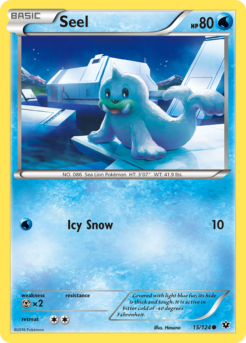
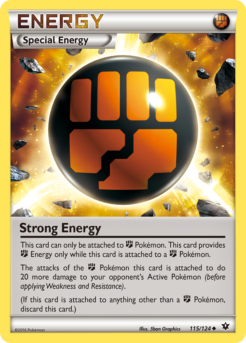
Fates Collide
Covered with light blue fur, its hide is thick and tough. It is active in bitter cold of -40 degrees Fahrenheit.
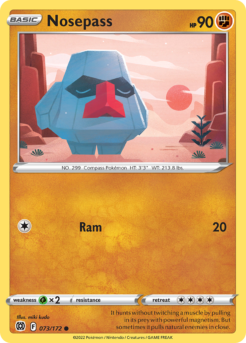
Brilliant Stars
It hunts without twitching a muscle by pulling in its prey with powerful magnetism. But sometimes it pulls natural enemies in close.
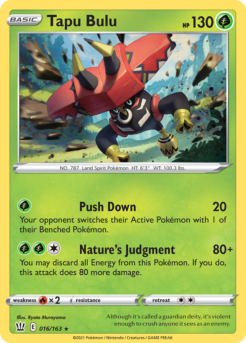
Battle Styles
Although it's called a guardian deity, it's violent enough to crush anyone it sees as an enemy.
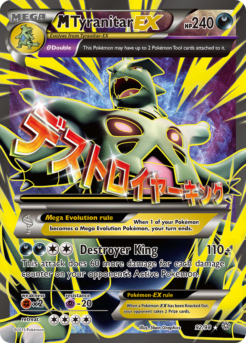
Ancient Origins
This attack does 60 more damage for each damage counter on your opponent’s Active Pokémon.
Related products
Sword & Shield
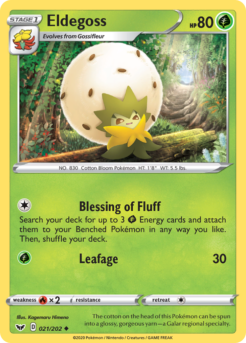
The cotton on the head of this Pokémon can be spun into a glossy, gorgeous yarn—a Galar regional specialty.
Sword & Shield
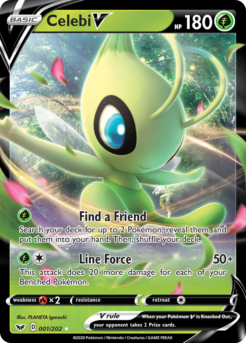
Search your deck for up to 2 Pokémon, reveal them, and put them into your hand. Then, shuffle your deck.
Sword & Shield
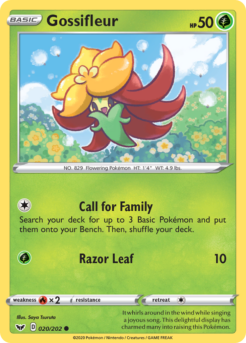
It whirls around in the wind while singing a joyous song. This delightful display has charmed many into raising this Pokémon.
Sword & Shield
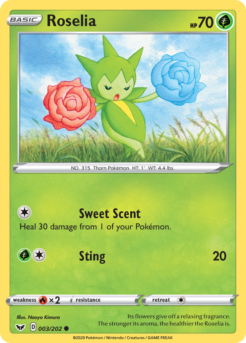
Its flowers give off a relaxing fragrance. The stronger its aroma, the healthier the Roselia is.
Sword & Shield
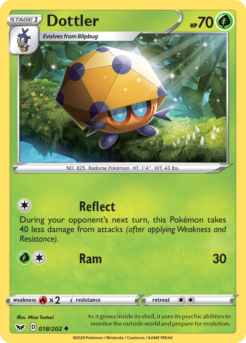
As it grows inside its shell, it uses its psychic abilities to monitor the outside world and prepare for evolution.
Sword & Shield
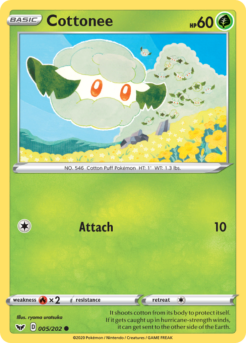
It shoots cotton from its body to protect itself. If it gets caught up in hurricane-strength winds, it can get sent to the other side of the Earth.
Sword & Shield
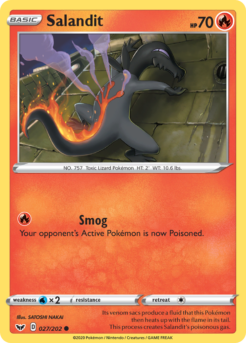
Its venom sacs produce a fluid that this Pokémon then heats up with the flame in its tail. This process creates Salandit's poisonous gas.
Sword & Shield
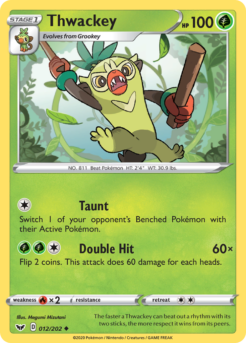
The faster a Thwackey can beat out a rhythm with its two sticks, the more respect it wins from its peers.