



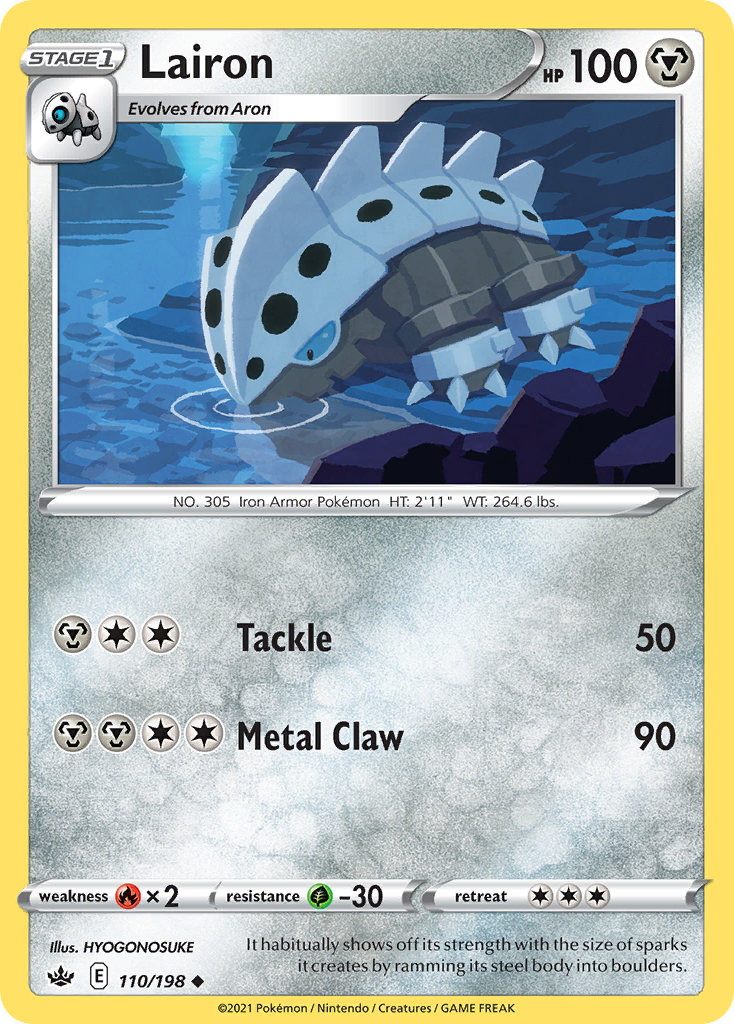
Lairon

It habitually shows off its strength with the size of sparks it creates by ramming its steel body into boulders.
| Supertype | Pokémon |
|---|---|
| Subtype | Stage 1 |
| HP | 100 |
| Types | Metal |
| Attack | Tackle |
| Attack cost | Metal |
| Artist | HYOGONOSUKE |
| Rarity | Uncommon |
| Pokédex | 305 |
| Evolves from | Aron |
| Evolves to | Aggron |
Vendor Information
- Store Name: DutchGem
- Vendor: DutchGem
-
Address:
gekkestraat
179
2345GT Utrecht

Sword & Shield
As a result of strict training, each Dewott learns different forms for using the scalchops.

Steam Siege
Discard 3 Energy attached to this Pokémon. This attack does 50 damage to 2 of your opponent’s Benched Pokémon. (Don’t apply Weakness and Resistance for Benched Pokémon.)
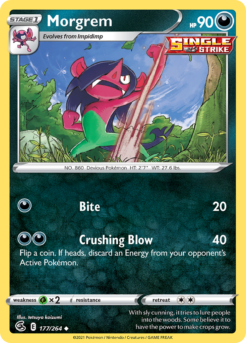
Fusion Strike
With sly cunning, it tries to lure people into the woods. Some believe it to have the power to make crops grow.
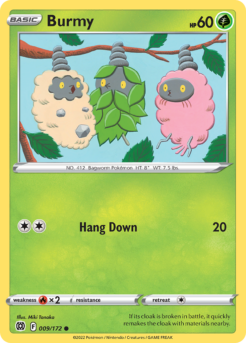
Brilliant Stars
If its cloak is broken in battle, it quickly remakes the cloak with materials nearby.
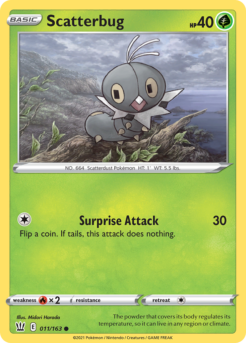
Battle Styles
The powder that covers its body regulates its temperature, so it can live in any region or climate.
Related products
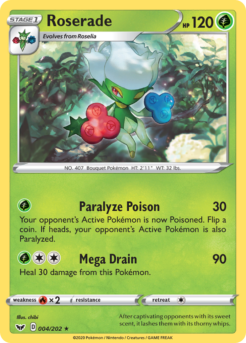
Sword & Shield
After captivating opponents with its sweet scent, it lashes them with its thorny whips.
Sword & Shield
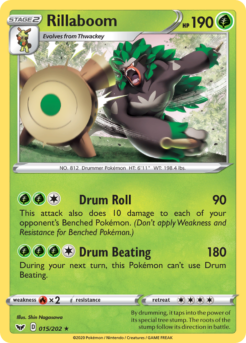
By drumming, it taps into the power of its special tree stump. The roots of the stump follow its direction in battle.
Sword & Shield
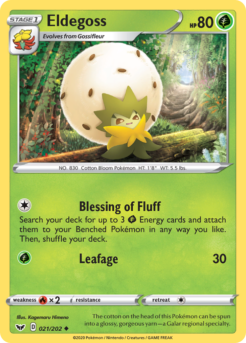
The cotton on the head of this Pokémon can be spun into a glossy, gorgeous yarn—a Galar regional specialty.
Sword & Shield
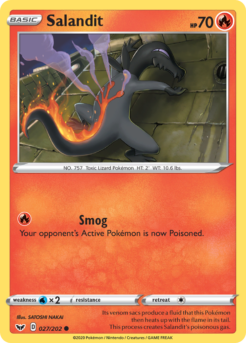
Its venom sacs produce a fluid that this Pokémon then heats up with the flame in its tail. This process creates Salandit's poisonous gas.

Sword & Shield
It whirls around in the wind while singing a joyous song. This delightful display has charmed many into raising this Pokémon.
Sword & Shield
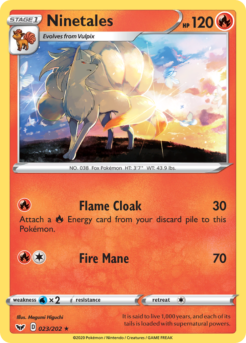
It is said to live 1,000 years, and each of its tails is loaded with supernatural powers.

Sword & Shield
As it grows inside its shell, it uses its psychic abilities to monitor the outside world and prepare for evolution.
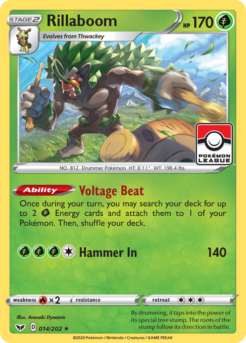
Sword & Shield
By drumming, it taps into the power of its special tree stump. The roots of the stump follow its direction in battle.