



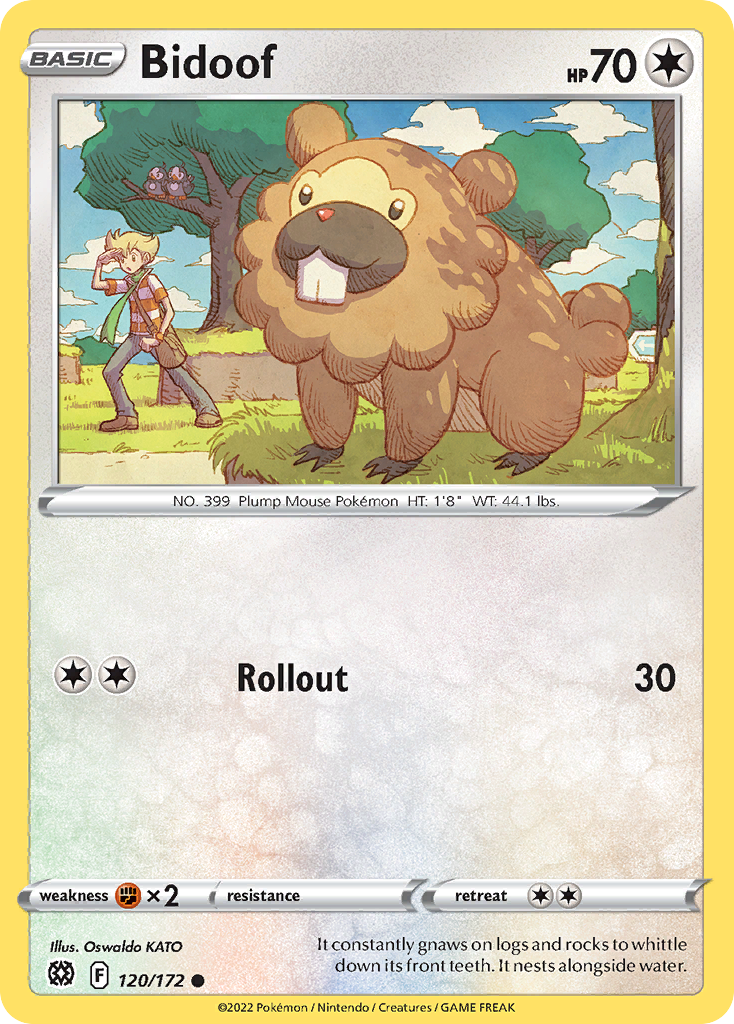
Bidoof
It constantly gnaws on logs and rocks to whittle down its front teeth. It nests alongside water.

| Supertype | Pokémon |
|---|---|
| Subtype | Basic |
| HP | 70 |
| Types | Colorless |
| Attack | Rollout |
| Attack cost | Colorless |
| Artist | Oswaldo KATO |
| Rarity | Common |
| Pokédex | 399 |
| Evolves to | Bibarel |
Vendor Information
- Store Name: DutchGem
- Vendor: DutchGem
-
Address:
gekkestraat
179
2345GT Utrecht
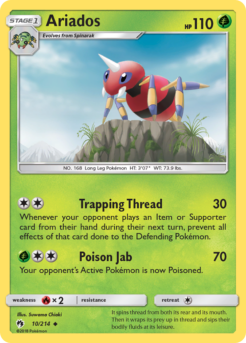
Lost Thunder
It spins thread from both its rear and its mouth. Then it wraps its prey up in thread and sips their bodily fluids at its leisure.
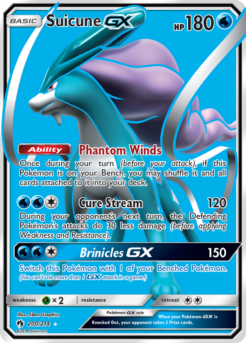
Lost Thunder
During your opponent’s next turn, the Defending Pokémon’s attacks do 30 less damage (before applying Weakness and Resistance).
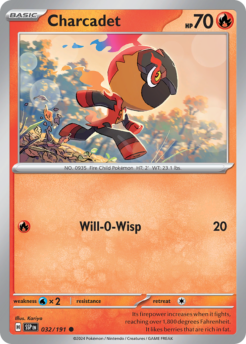
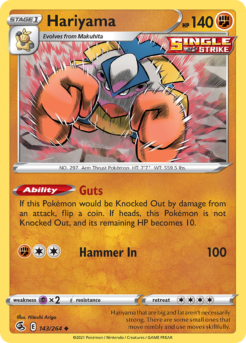
Fusion Strike
Hariyama that are big and fat aren't necessarily strong. There are some small ones that move nimbly and use moves skillfully.
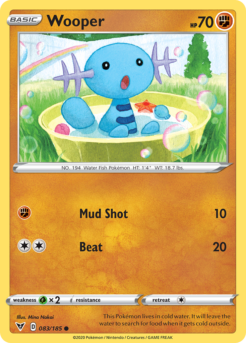
Sword & Shield
This Pokémon lives in cold water. It will leave the water to search for food when it gets cold outside.
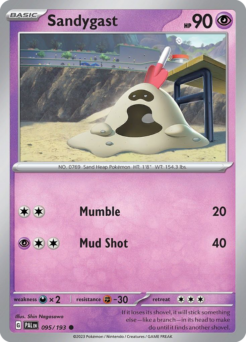
Paldea Evolved
If it loses its shovel, it will stick something else— like a branch—in its head to make do until it finds another shovel.
Related products
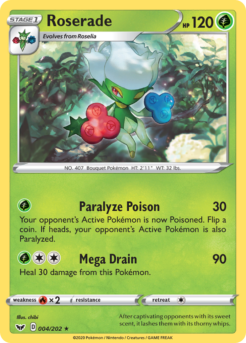
Sword & Shield
After captivating opponents with its sweet scent, it lashes them with its thorny whips.
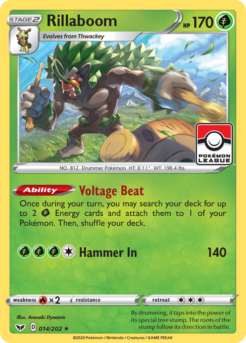
Sword & Shield
By drumming, it taps into the power of its special tree stump. The roots of the stump follow its direction in battle.
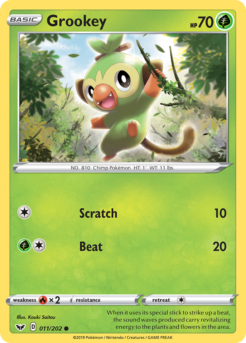
Sword & Shield
When it uses its special stick to strike up a beat, the sound waves produced carry revitalizing energy to the plants and flowers in the area.
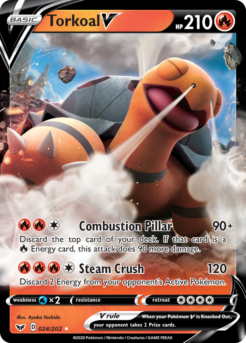
Sword & Shield
Discard the top card of your deck. If that card is a Fire Energy card, this attack does 90 more damage.
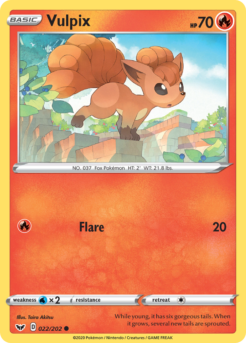
Sword & Shield
While young, it has six gorgeous tails. When it grows, several new tails are sprouted.
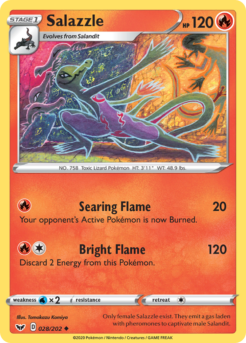
Sword & Shield
Only female Salazzle exist. They emit a gas laden with pheromones to captivate male Salandit.
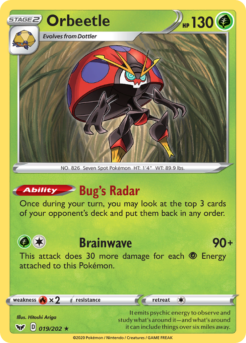
Sword & Shield
It emits psychic energy to observe and study what's around it—and what's around it can include things over six miles away.
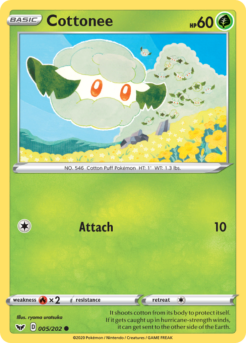
Sword & Shield
It shoots cotton from its body to protect itself. If it gets caught up in hurricane-strength winds, it can get sent to the other side of the Earth.