



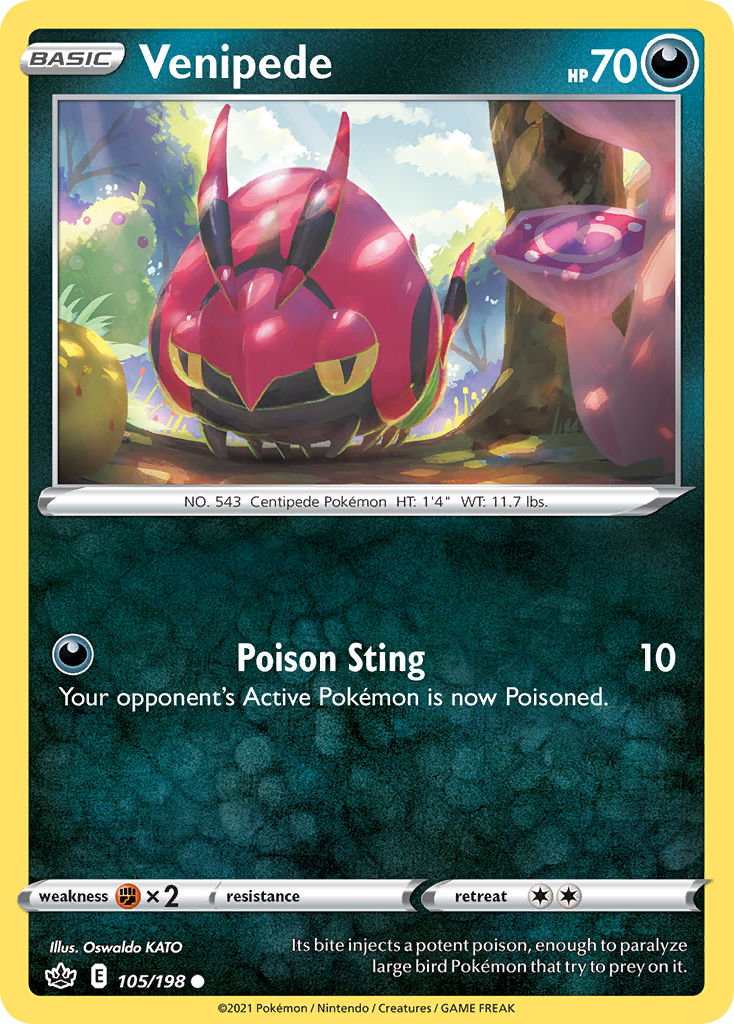
Venipede
Its bite injects a potent poison, enough to paralyze large bird Pokémon that try to prey on it.

Your opponent’s Active Pokémon is now Poisoned.
| Supertype | Pokémon |
|---|---|
| Subtype | Basic |
| HP | 70 |
| Types | Darkness |
| Attack | Poison Sting |
| Attack cost | Darkness |
| Artist | Oswaldo KATO |
| Rarity | Common |
| Pokédex | 543 |
| Evolves to | Whirlipede |
Vendor Information
- Store Name: DutchGem
- Vendor: DutchGem
-
Address:
gekkestraat
179
2345GT Utrecht
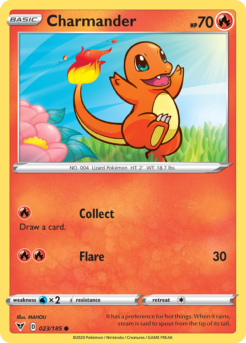
Sword & Shield
It has a preference for hot things. When it rains, steam is said to spout from the tip of its tail.
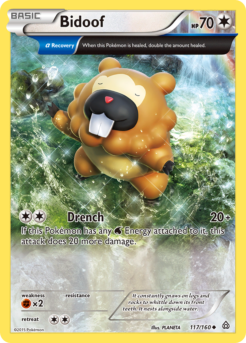
Primal Clash
It constantly gnaws on logs and rocks to whittle down its front teeth. It nests alongside water.
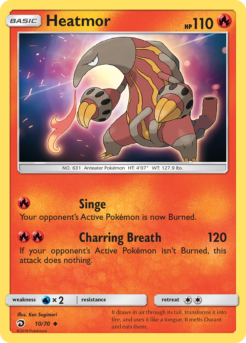
Dragon Majesty
It draws in air through its tail, transforms it into fire, and uses it like a tongue. It melts Durant and eats them.
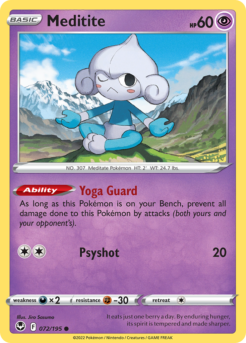
Silver Tempest
It eats just one berry a day. By enduring hunger, its spirit is tempered and made sharper.
Base
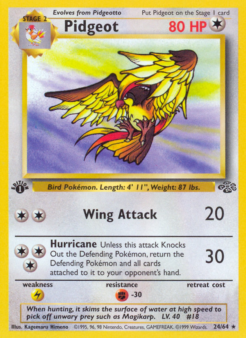
When hunting, it skims the surface of water at high speed to pick off unwary prey such as Magikarp.
Related products
Sword & Shield
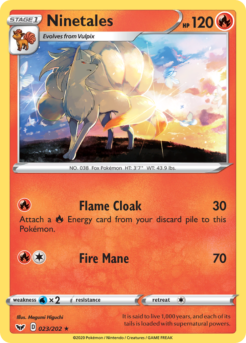
It is said to live 1,000 years, and each of its tails is loaded with supernatural powers.
Sword & Shield
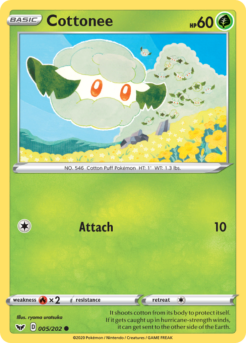
It shoots cotton from its body to protect itself. If it gets caught up in hurricane-strength winds, it can get sent to the other side of the Earth.
Sword & Shield
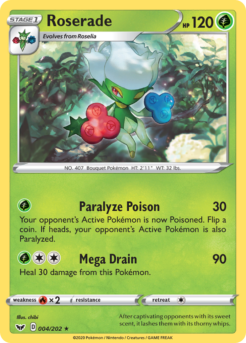
After captivating opponents with its sweet scent, it lashes them with its thorny whips.
Sword & Shield
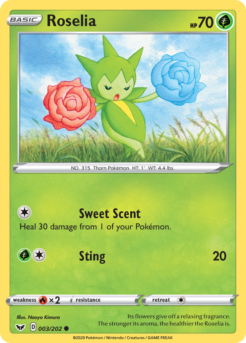
Its flowers give off a relaxing fragrance. The stronger its aroma, the healthier the Roselia is.
Sword & Shield
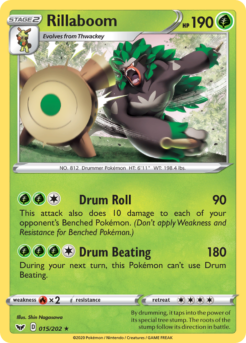
By drumming, it taps into the power of its special tree stump. The roots of the stump follow its direction in battle.
Sword & Shield
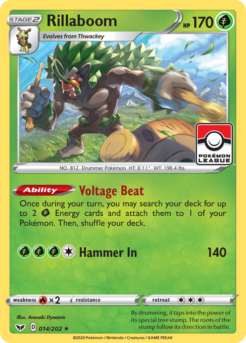
By drumming, it taps into the power of its special tree stump. The roots of the stump follow its direction in battle.
Sword & Shield
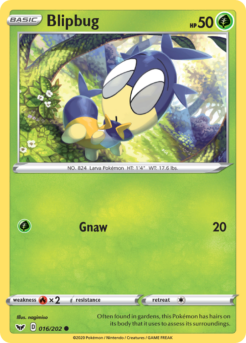
Often found in gardens, this Pokémon has hairs on its body that it uses to assess its surroundings.
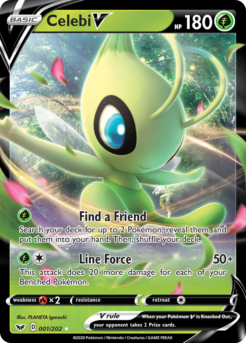
Sword & Shield
Search your deck for up to 2 Pokémon, reveal them, and put them into your hand. Then, shuffle your deck.