



Trevenant


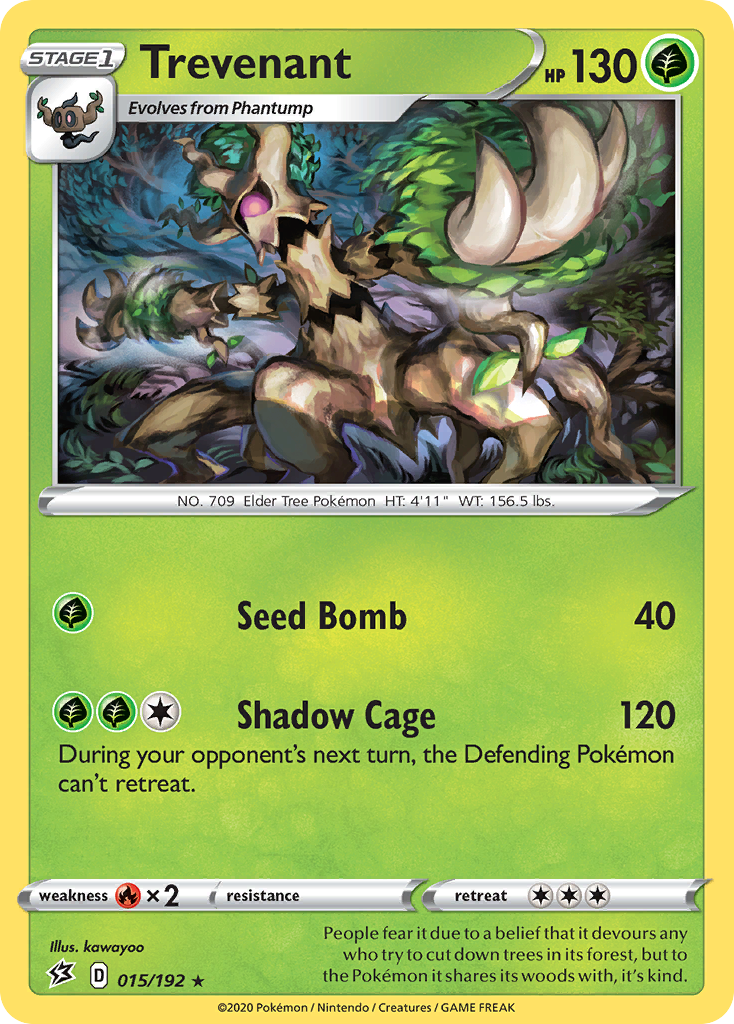
People fear it due to a belief that it devours any who try to cut down trees in its forest, but to the Pokémon it shares its woods with, it’s kind.

| Supertype | Pokémon |
|---|---|
| Subtype | Stage 1 |
| HP | 130 |
| Types | Grass |
| Attack | Seed Bomb |
| Attack cost | Grass |
| Artist | kawayoo |
| Rarity | Rare |
| Pokédex | 709 |
| Evolves from | Phantump |
Vendor Information
- Store Name: DutchGem
- Vendor: DutchGem
-
Address:
gekkestraat
179
2345GT Utrecht

Sun & Moon
When it's in trouble, its eyes moisten and begin to shine. The shining light attracts its comrades, and they stand together against their enemies.

Lost Origin
Constant polishing makes the edge of the blade on its tail extremely sharp. It's Zangoose's archrival.
Scarlet & Violet
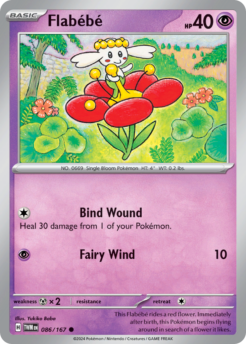
This Flabébé rides a red flower. Immediately after birth, this Pokémon begins flying around in search of a flower it likes.
BREAKpoint
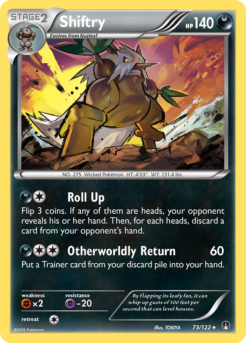
By flapping its leafy fan, it can whip up gusts of 100 feet per second that can level houses.

Brilliant Stars
It launches kicks while spinning. If it spins at high speed, it may bore its way into the ground.
Related products
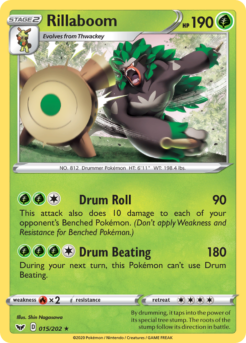
Sword & Shield
By drumming, it taps into the power of its special tree stump. The roots of the stump follow its direction in battle.
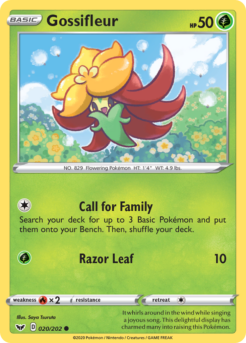
Sword & Shield
It whirls around in the wind while singing a joyous song. This delightful display has charmed many into raising this Pokémon.
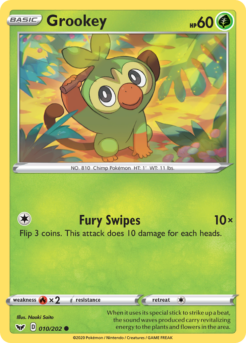
Sword & Shield
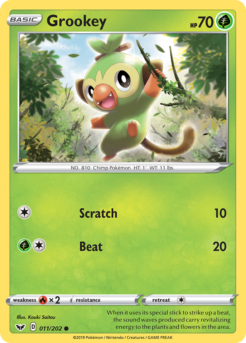
When it uses its special stick to strike up a beat, the sound waves produced carry revitalizing energy to the plants and flowers in the area.

Sword & Shield
Search your deck for up to 2 Pokémon, reveal them, and put them into your hand. Then, shuffle your deck.
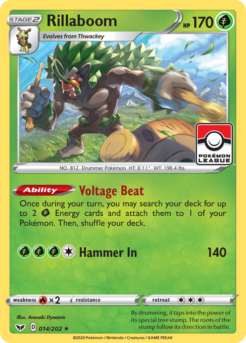
Sword & Shield
By drumming, it taps into the power of its special tree stump. The roots of the stump follow its direction in battle.
Sword & Shield
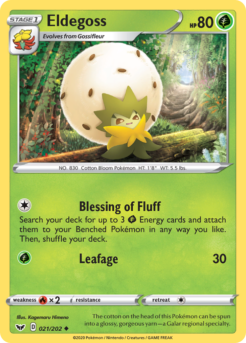
The cotton on the head of this Pokémon can be spun into a glossy, gorgeous yarn—a Galar regional specialty.
Sword & Shield
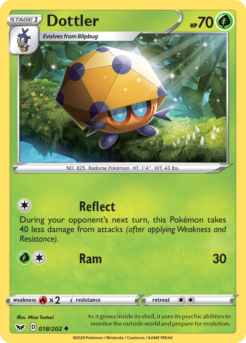
As it grows inside its shell, it uses its psychic abilities to monitor the outside world and prepare for evolution.
Sword & Shield
When it uses its special stick to strike up a beat, the sound waves produced carry revitalizing energy to the plants and flowers in the area.