



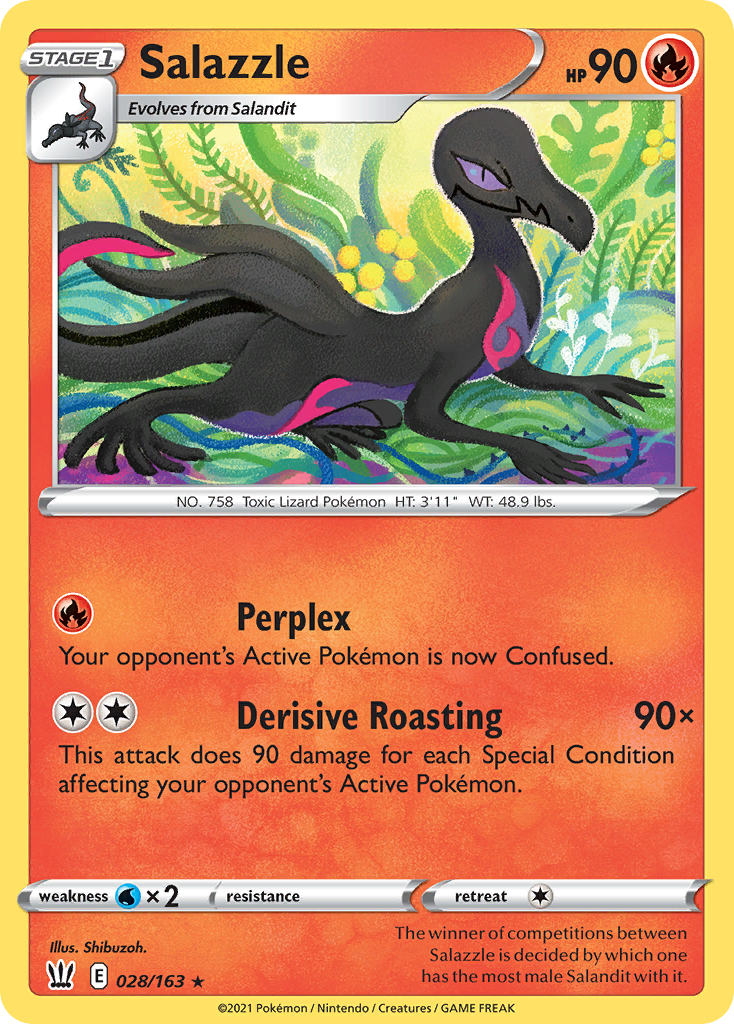
Salazzle
The winner of competitions between Salazzle is decided by which one has the most male Salandit with it.
Your opponent’s Active Pokémon is now Confused.
| Supertype | Pokémon |
|---|---|
| Subtype | Stage 1 |
| HP | 90 |
| Types | Fire |
| Attack | Perplex |
| Attack cost | Fire |
| Artist | Shibuzoh. |
| Rarity | Rare |
| Pokédex | 758 |
| Evolves from | Salandit |
Vendor Information
- Store Name: DutchGem
- Vendor: DutchGem
-
Address:
gekkestraat
179
2345GT Utrecht

Lost Origin
Search your deck for up to 2 Item cards, reveal them, and put them into your hand. Then, shuffle your deck.
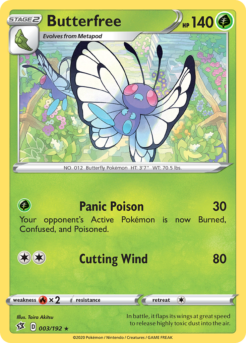
Rebel Clash
In battle, it flaps its wings at great speed to release highly toxic dust into the air.
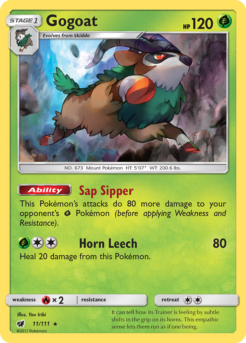
Crimson Invasion
It can tell how its trainer is feeling by subtle shifts in the grip on its horns. This empathetic sense lets them run as if one being.
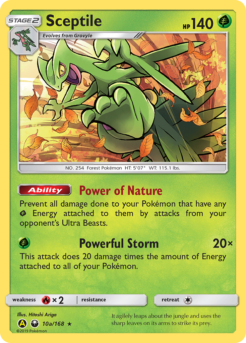
Celestial Storm
It agilely leaps about the jungle and uses the sharp leaves on its arms to strike its prey.
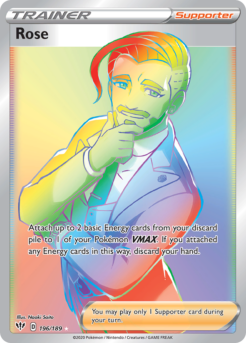
Darkness Ablaze
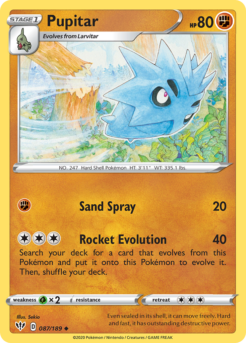
Even sealed in its shell, it can move freely. Hard and fast, it has outstanding destructive power.
Related products
Sword & Shield
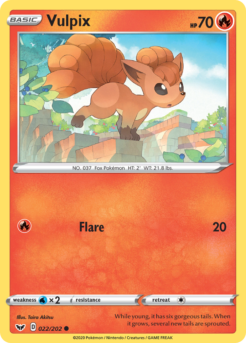
While young, it has six gorgeous tails. When it grows, several new tails are sprouted.
Sword & Shield
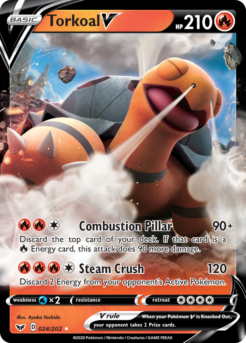
Discard the top card of your deck. If that card is a Fire Energy card, this attack does 90 more damage.
Sword & Shield
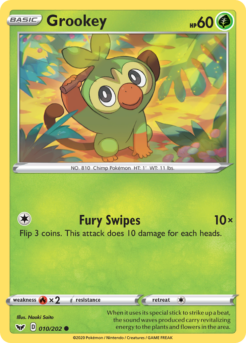
When it uses its special stick to strike up a beat, the sound waves produced carry revitalizing energy to the plants and flowers in the area.
Sword & Shield
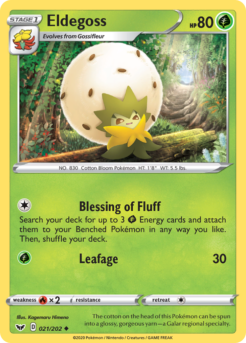
The cotton on the head of this Pokémon can be spun into a glossy, gorgeous yarn—a Galar regional specialty.
Sword & Shield
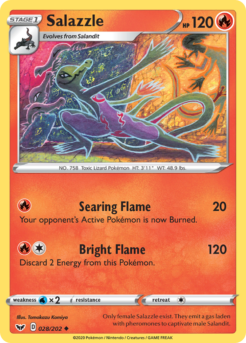
Only female Salazzle exist. They emit a gas laden with pheromones to captivate male Salandit.
Sword & Shield
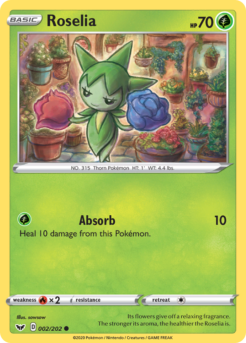
Its flowers give off a relaxing fragrance. The stronger its aroma, the healthier the Roselia is.
Sword & Shield
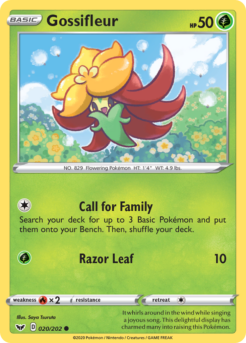
It whirls around in the wind while singing a joyous song. This delightful display has charmed many into raising this Pokémon.
Sword & Shield
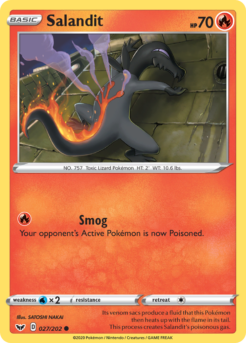
Its venom sacs produce a fluid that this Pokémon then heats up with the flame in its tail. This process creates Salandit's poisonous gas.