



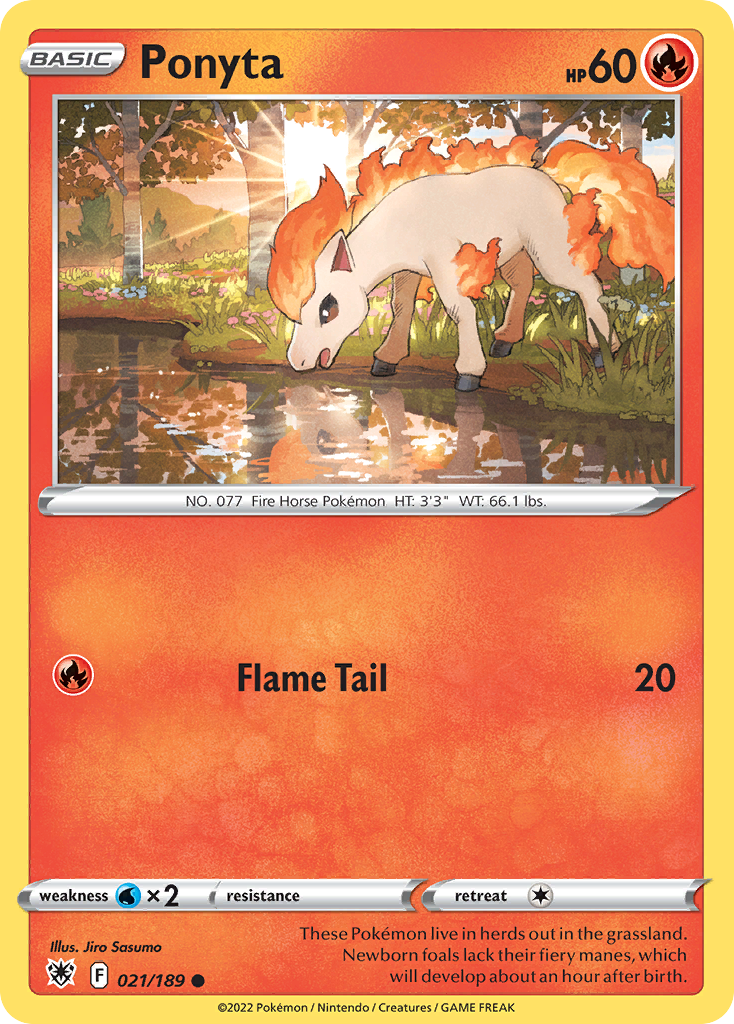
Ponyta
These Pokémon live in herds out in the grassland. Newborn foals lack their fiery manes, which will develop about an hour after birth.

| Supertype | Pokémon |
|---|---|
| Subtype | Basic |
| HP | 60 |
| Types | Fire |
| Attack | Flame Tail |
| Attack cost | Fire |
| Artist | Jiro Sasumo |
| Rarity | Common |
| Pokédex | 77 |
| Evolves to | Rapidash |
Vendor Information
- Store Name: DutchGem
- Vendor: DutchGem
-
Address:
gekkestraat
179
2345GT Utrecht
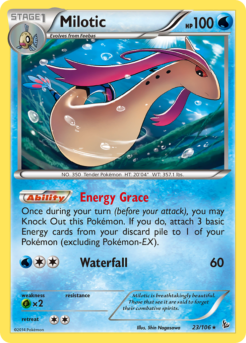
Flashfire
Milotic is breathtakingly beautiful. Those that see it are said to forget their combative spirits.
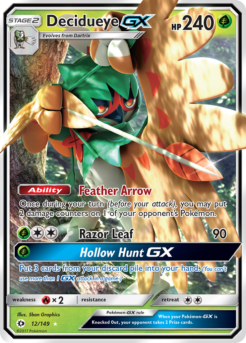
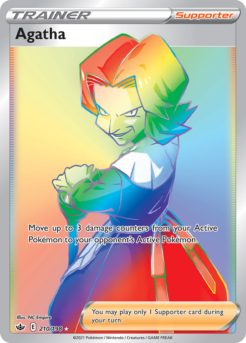
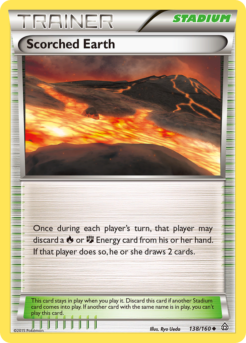
Darkness Ablaze
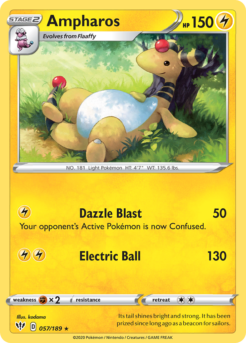
Its tail shines bright and strong. It has been prized since long ago as a beacon for sailors.
Related products
Sword & Shield
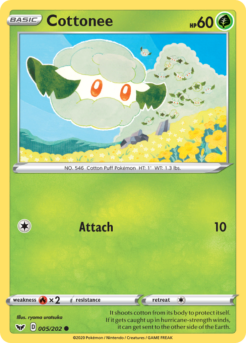
It shoots cotton from its body to protect itself. If it gets caught up in hurricane-strength winds, it can get sent to the other side of the Earth.
Sword & Shield
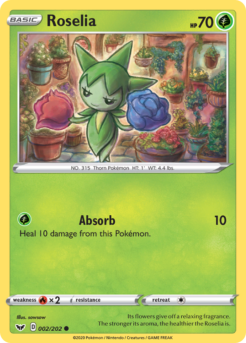
Its flowers give off a relaxing fragrance. The stronger its aroma, the healthier the Roselia is.
Sword & Shield
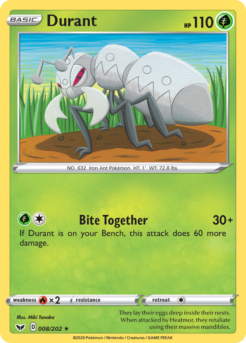
They lay their eggs deep inside their nests. When attacked by Heatmor, they retaliate using their massive mandibles.
Sword & Shield
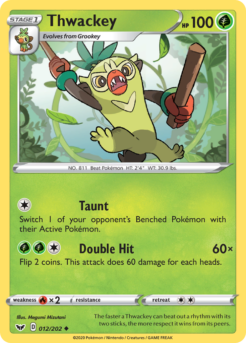
The faster a Thwackey can beat out a rhythm with its two sticks, the more respect it wins from its peers.
Sword & Shield
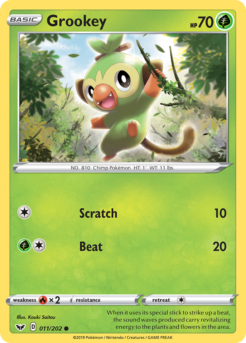
When it uses its special stick to strike up a beat, the sound waves produced carry revitalizing energy to the plants and flowers in the area.
Sword & Shield
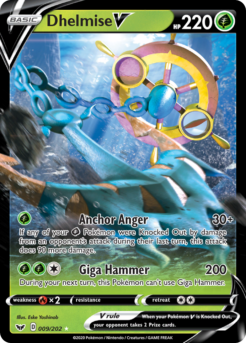
If any of your Grass Pokémon were Knocked Out by damage from an opponent’s attack during their last turn, this attack does 90 more damage.
Sword & Shield
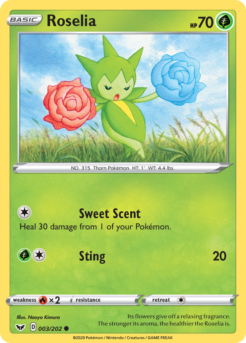
Its flowers give off a relaxing fragrance. The stronger its aroma, the healthier the Roselia is.
Sword & Shield
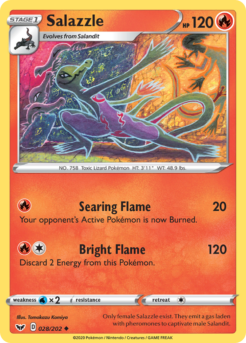
Only female Salazzle exist. They emit a gas laden with pheromones to captivate male Salandit.