



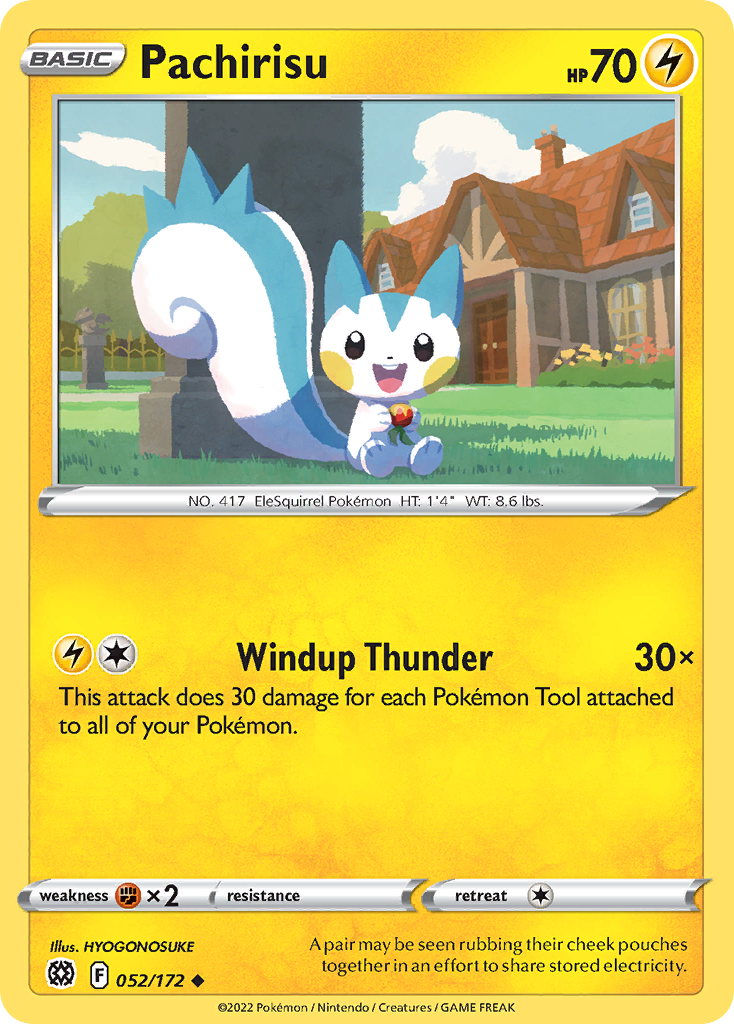
Pachirisu
A pair may be seen rubbing their cheek pouches together in an effort to share stored electricity.
This attack does 30 damage for each Pokémon Tool attached to all of your Pokémon.
| Supertype | Pokémon |
|---|---|
| Subtype | Basic |
| HP | 70 |
| Types | Lightning |
| Attack | Windup Thunder |
| Attack cost | Lightning |
| Artist | HYOGONOSUKE |
| Rarity | Uncommon |
| Pokédex | 417 |
Vendor Information
- Store Name: DutchGem
- Vendor: DutchGem
-
Address:
gekkestraat
179
2345GT Utrecht
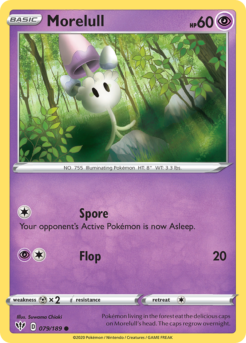
Darkness Ablaze
Pokémon living in the forest eat the delicious caps on Morelull's head. The caps regrow overnight.
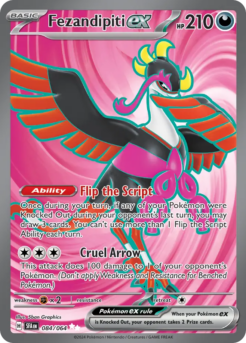
Scarlet & Violet
This attack does 100 damage to 1 of your opponent’s Pokémon. (Don’t apply Weakness and Resistance for Benched Pokémon.)
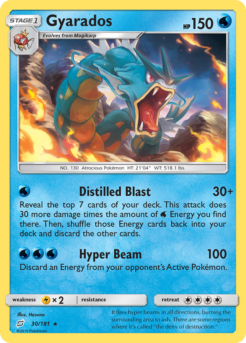
Sun & Moon
It fires hyper beams in all directions, burning the surrounding area to ash. There are some regions where it's called "the deity of destruction."
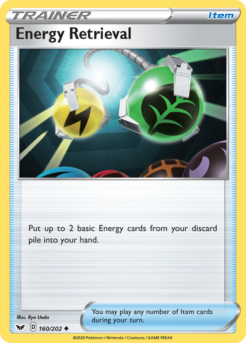
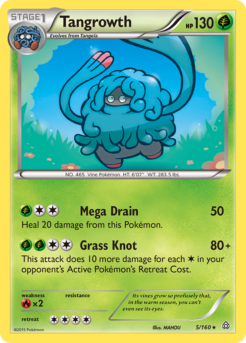
Primal Clash
Its vines grow so profusely that, in the warm season, you can't even see its eyes.
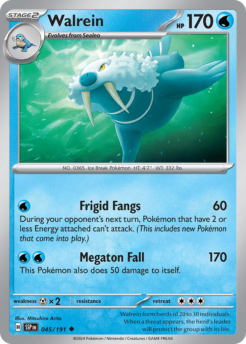
Scarlet & Violet
During your opponent’s next turn, Pokémon that have 2 or less Energy attached can’t attack. (This includes new Pokémon that come into play.)
Related products
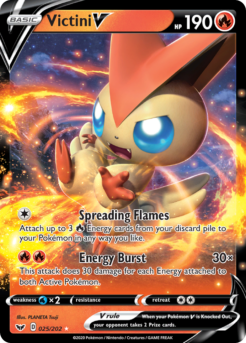
Sword & Shield
Attach up to 3 Fire Energy cards from your discard pile to your Pokémon in any way you like.
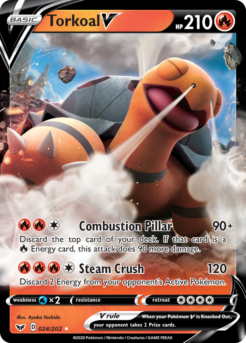
Sword & Shield
Discard the top card of your deck. If that card is a Fire Energy card, this attack does 90 more damage.
Sword & Shield
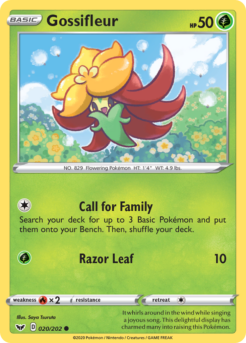
It whirls around in the wind while singing a joyous song. This delightful display has charmed many into raising this Pokémon.
Sword & Shield
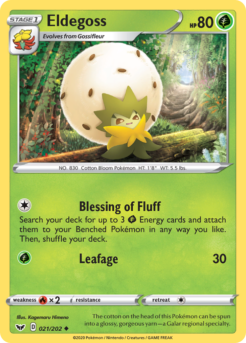
The cotton on the head of this Pokémon can be spun into a glossy, gorgeous yarn—a Galar regional specialty.
Sword & Shield
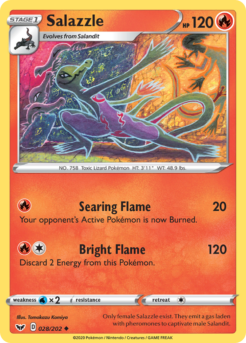
Only female Salazzle exist. They emit a gas laden with pheromones to captivate male Salandit.
Sword & Shield
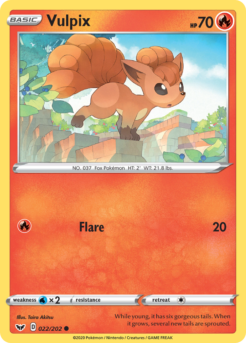
While young, it has six gorgeous tails. When it grows, several new tails are sprouted.
Sword & Shield
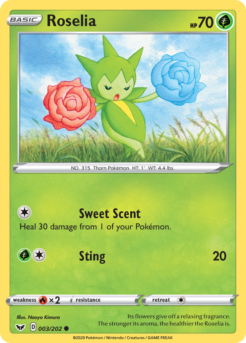
Its flowers give off a relaxing fragrance. The stronger its aroma, the healthier the Roselia is.
Sword & Shield
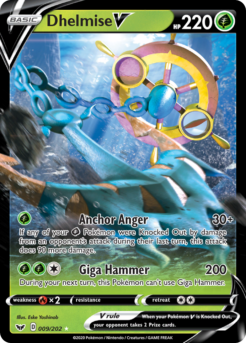
If any of your Grass Pokémon were Knocked Out by damage from an opponent’s attack during their last turn, this attack does 90 more damage.