



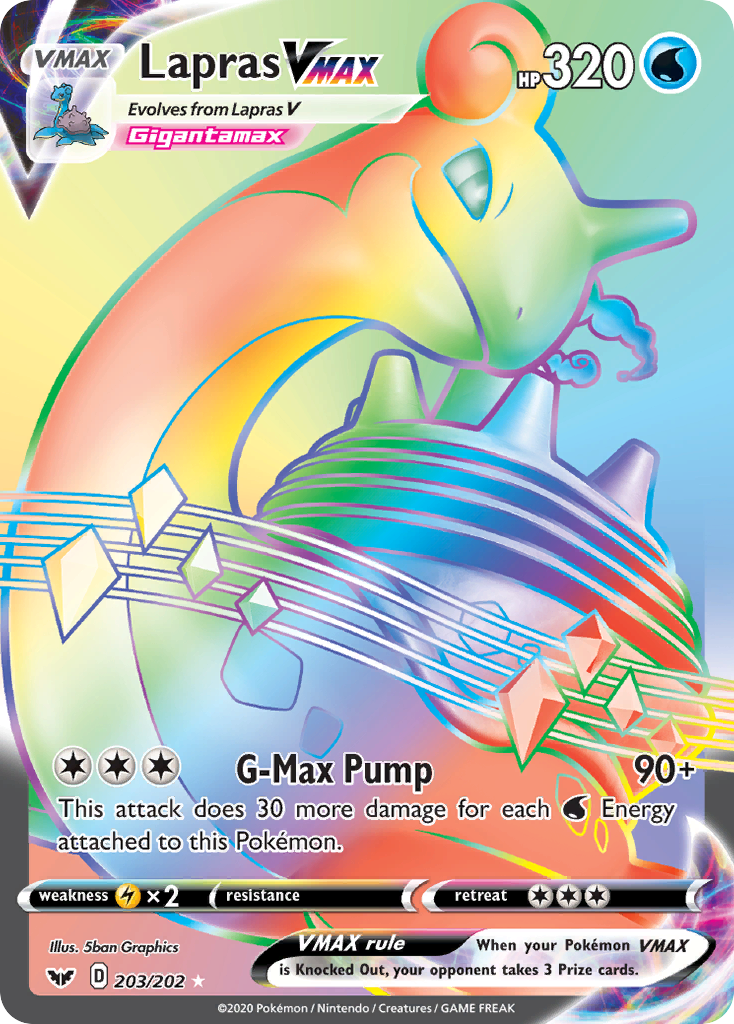


This attack does 30 more damage for each Water Energy attached to this Pokémon.
| Supertype | Pokémon |
|---|---|
| Subtype | VMAX |
| HP | 320 |
| Types | Water |
| Attack | G-Max Pump |
| Attack cost | Colorless |
| Artist | 5ban Graphics |
| Rarity | Rare Rainbow |
| Pokédex | 131 |
| Evolves from | Lapras V |
Vendor Information
- Store Name: DutchGem
- Vendor: DutchGem
-
Address:
gekkestraat
179
2345GT Utrecht
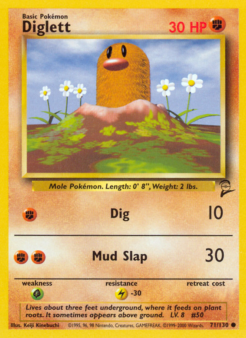
Base
Lives about three feet underground, where it feeds on plant roots. It sometimes appears above ground.
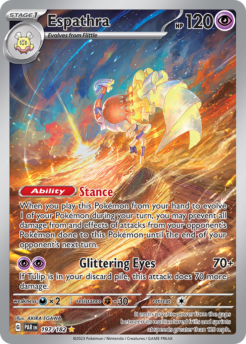
Paradox Rift
It emits psychic power from the gaps between its multicolored frills and sprints at speeds greater than 120 mph.
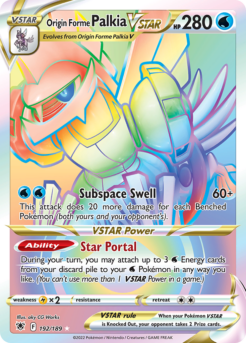
Astral Radiance
This attack does 20 more damage for each Benched Pokémon (both yours and your opponent’s).
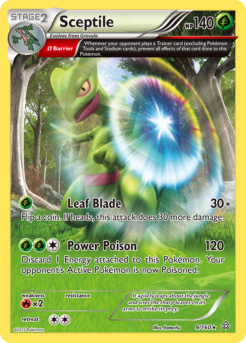
Primal Clash
It agilely leaps about the jungle and uses the sharp leaves on its arms to strike its prey.
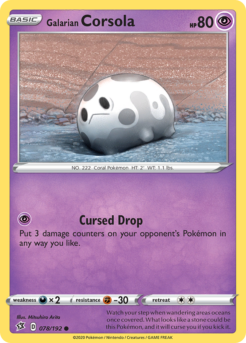
Rebel Clash
Watch your step when wandering areas oceans once covered. What looks like a stone could be this Pokémon, and it will curse you if you kick it.
Related products
Sword & Shield
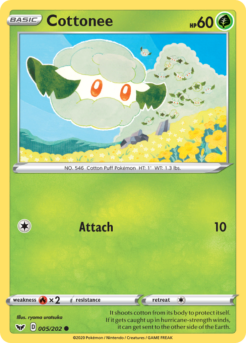
It shoots cotton from its body to protect itself. If it gets caught up in hurricane-strength winds, it can get sent to the other side of the Earth.
Sword & Shield
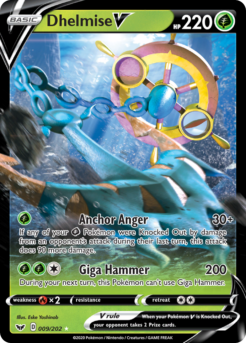
If any of your Grass Pokémon were Knocked Out by damage from an opponent’s attack during their last turn, this attack does 90 more damage.
Sword & Shield
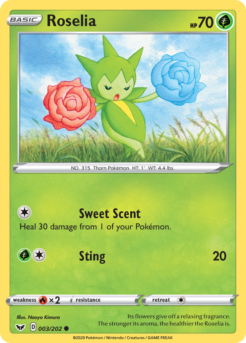
Its flowers give off a relaxing fragrance. The stronger its aroma, the healthier the Roselia is.
Sword & Shield
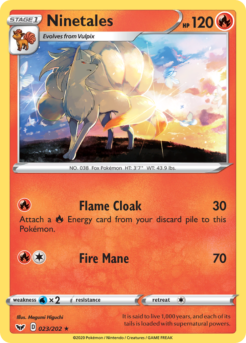
It is said to live 1,000 years, and each of its tails is loaded with supernatural powers.
Sword & Shield
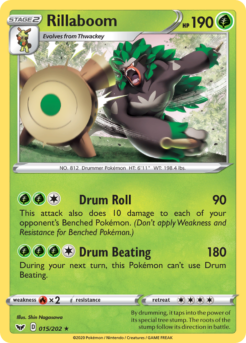
By drumming, it taps into the power of its special tree stump. The roots of the stump follow its direction in battle.
Sword & Shield
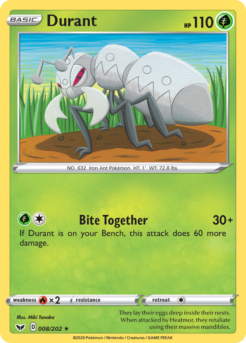
They lay their eggs deep inside their nests. When attacked by Heatmor, they retaliate using their massive mandibles.
Sword & Shield
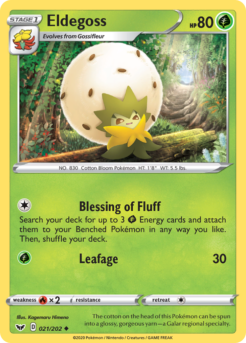
The cotton on the head of this Pokémon can be spun into a glossy, gorgeous yarn—a Galar regional specialty.
Sword & Shield
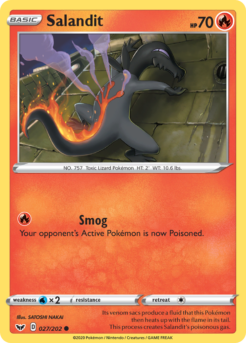
Its venom sacs produce a fluid that this Pokémon then heats up with the flame in its tail. This process creates Salandit's poisonous gas.