



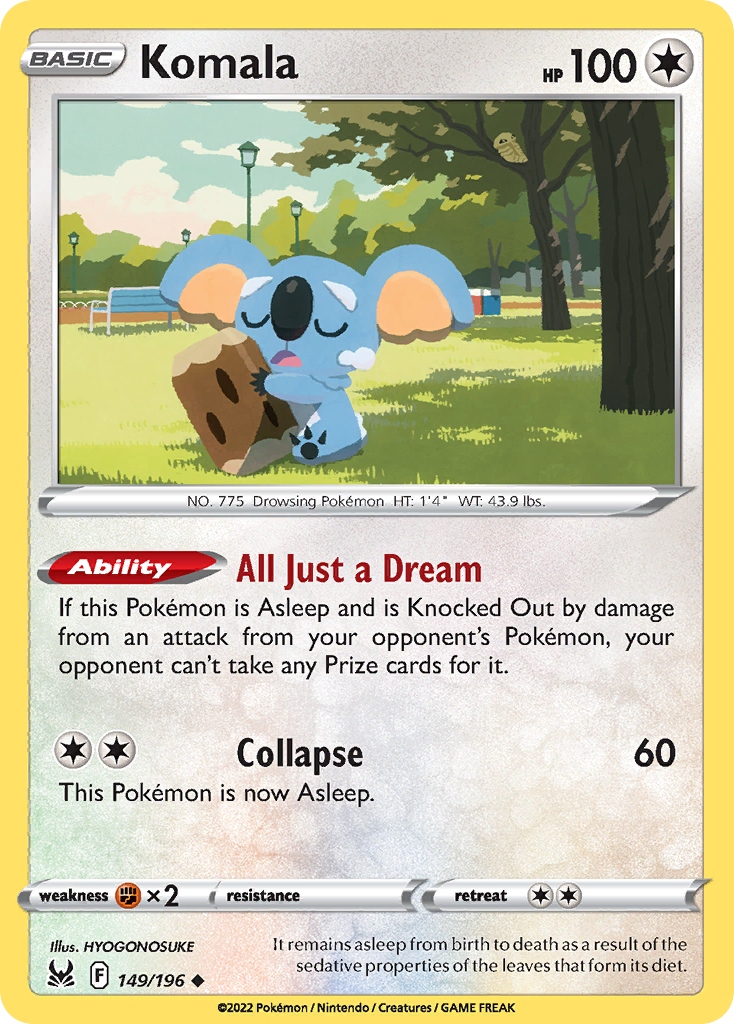
Komala
It remains asleep from birth to death as a result of the sedative properties of the leaves that form its diet.
This Pokémon is now Asleep.
| Supertype | Pokémon |
|---|---|
| Subtype | Basic |
| HP | 100 |
| Types | Colorless |
| Attack | Collapse |
| Attack cost | Colorless |
| Artist | HYOGONOSUKE |
| Rarity | Uncommon |
| Pokédex | 775 |
Vendor Information
- Store Name: DutchGem
- Vendor: DutchGem
-
Address:
gekkestraat
179
2345GT Utrecht
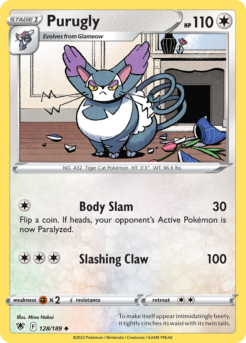
Astral Radiance
To make itself appear intimidatingly beefy, it tightly cinches its waist with its twin tails.

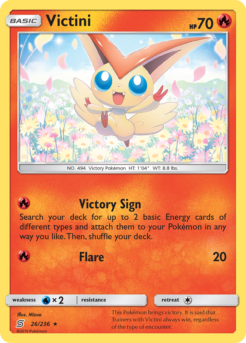
Sun & Moon
This Pokémon brings victory. It is said that Trainers with Victini always win, regardless of the type of encounter.
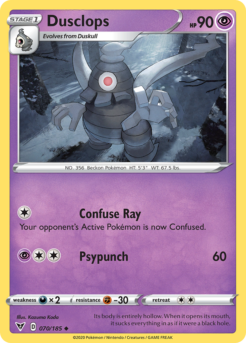
Sword & Shield
Its body is entirely hollow. When it opens its mouth, it sucks everything in as if it were a black hole.
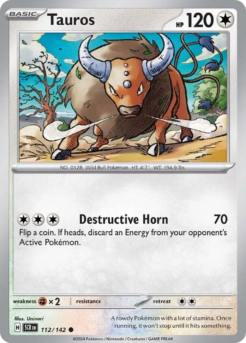
Scarlet & Violet
Flip a coin. If heads, discard an Energy from your opponent’s Active Pokémon.
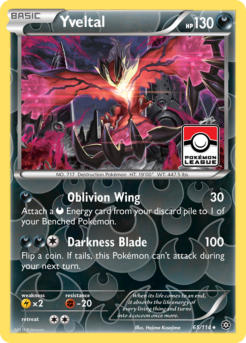
Steam Siege
When its life comes to an end, it absorbs the life energy of every living thing and turns into a cocoon once more.
Related products

Sword & Shield
Attach up to 3 Fire Energy cards from your discard pile to your Pokémon in any way you like.
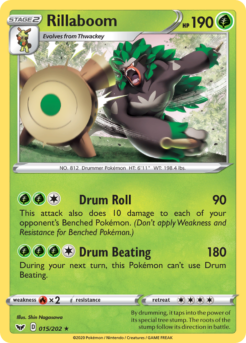
Sword & Shield
By drumming, it taps into the power of its special tree stump. The roots of the stump follow its direction in battle.
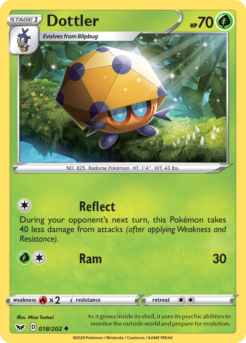
Sword & Shield
As it grows inside its shell, it uses its psychic abilities to monitor the outside world and prepare for evolution.
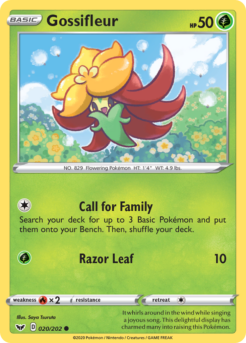
Sword & Shield
It whirls around in the wind while singing a joyous song. This delightful display has charmed many into raising this Pokémon.
Sword & Shield
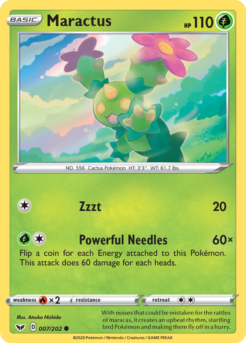
With noises that could be mistaken for the rattles of maracas, it creates an upbeat rhythm, startling bird Pokémon and making them fly off in a hurry.
Sword & Shield
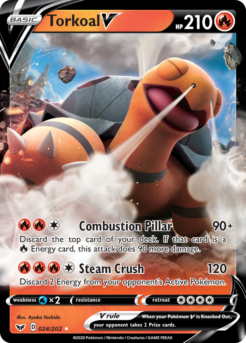
Discard the top card of your deck. If that card is a Fire Energy card, this attack does 90 more damage.
Sword & Shield
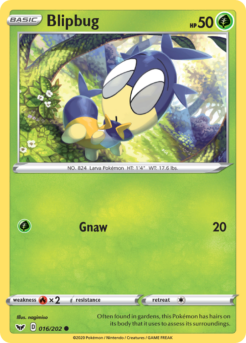
Often found in gardens, this Pokémon has hairs on its body that it uses to assess its surroundings.
Sword & Shield
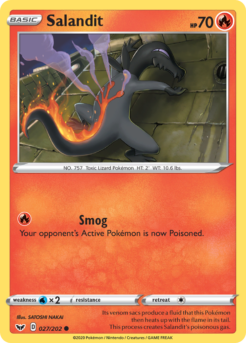
Its venom sacs produce a fluid that this Pokémon then heats up with the flame in its tail. This process creates Salandit's poisonous gas.