



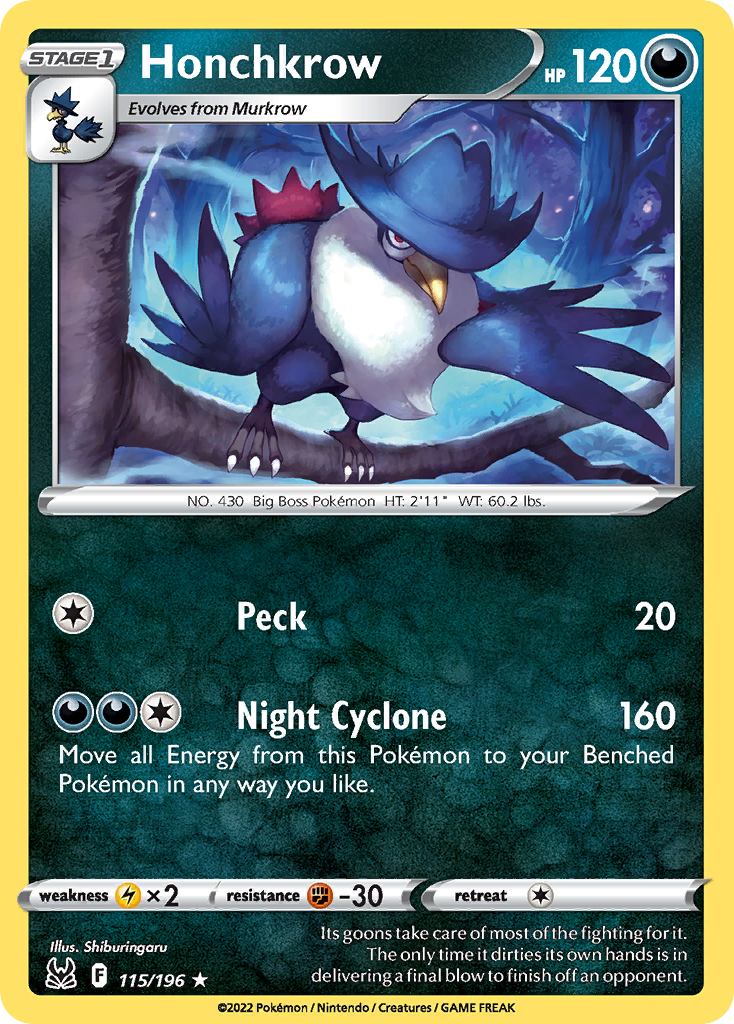
Honchkrow
Its goons take care of most of the fighting for it. The only time it dirties its own hands is in delivering a final blow to finish off an opponent.
| Supertype | Pokémon |
|---|---|
| Subtype | Stage 1 |
| HP | 120 |
| Types | Darkness |
| Attack | Peck |
| Attack cost | Colorless |
| Artist | Shiburingaru |
| Rarity | Rare |
| Pokédex | 430 |
| Evolves from | Murkrow |
Vendor Information
- Store Name: DutchGem
- Vendor: DutchGem
-
Address:
gekkestraat
179
2345GT Utrecht
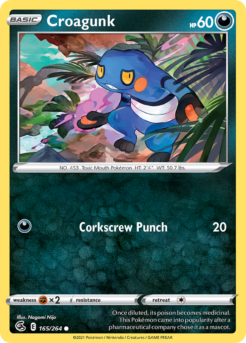
Fusion Strike
Once diluted, its poison becomes medicinal. This Pokémon came into popularity after a pharmaceutical company chose it as a mascot.
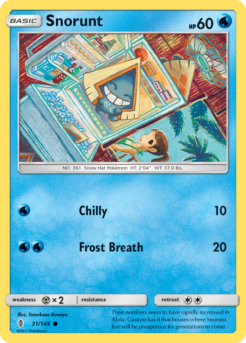
Guardians Rising
Their numbers seem to have rapidly increased in Alola. Custom has it that houses where Snorunt live will be prosperous for generations to come.
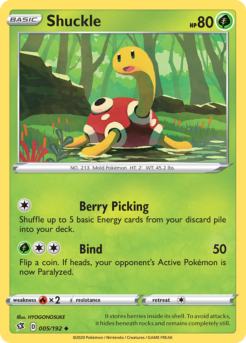
Rebel Clash
It stores berries inside its shell. To avoid attacks, it hides beneath rocks and remains completely still.
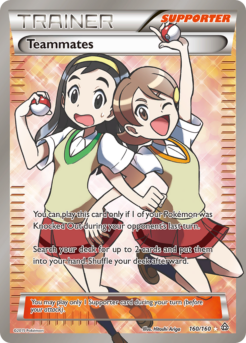
Lost Thunder
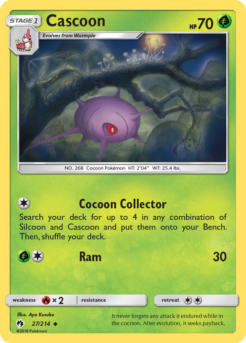
It never forgets any attack it endured while in the cocoon. After evolution, it seeks payback.
Chilling Reign
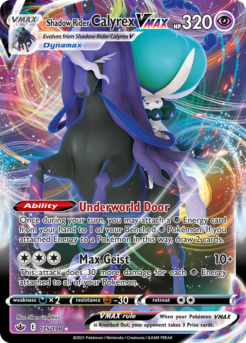
This attack does 30 more damage for each Psychic Energy attached to all of your Pokémon.
Related products
Sword & Shield
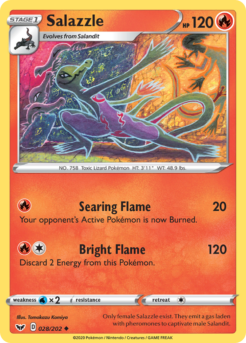
Only female Salazzle exist. They emit a gas laden with pheromones to captivate male Salandit.
Sword & Shield
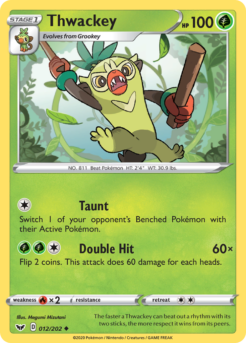
The faster a Thwackey can beat out a rhythm with its two sticks, the more respect it wins from its peers.
Sword & Shield
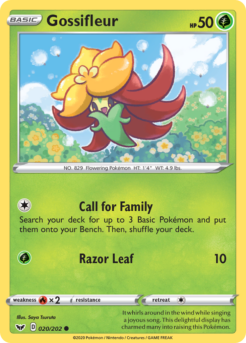
It whirls around in the wind while singing a joyous song. This delightful display has charmed many into raising this Pokémon.
Sword & Shield
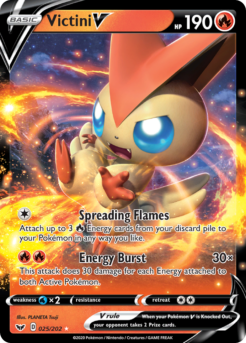
Attach up to 3 Fire Energy cards from your discard pile to your Pokémon in any way you like.
Sword & Shield
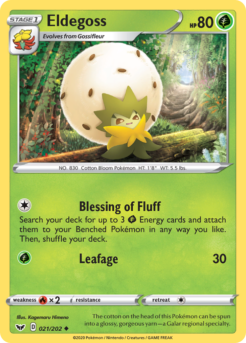
The cotton on the head of this Pokémon can be spun into a glossy, gorgeous yarn—a Galar regional specialty.
Sword & Shield
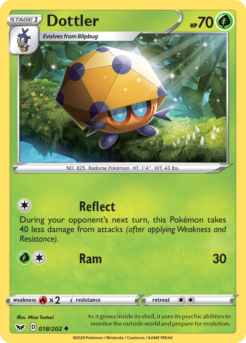
As it grows inside its shell, it uses its psychic abilities to monitor the outside world and prepare for evolution.
Sword & Shield
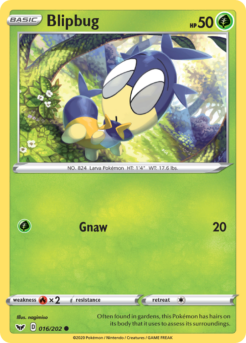
Often found in gardens, this Pokémon has hairs on its body that it uses to assess its surroundings.
Sword & Shield
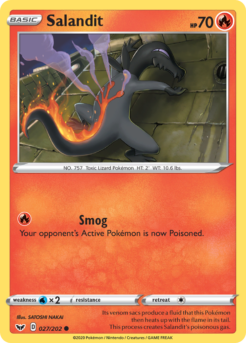
Its venom sacs produce a fluid that this Pokémon then heats up with the flame in its tail. This process creates Salandit's poisonous gas.