



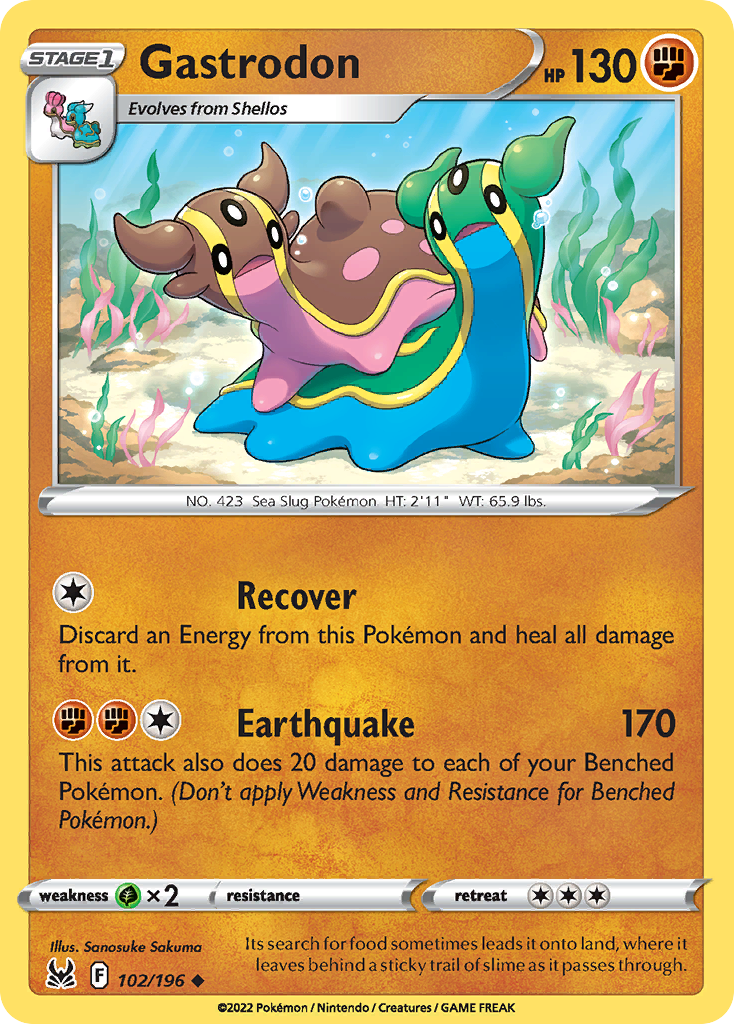
Gastrodon
Its search for food sometimes leads it onto land, where it leaves behind a sticky trail of slime as it passes through.
Discard an Energy from this Pokémon and heal all damage from it.
| Supertype | Pokémon |
|---|---|
| Subtype | Stage 1 |
| HP | 130 |
| Types | Fighting |
| Attack | Recover |
| Attack cost | Colorless |
| Artist | Sanosuke Sakuma |
| Rarity | Uncommon |
| Pokédex | 423 |
| Evolves from | Shellos |
Vendor Information
- Store Name: DutchGem
- Vendor: DutchGem
-
Address:
gekkestraat
179
2345GT Utrecht
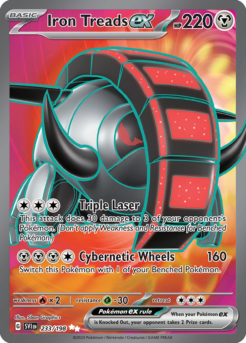
Scarlet & Violet
This attack does 30 damage to 3 of your opponent’s Pokémon. (Don’t apply Weakness and Resistance for Benched Pokémon.)
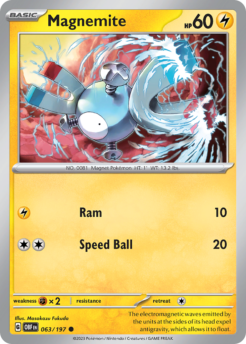
Obsidian Flames
The electromagnetic waves emitted by the units at the sides of its head expel antigravity, which allows it to float.
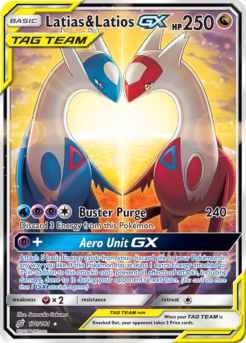
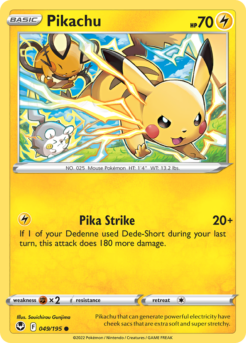
Silver Tempest
Pikachu that can generate powerful electricity have cheek sacs that are extra soft and super stretchy.
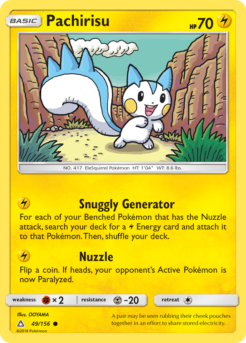
Sun & Moon
A pair may be seen rubbing their cheek pouches together in an effort to share stored electricity.
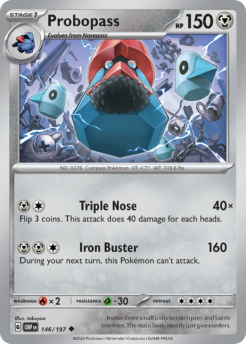
Obsidian Flames
It uses three small units to catch prey and battle enemies. The main body mostly just gives orders.
Related products
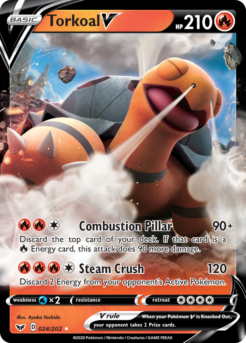
Sword & Shield
Discard the top card of your deck. If that card is a Fire Energy card, this attack does 90 more damage.
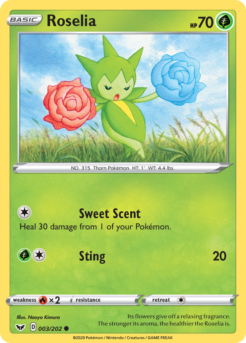
Sword & Shield
Its flowers give off a relaxing fragrance. The stronger its aroma, the healthier the Roselia is.
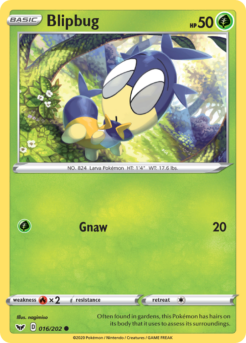
Sword & Shield
Often found in gardens, this Pokémon has hairs on its body that it uses to assess its surroundings.
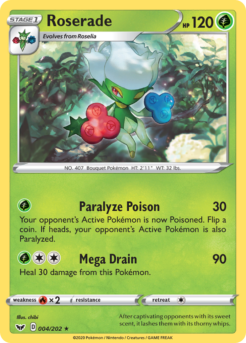
Sword & Shield
After captivating opponents with its sweet scent, it lashes them with its thorny whips.
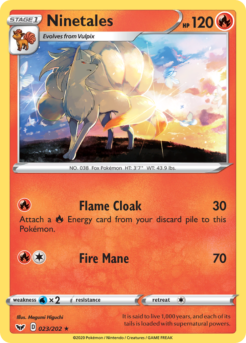
Sword & Shield
It is said to live 1,000 years, and each of its tails is loaded with supernatural powers.
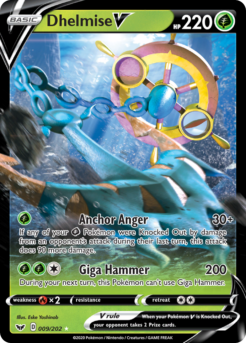
Sword & Shield
If any of your Grass Pokémon were Knocked Out by damage from an opponent’s attack during their last turn, this attack does 90 more damage.
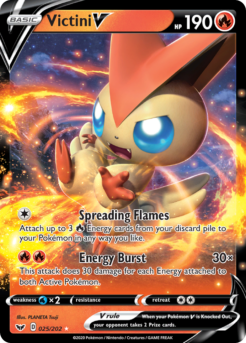
Sword & Shield
Attach up to 3 Fire Energy cards from your discard pile to your Pokémon in any way you like.
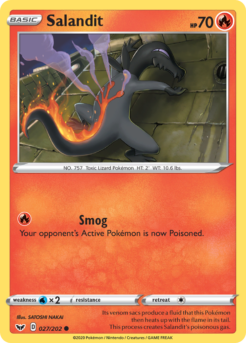
Sword & Shield
Its venom sacs produce a fluid that this Pokémon then heats up with the flame in its tail. This process creates Salandit's poisonous gas.