



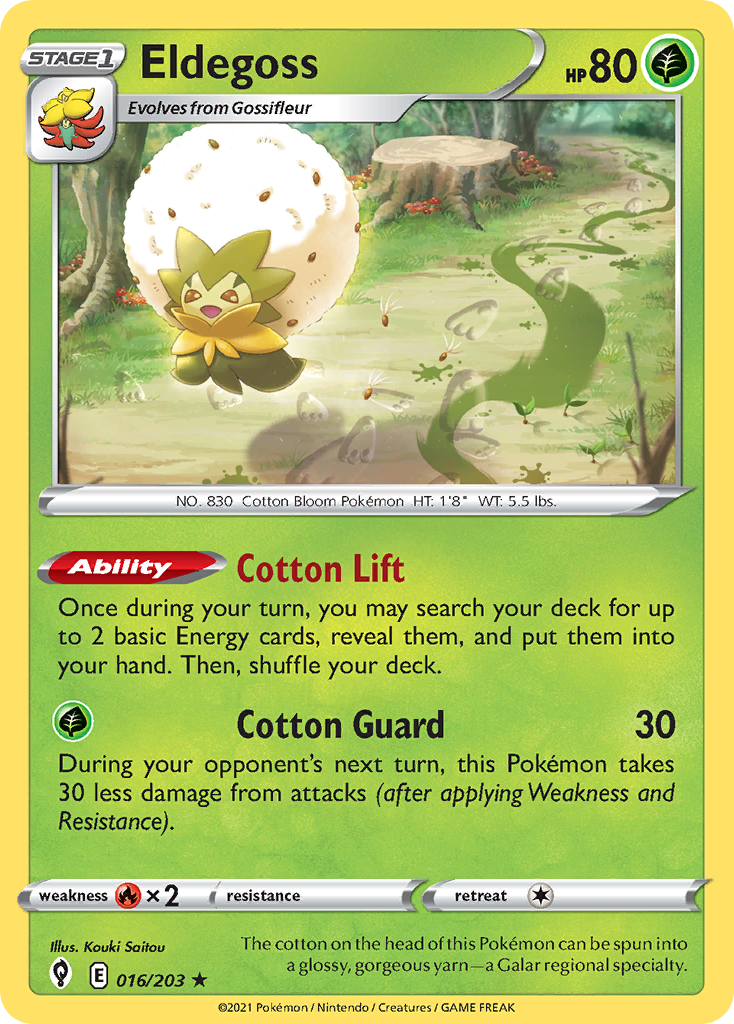
Eldegoss

The cotton on the head of this Pokémon can be spun into a glossy, gorgeous yarn—a Galar regional specialty.
During your opponent’s next turn, this Pokémon takes 30 less damage from attacks (after applying Weakness and Resistance).
| Supertype | Pokémon |
|---|---|
| Subtype | Stage 1 |
| HP | 80 |
| Types | Grass |
| Attack | Cotton Guard |
| Attack cost | Grass |
| Artist | Kouki Saitou |
| Rarity | Rare Holo |
| Pokédex | 830 |
| Evolves from | Gossifleur |
Vendor Information
- Store Name: DutchGem
- Vendor: DutchGem
-
Address:
gekkestraat
179
2345GT Utrecht
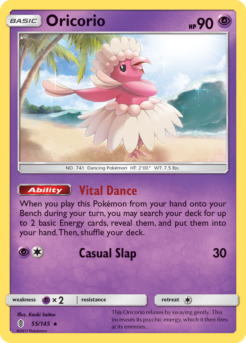
Guardians Rising
This Oricorio relaxes by swaying gently. This increases its psychic energy, which it then fires at its enemies.


Base
Its newly grown legs prevent it from running. It appears to prefer swimming over trying to stand.

Cosmic Eclipse
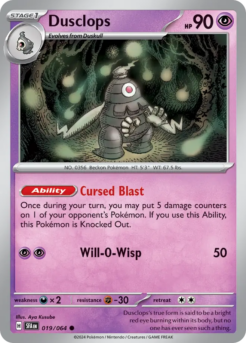
It usually passes its time in the water. When its belly is full, it stores its subdued prey in the water bubble on its head.
Lost Thunder
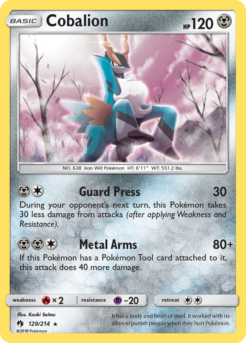
It has a body and heart of steel. It worked with its allies to punish people when they hurt Pokémon.
Related products
Sword & Shield
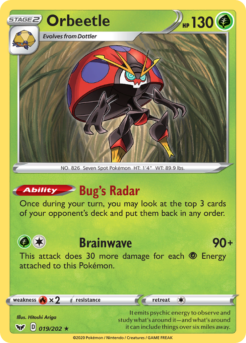
It emits psychic energy to observe and study what's around it—and what's around it can include things over six miles away.
Sword & Shield
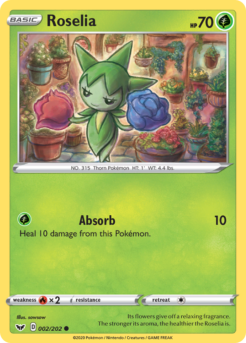
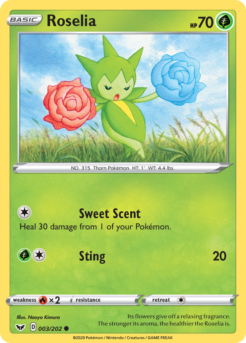
Its flowers give off a relaxing fragrance. The stronger its aroma, the healthier the Roselia is.
Sword & Shield
Its flowers give off a relaxing fragrance. The stronger its aroma, the healthier the Roselia is.
Sword & Shield
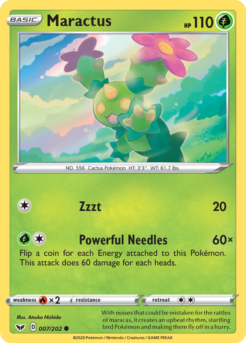
With noises that could be mistaken for the rattles of maracas, it creates an upbeat rhythm, startling bird Pokémon and making them fly off in a hurry.
Sword & Shield
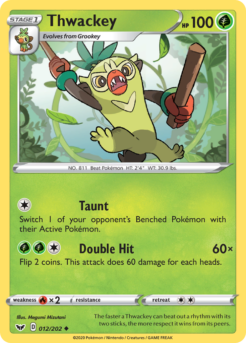
The faster a Thwackey can beat out a rhythm with its two sticks, the more respect it wins from its peers.

Sword & Shield
Search your deck for up to 2 Pokémon, reveal them, and put them into your hand. Then, shuffle your deck.
Sword & Shield
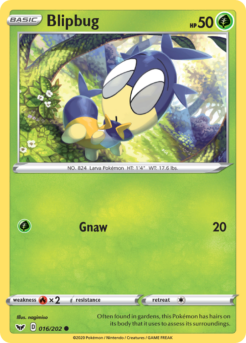
Often found in gardens, this Pokémon has hairs on its body that it uses to assess its surroundings.
Sword & Shield
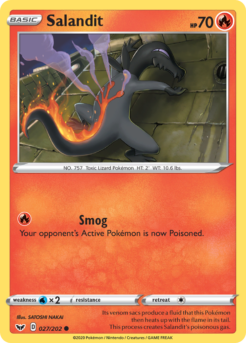
Its venom sacs produce a fluid that this Pokémon then heats up with the flame in its tail. This process creates Salandit's poisonous gas.