



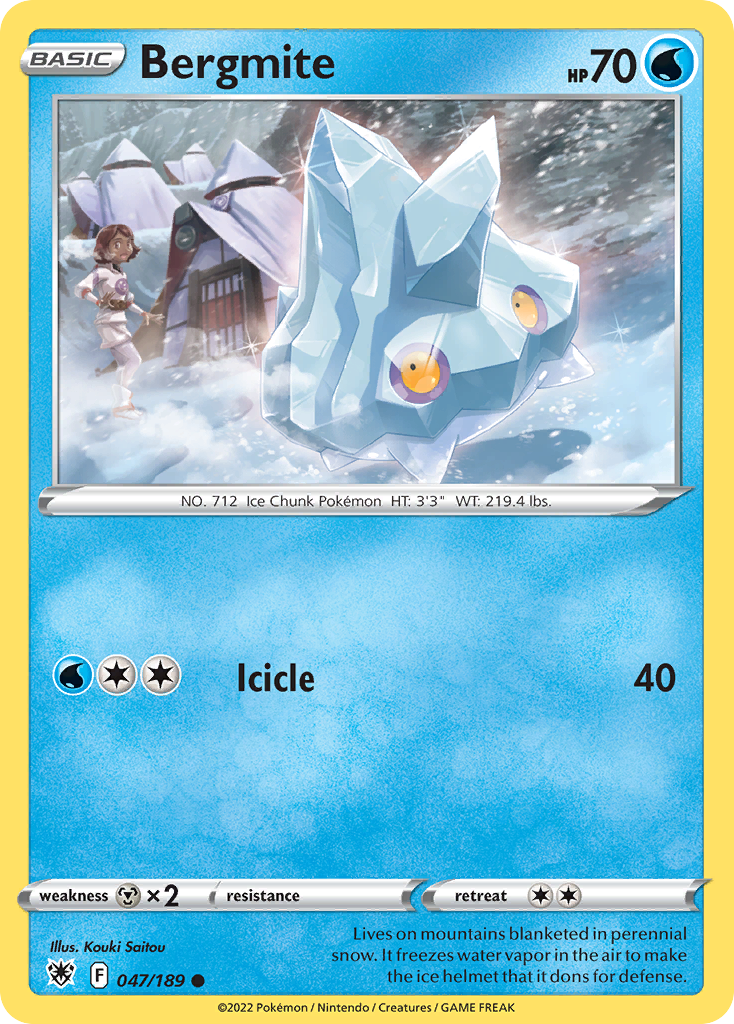
Bergmite

Lives on mountains blanketed in perennial snow. It freezes water vapor in the air to make the ice helmet that it dons for defense.
| Supertype | Pokémon |
|---|---|
| Subtype | Basic |
| HP | 70 |
| Types | Water |
| Attack | Icicle |
| Attack cost | Water |
| Artist | Kouki Saitou |
| Rarity | Common |
| Pokédex | 712 |
| Evolves to | Avalugg |
Vendor Information
- Store Name: DutchGem
- Vendor: DutchGem
-
Address:
gekkestraat
179
2345GT Utrecht
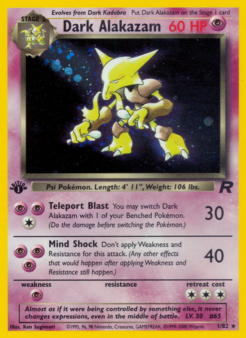
Base
Almost as if it were being controlled by something else, it never changes expressions, even in the middle of battle.
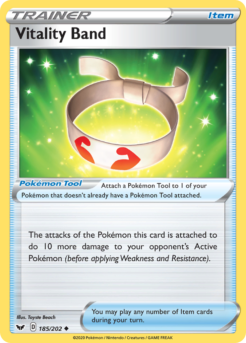

Battle Styles
If this Pokémon moved from your Bench to the Active Spot this turn, this attack does 120 more damage.
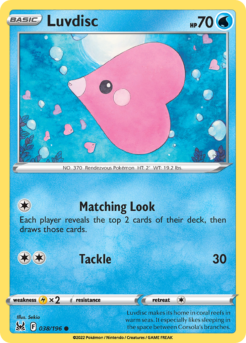
Lost Origin
Luvdisc makes its home in coral reefs in warm seas. It especially likes sleeping in the space between Corsola's branches.
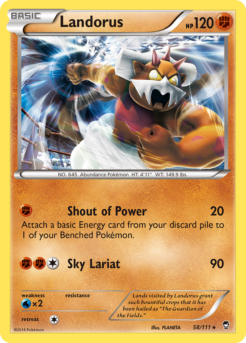
Furious Fists
Lands visited by Landorus grant such bountiful crops that it has been hailed as "The Guardian of the Fields."
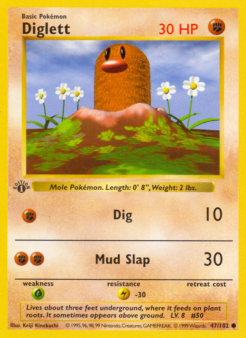
Base
Lives about three feet underground, where it feeds on plant roots. It sometimes appears above ground.
Related products
Sword & Shield
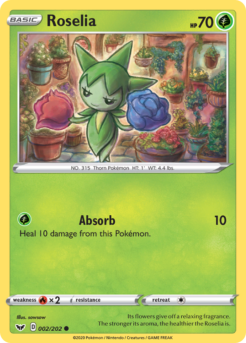
Its flowers give off a relaxing fragrance. The stronger its aroma, the healthier the Roselia is.
Sword & Shield
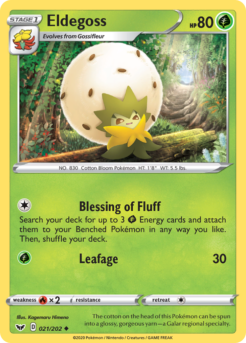
The cotton on the head of this Pokémon can be spun into a glossy, gorgeous yarn—a Galar regional specialty.
Sword & Shield
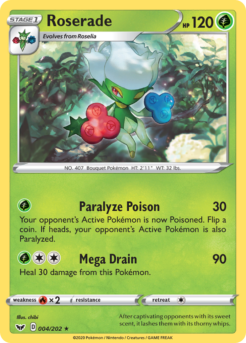
After captivating opponents with its sweet scent, it lashes them with its thorny whips.
Sword & Shield
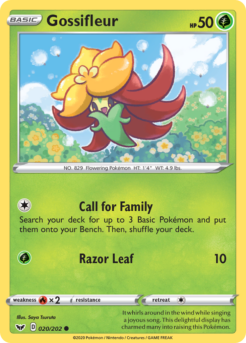
It whirls around in the wind while singing a joyous song. This delightful display has charmed many into raising this Pokémon.
Sword & Shield
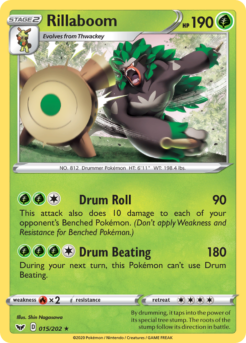
By drumming, it taps into the power of its special tree stump. The roots of the stump follow its direction in battle.
Sword & Shield
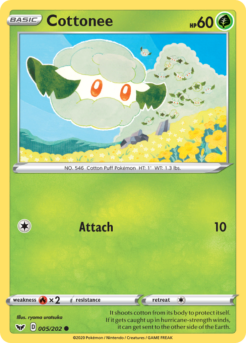
It shoots cotton from its body to protect itself. If it gets caught up in hurricane-strength winds, it can get sent to the other side of the Earth.
Sword & Shield
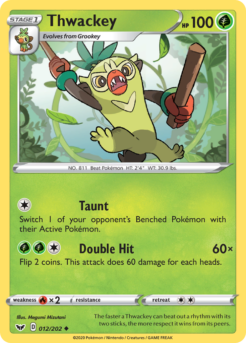
The faster a Thwackey can beat out a rhythm with its two sticks, the more respect it wins from its peers.
Sword & Shield
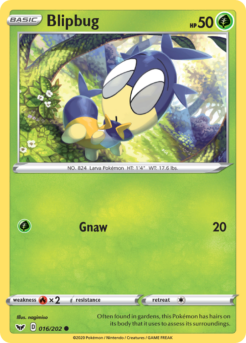
Often found in gardens, this Pokémon has hairs on its body that it uses to assess its surroundings.