



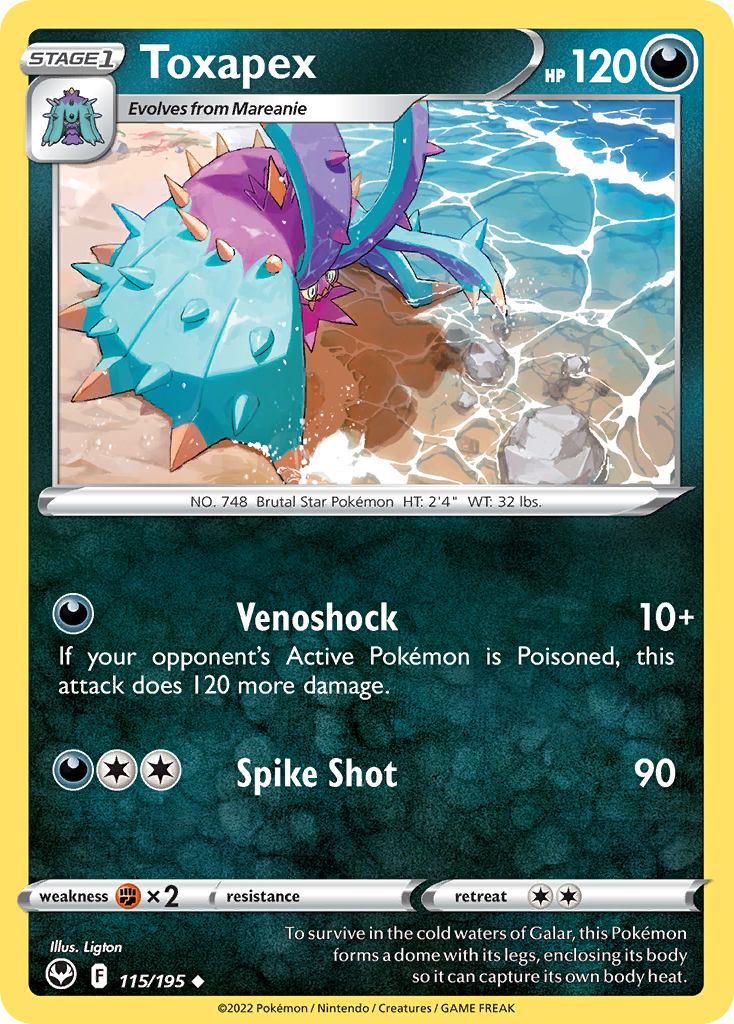
Toxapex
To survive in the cold waters of Galar, this Pokémon forms a dome with its legs, enclosing its body so it can capture its own body heat.

If your opponent’s Active Pokémon is Poisoned, this attack does 120 more damage.
| Supertype | Pokémon |
|---|---|
| Subtype | Stage 1 |
| HP | 120 |
| Types | Darkness |
| Attack | Venoshock |
| Attack cost | Darkness |
| Artist | Ligton |
| Rarity | Uncommon |
| Pokédex | 748 |
| Evolves from | Mareanie |
Vendor Information
- Store Name: DutchGem
- Vendor: DutchGem
-
Address:
gekkestraat
179
2345GT Utrecht
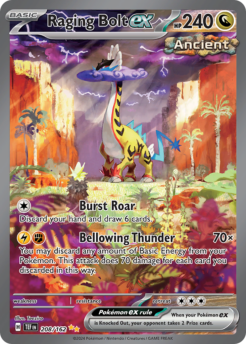
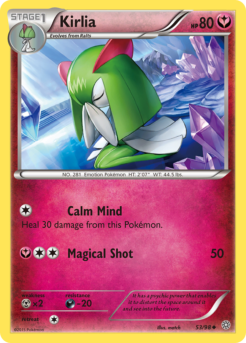
Ancient Origins
It has a psychic power that enables it to distort the space around it and see into the future.
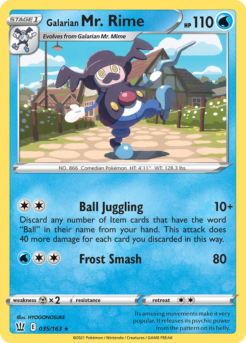
Battle Styles
Its amusing movements make it very popular. It releases its psychic power from the pattern on its belly.
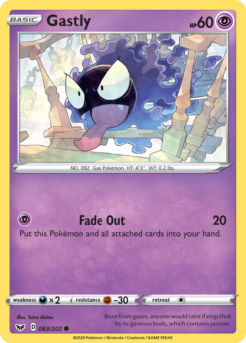
Sword & Shield
Born from gases, anyone would faint if engulfed by its gaseous body, which contains poison.
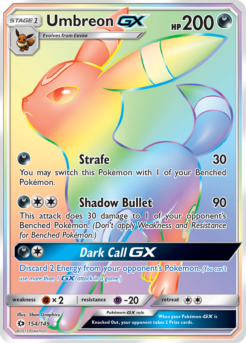
Guardians Rising
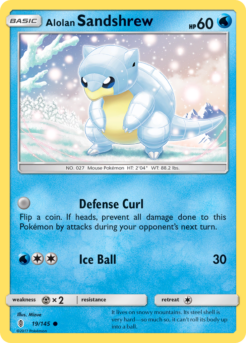
It lives on snowy mountains. Its steel shell is very hard—so much so, it can't roll its body up into a ball.
Related products
Sword & Shield
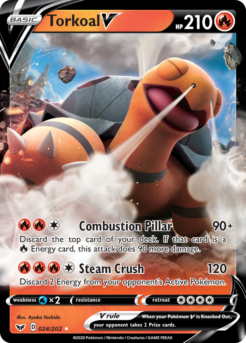
Discard the top card of your deck. If that card is a Fire Energy card, this attack does 90 more damage.
Sword & Shield
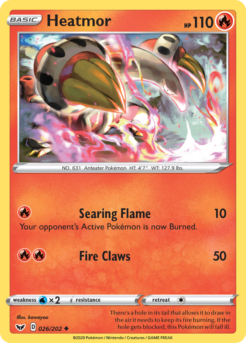
There's a hole in its tail that allows it to draw in the air it needs to keep its fire burning. If the hole gets blocked, this Pokémon will fall ill.
Sword & Shield
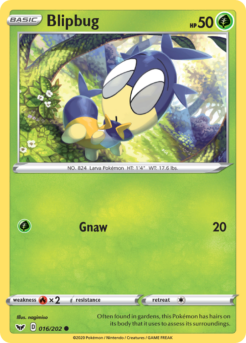
Often found in gardens, this Pokémon has hairs on its body that it uses to assess its surroundings.
Sword & Shield
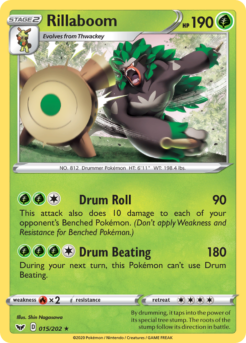
By drumming, it taps into the power of its special tree stump. The roots of the stump follow its direction in battle.
Sword & Shield
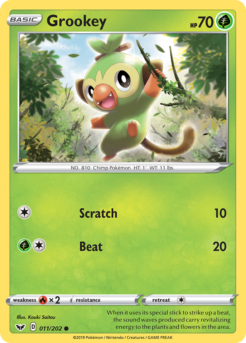
When it uses its special stick to strike up a beat, the sound waves produced carry revitalizing energy to the plants and flowers in the area.
Sword & Shield
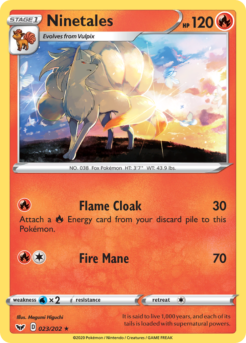
It is said to live 1,000 years, and each of its tails is loaded with supernatural powers.
Sword & Shield
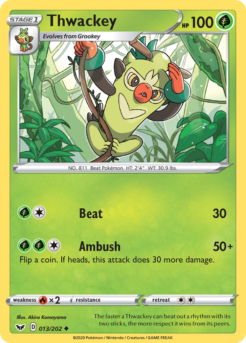
The faster a Thwackey can beat out a rhythm with its two sticks, the more respect it wins from its peers.
Sword & Shield
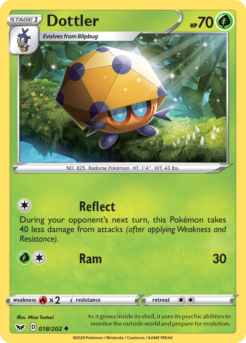
As it grows inside its shell, it uses its psychic abilities to monitor the outside world and prepare for evolution.