



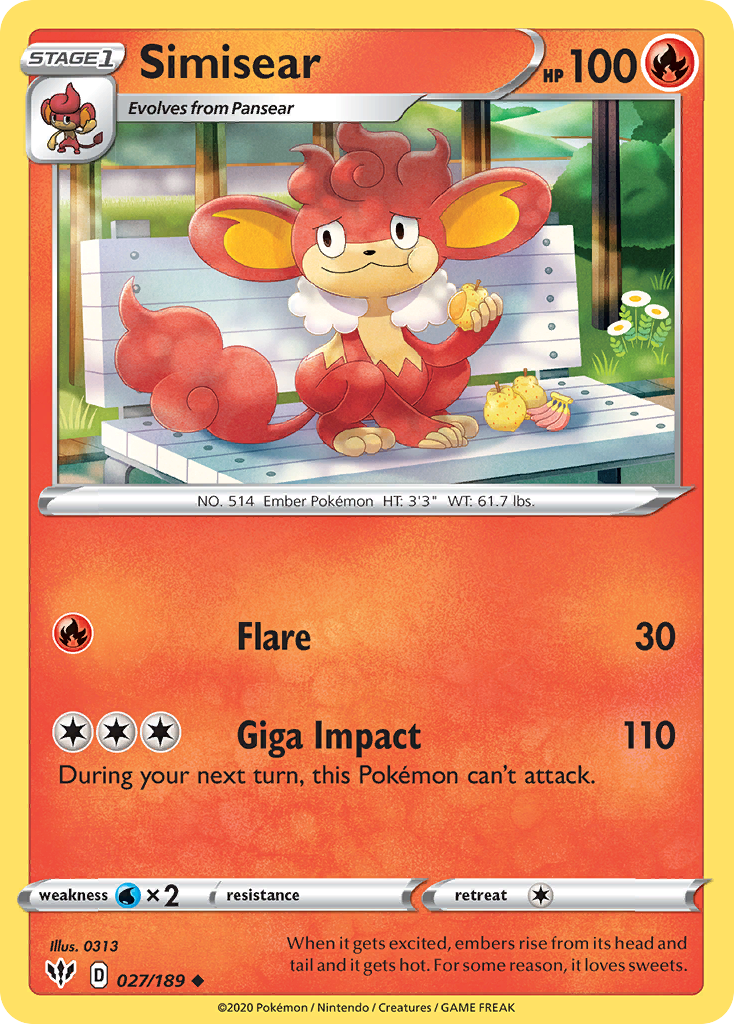
Simisear


When it gets excited, embers rise from its head and tail and it gets hot. For some reason, it loves sweets.

| Supertype | Pokémon |
|---|---|
| Subtype | Stage 1 |
| HP | 100 |
| Types | Fire |
| Attack | Flare |
| Attack cost | Fire |
| Artist | 0313 |
| Rarity | Uncommon |
| Pokédex | 514 |
| Evolves from | Pansear |
Vendor Information
- Store Name: DutchGem
- Vendor: DutchGem
-
Address:
gekkestraat
179
2345GT Utrecht



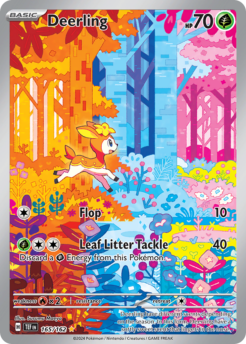
Scarlet & Violet
Deerling have different scents depending on the season. In this form, Deerling have a softly sweet scent that lingers in the nose.

Sword & Shield
Thought to be the oldest form of Zigzagoon, it moves in zigzags and wreaks havoc upon its surroundings.

Celestial Storm
During a battle, the hot flame in its body increases. Its kicks have outstanding destructive power.
Related products

Sword & Shield
When it uses its special stick to strike up a beat, the sound waves produced carry revitalizing energy to the plants and flowers in the area.

Sword & Shield
By drumming, it taps into the power of its special tree stump. The roots of the stump follow its direction in battle.
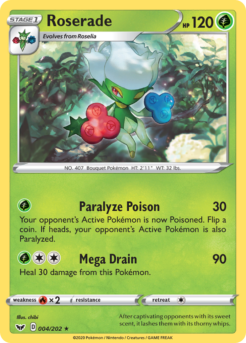
Sword & Shield
After captivating opponents with its sweet scent, it lashes them with its thorny whips.
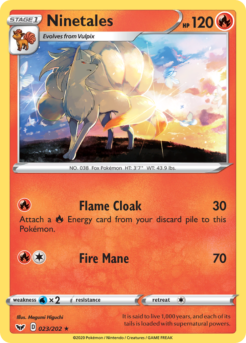
Sword & Shield
It is said to live 1,000 years, and each of its tails is loaded with supernatural powers.
Sword & Shield
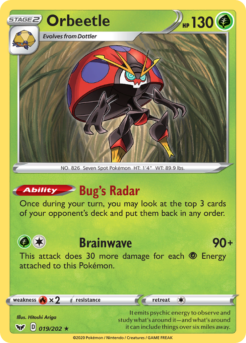
It emits psychic energy to observe and study what's around it—and what's around it can include things over six miles away.
Sword & Shield
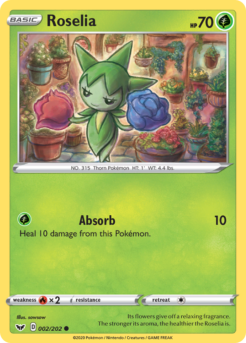
Its flowers give off a relaxing fragrance. The stronger its aroma, the healthier the Roselia is.

Sword & Shield
It whirls around in the wind while singing a joyous song. This delightful display has charmed many into raising this Pokémon.

Sword & Shield
The faster a Thwackey can beat out a rhythm with its two sticks, the more respect it wins from its peers.