



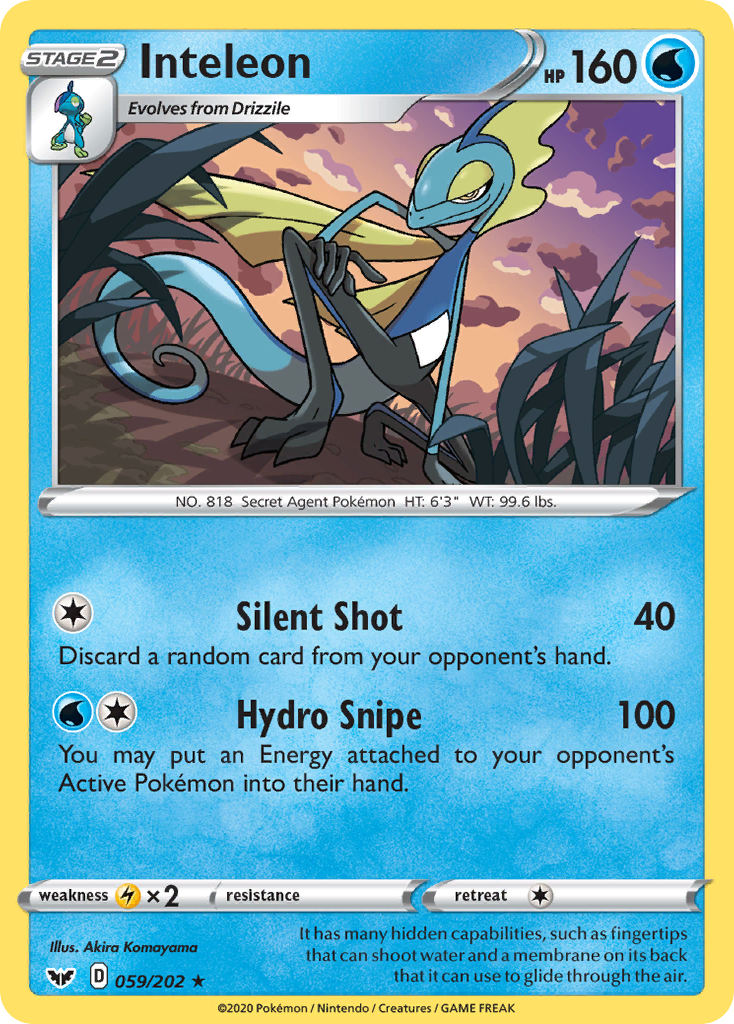
Inteleon
It has many hidden capabilities, such as fingertips that can shoot water and a membrane on its back that it can use to glide through the air.
Discard a random card from your opponent’s hand.
| Supertype | Pokémon |
|---|---|
| Subtype | Stage 2 |
| HP | 160 |
| Types | Water |
| Attack | Silent Shot |
| Attack cost | Colorless |
| Artist | Akira Komayama |
| Rarity | Rare |
| Pokédex | 818 |
| Evolves from | Drizzile |
Vendor Information
- Store Name: DutchGem
- Vendor: DutchGem
-
Address:
gekkestraat
179
2345GT Utrecht
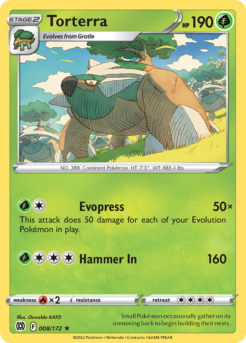
Brilliant Stars
Small Pokémon occasionally gather on its unmoving back to begin building their nests.
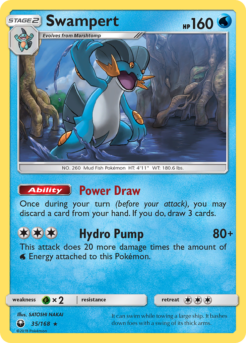
Celestial Storm
It can swim while towing a large ship. It bashes down foes with a swing of its thick arms.
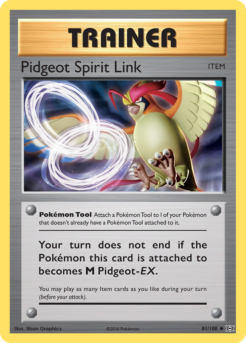
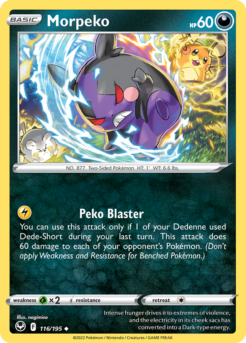
Silver Tempest
Intense hunger drives it to extremes of violence, and the electricity in its cheek sacs has converted into a Dark-type energy.
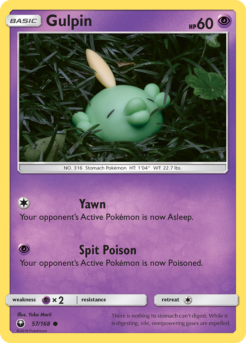
Celestial Storm
There is nothing its stomach can't digest. While it is digesting, vile, overpowering gases are expelled.
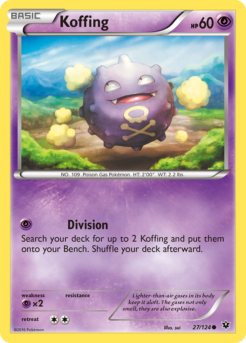
Fates Collide
Lighter-than-air gases in its body keep it aloft. The gases not only smell, they are also explosive.
Related products
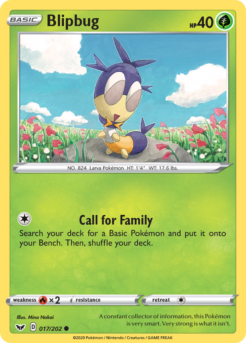
Sword & Shield
A constant collector of information, this Pokémon is very smart. Very strong is what it isn't.
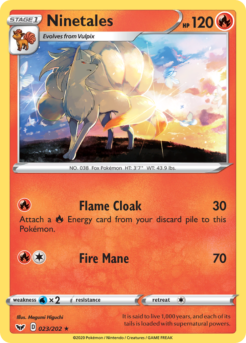
Sword & Shield
It is said to live 1,000 years, and each of its tails is loaded with supernatural powers.
Sword & Shield
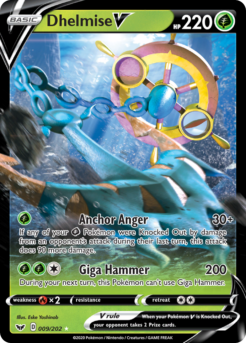
If any of your Grass Pokémon were Knocked Out by damage from an opponent’s attack during their last turn, this attack does 90 more damage.
Sword & Shield
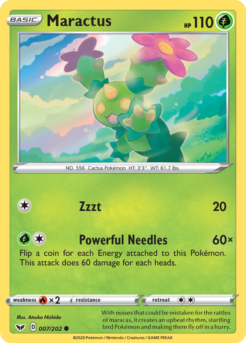
With noises that could be mistaken for the rattles of maracas, it creates an upbeat rhythm, startling bird Pokémon and making them fly off in a hurry.
Sword & Shield
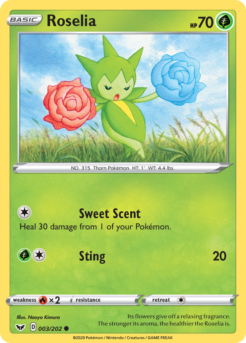
Its flowers give off a relaxing fragrance. The stronger its aroma, the healthier the Roselia is.
Sword & Shield
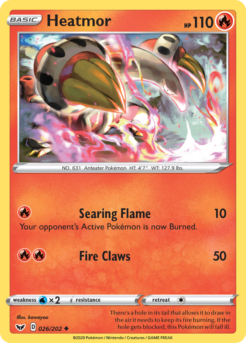
There's a hole in its tail that allows it to draw in the air it needs to keep its fire burning. If the hole gets blocked, this Pokémon will fall ill.
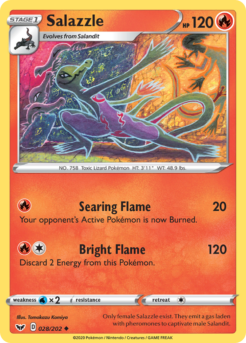
Sword & Shield
Only female Salazzle exist. They emit a gas laden with pheromones to captivate male Salandit.
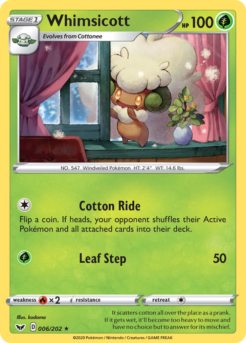
Sword & Shield
It scatters cotton all over the place as a prank. If it gets wet, it'll become too heavy to move and have no choice but to answer for its mischief.