



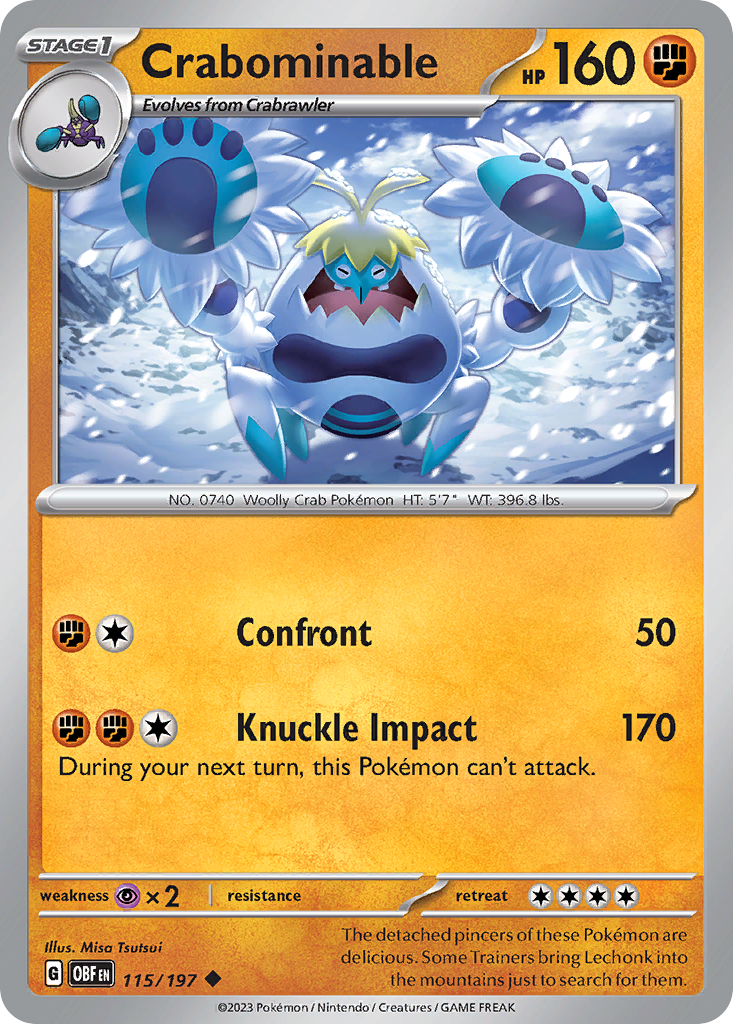
Crabominable
The detached pincers of these Pokémon are delicious. Some Trainers bring Lechonk into the mountains just to search for them.
| Supertype | Pokémon |
|---|---|
| Subtype | Stage 1 |
| HP | 160 |
| Types | Fighting |
| Attack | Confront |
| Attack cost | Fighting |
| Artist | Misa Tsutsui |
| Rarity | Uncommon |
| Pokédex | 740 |
| Evolves from | Crabrawler |
Vendor Information
- Store Name: DutchGem
- Vendor: DutchGem
-
Address:
gekkestraat
179
2345GT Utrecht
Paldea Evolved
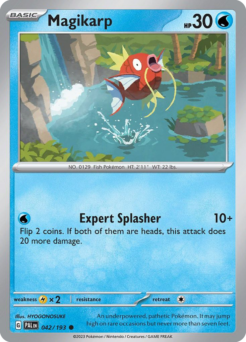
An underpowered, pathetic Pokémon. It may jump high on rare occasions but never more than seven feet.

Cosmic Eclipse
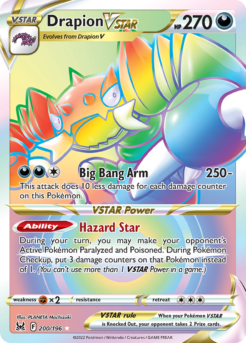
The males are usually lazy, but when attacked by a strong foe, a male will protect its friends with no regard for its own safety.
Scarlet & Violet
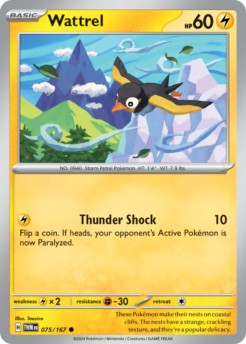
These Pokémon make their nests on coastal cliffs. The nests have a strange, crackling texture, and they're a popular delicacy.
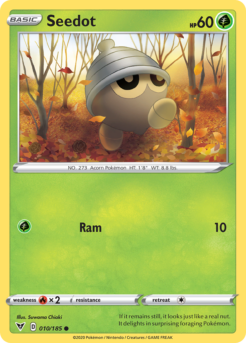
Sword & Shield
If it remains still, it looks just like a real nut. It delights in surprising foraging Pokémon.
Related products
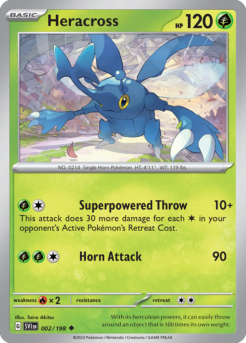
Scarlet & Violet
With its herculean powers, it can easily throw around an object that is 100 times its own weight.
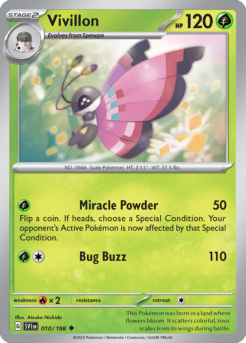
Scarlet & Violet
This Pokémon was born in a land where flowers bloom. It scatters colorful, toxic scales from its wings during battle.
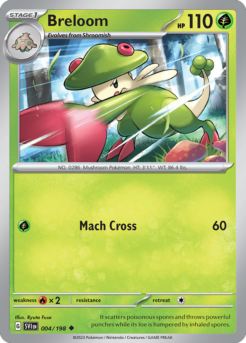
Scarlet & Violet
It scatters poisonous spores and throws powerful punches while its foe is hampered by inhaled spores.
Scarlet & Violet
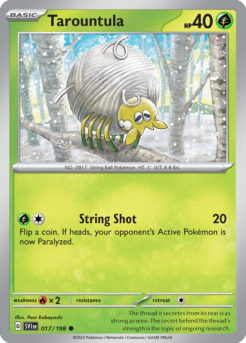
The thread it secretes from its rear is as strong as wire. The secret behind the thread's strength is the topic of ongoing research.
Scarlet & Violet
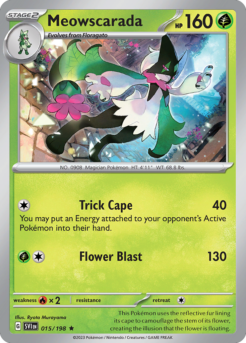
This Pokémon uses the reflective fur lining its cape to camouflage the stem of its flower, creating the illusion that the flower is floating.
Scarlet & Violet
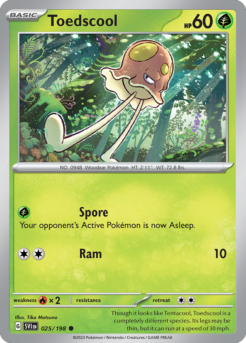
Though it looks like Tentacool, Toedscool is a completely different species. Its legs may be thin, but it can run at a speed of 30 mph.
Scarlet & Violet
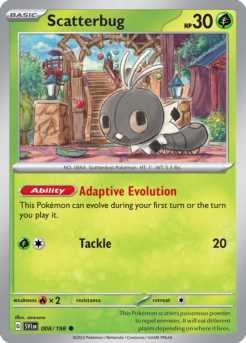
This Pokémon scatters poisonous powder to repel enemies. It will eat different plants depending on where it lives.
Scarlet & Violet
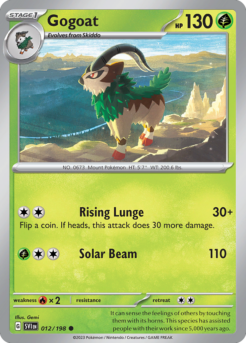
It can sense the feelings of others by touching them with its horns. This species has assisted people with their work since 5,000 years ago.