


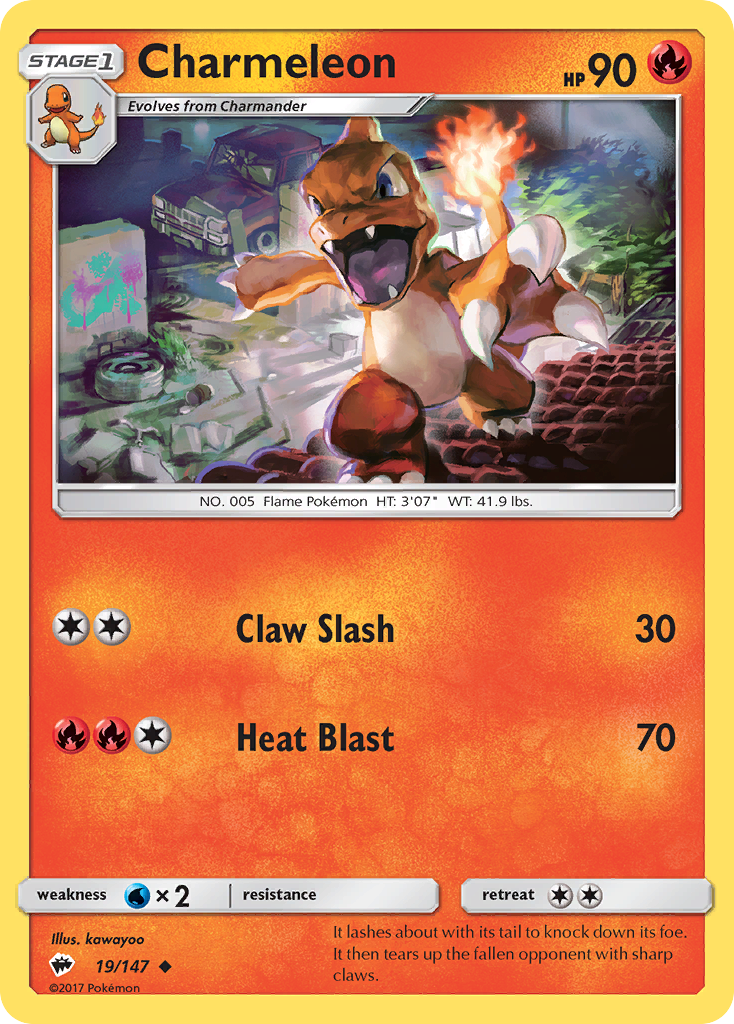
Charmeleon
It lashes about with its tail to knock down its foe. It then tears up the fallen opponent with sharp claws.
| Supertype | Pokémon |
|---|---|
| Subtype | Stage 1 |
| HP | 90 |
| Types | Fire |
| Attack | Claw Slash |
| Attack cost | Colorless |
| Artist | kawayoo |
| Rarity | Uncommon |
| Pokédex | 5 |
| Evolves from | Charmander |
| Evolves to | Charizard |
Vendor Information
- Store Name: DutchGem
- Vendor: DutchGem
-
Address:
gekkestraat
179
2345GT Utrecht
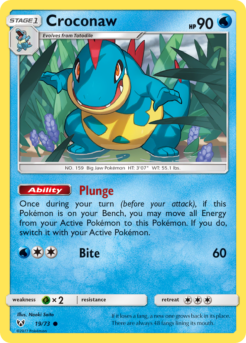
Shining Legends
If it loses a fang, a new one grows back in its place. There are always 48 fangs lining its mouth.
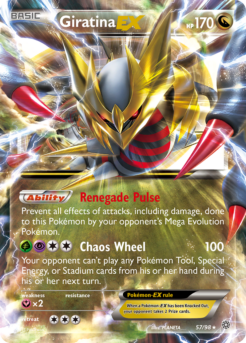
Ancient Origins
Your opponent can’t play any Pokémon Tool, Special Energy, or Stadium cards from his or her hand during his or her next turn.
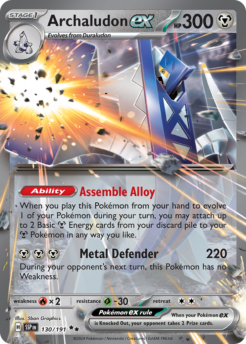
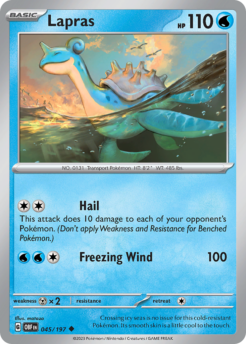
Obsidian Flames
Crossing icy seas is no issue for this cold-resistant Pokémon. Its smooth skin is a little cool to the touch.
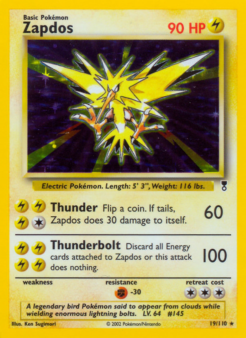
Base
A legendary bird Pokémon said to appear from clouds while wielding enormous lightning bolts.
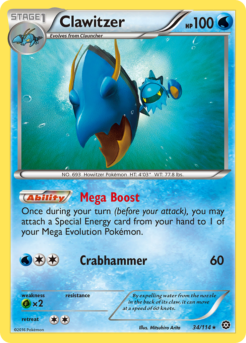
Steam Siege
By expelling water from the nozzle in the back of its claw, it can move at a speed of 60 knots.
Related products
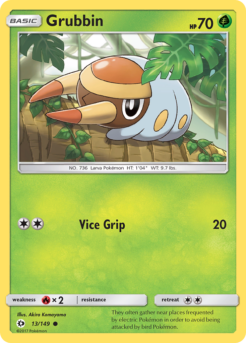
Sun & Moon
They often gather near places frequented by electric Pokémon in order to avoid being attacked by bird Pokémon.
Sun & Moon
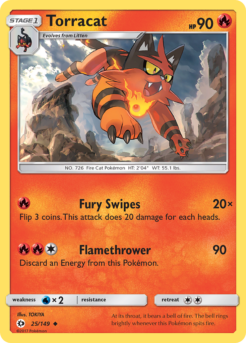
At its throat, it bears a bell of fire. The bell rings brightly whenever this Pokémon spits fire.
Sun & Moon
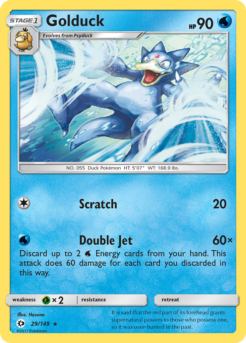
It is said that the red part of its forehead grants supernatural powers to those who posses one, so it was over-hunted in the past.
Sun & Moon
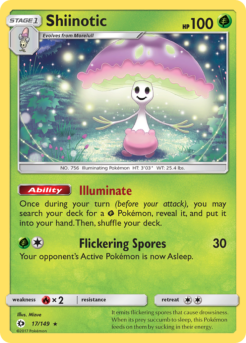
It emits flickering spores that cause drowsiness. When its prey succumb to sleep, this Pokémon feeds on them by sucking in their energy.
Sun & Moon
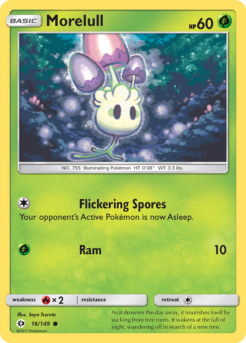
As it drowses the day away, it nourishes itself by sucking from tree roots. It wakens at the fall of night, wandering off in search of a new tree.
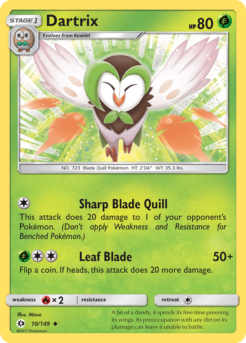
Sun & Moon
A bit of a dandy, it spends its free time preening its wings. Its preoccupation with any dirt on its plumage can leave it unable to battle.
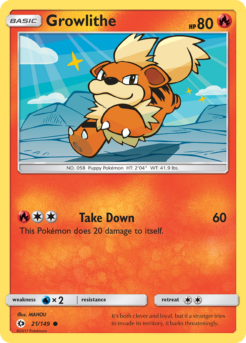
Sun & Moon
It's both clever and loyal, but if a stranger tries to invade its territory, it barks threateningly.
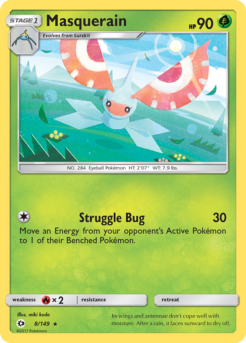
Sun & Moon
Its wings and antennae don't cope well with moisture. After a rain, it faces sunward to dry off.