



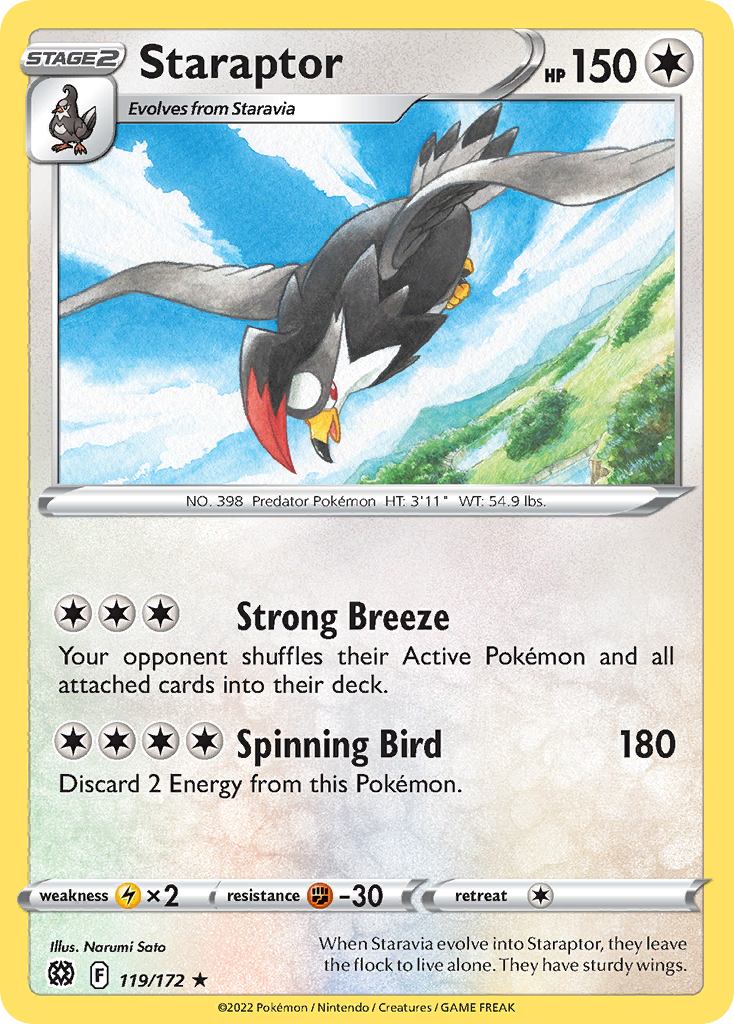
Staraptor
When Staravia evolve into Staraptor, they leave the flock to live alone. They have sturdy wings.
Your opponent shuffles their Active Pokémon and all attached cards into their deck.
| Supertype | Pokémon |
|---|---|
| Subtype | Stage 2 |
| HP | 150 |
| Types | Colorless |
| Attack | Strong Breeze |
| Attack cost | Colorless |
| Artist | Narumi Sato |
| Rarity | Rare |
| Pokédex | 398 |
| Evolves from | Staravia |
Vendor Information
- Store Name: DutchGem
- Vendor: DutchGem
-
Address:
gekkestraat
179
2345GT Utrecht
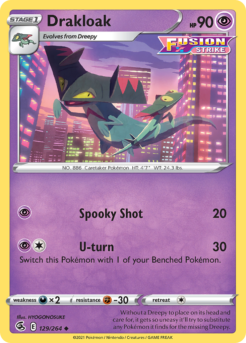
Fusion Strike
Without a Dreepy to place on its head and care for, it gets so uneasy it'll try to substitute any Pokémon it finds for the missing Dreepy.
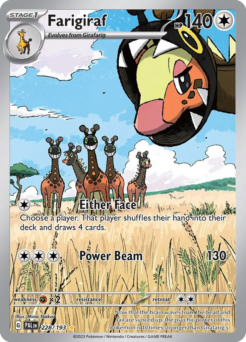
Paldea Evolved
Now that the brain waves from the head and tail are synced up, the psychic power of this Pokémon is 10 times stronger than Girafarig's.
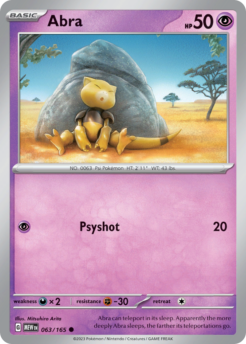
151
Abra can teleport in its sleep. Apparently the more deeply Abra sleeps, the farther its teleportations go.
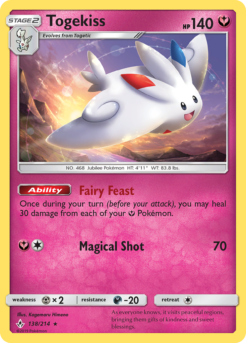
Sun & Moon
As everyone knows, it visits peaceful regions, bringing them gifts of kindness and sweet blessings.
Sun & Moon
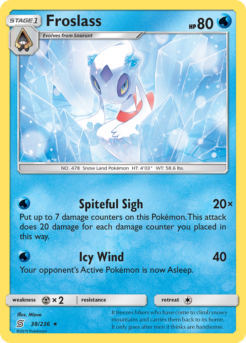
It freezes hikers who have come to climb snowy mountains and carries them back to its home. It only goes after men it thinks are handsome.
Sword & Shield
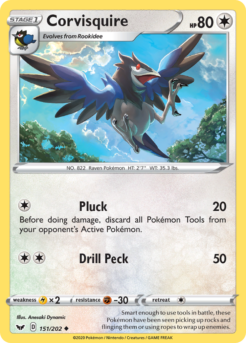
Smart enough to use tools in battle, these Pokémon have been seen picking up rocks and flinging them or using ropes to wrap up enemies.
Related products
Sword & Shield
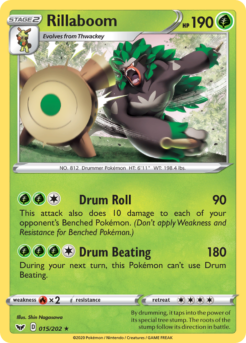
By drumming, it taps into the power of its special tree stump. The roots of the stump follow its direction in battle.
Sword & Shield
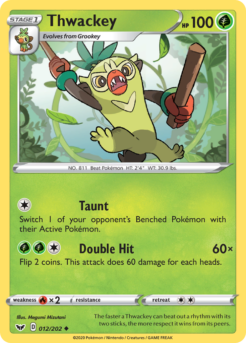
The faster a Thwackey can beat out a rhythm with its two sticks, the more respect it wins from its peers.
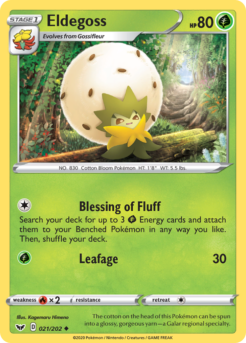
Sword & Shield
The cotton on the head of this Pokémon can be spun into a glossy, gorgeous yarn—a Galar regional specialty.
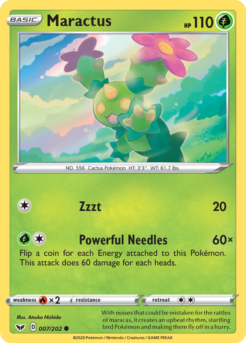
Sword & Shield
With noises that could be mistaken for the rattles of maracas, it creates an upbeat rhythm, startling bird Pokémon and making them fly off in a hurry.
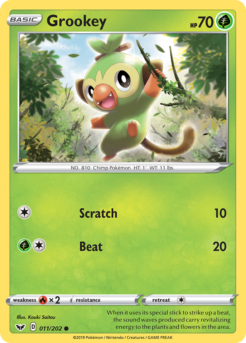
Sword & Shield
When it uses its special stick to strike up a beat, the sound waves produced carry revitalizing energy to the plants and flowers in the area.
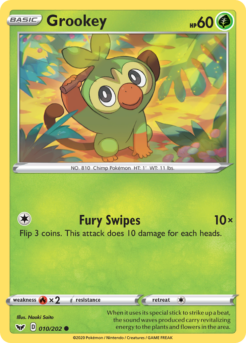
Sword & Shield
When it uses its special stick to strike up a beat, the sound waves produced carry revitalizing energy to the plants and flowers in the area.
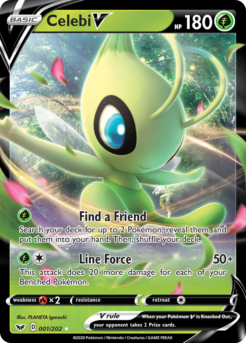
Sword & Shield
Search your deck for up to 2 Pokémon, reveal them, and put them into your hand. Then, shuffle your deck.
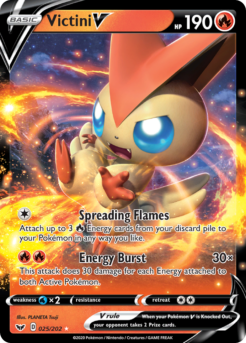
Sword & Shield
Attach up to 3 Fire Energy cards from your discard pile to your Pokémon in any way you like.