



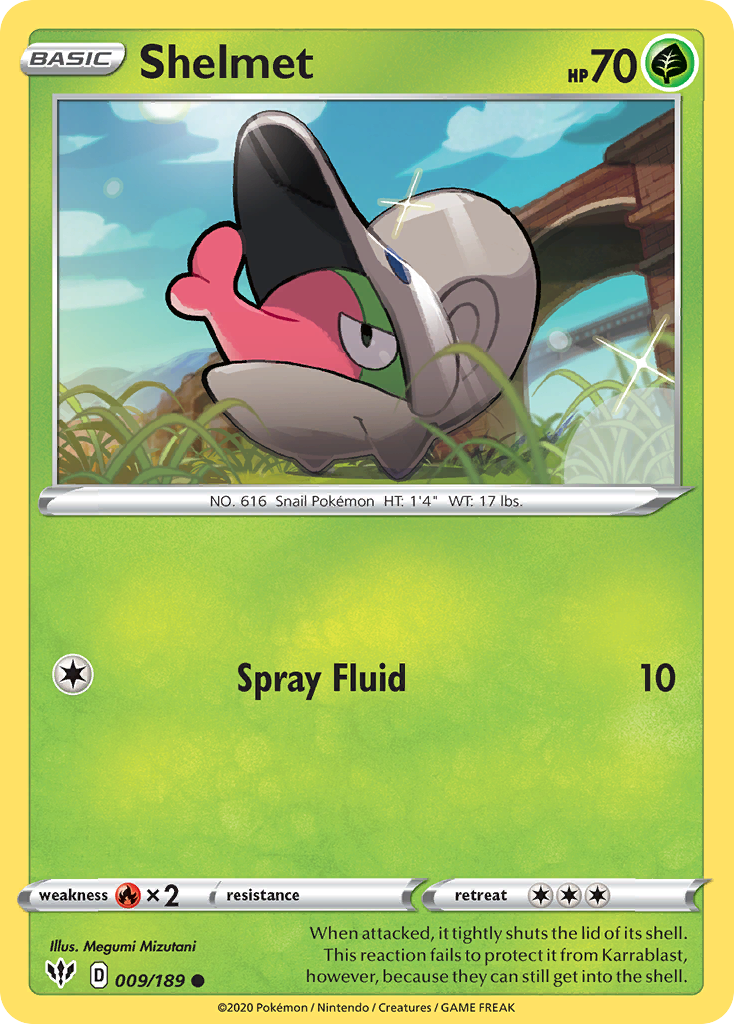
Shelmet

When attacked, it tightly shuts the lid of its shell. This reaction fails to protect it from Karrablast, however, because they can still get into the shell.
| Supertype | Pokémon |
|---|---|
| Subtype | Basic |
| HP | 70 |
| Types | Grass |
| Attack | Spray Fluid |
| Attack cost | Colorless |
| Artist | Megumi Mizutani |
| Rarity | Common |
| Pokédex | 616 |
| Evolves to | Accelgor |
Vendor Information
- Store Name: DutchGem
- Vendor: DutchGem
-
Address:
gekkestraat
179
2345GT Utrecht

Lost Thunder
The guardian deity of Poni, it can control water. People say it can create pure water that will wash away any uncleanness.
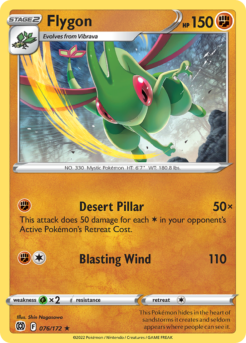
Brilliant Stars
This Pokémon hides in the heart of sandstorms it creates and seldom appears where people can see it.
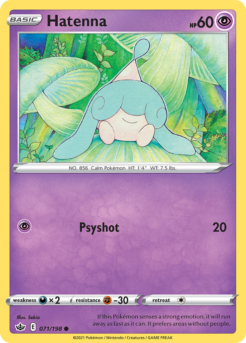
Chilling Reign
If this Pokémon senses a strong emotion, it will run away as fast as it can. It prefers areas without people.

Sword & Shield
This attack also does 30 damage to each of your opponent’s Benched Pokémon. (Don’t apply Weakness and Resistance for Benched Pokémon.)


Lost Origin
During your opponent’s next turn, this Pokémon takes 80 less damage from attacks (after applying Weakness and Resistance).
Related products

Sword & Shield
When it uses its special stick to strike up a beat, the sound waves produced carry revitalizing energy to the plants and flowers in the area.
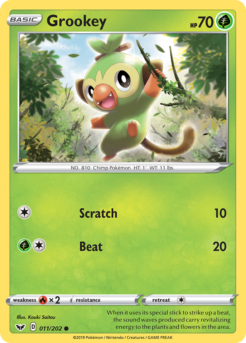
Sword & Shield
When it uses its special stick to strike up a beat, the sound waves produced carry revitalizing energy to the plants and flowers in the area.
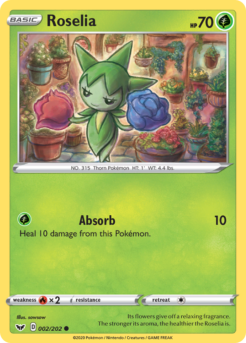
Sword & Shield
Its flowers give off a relaxing fragrance. The stronger its aroma, the healthier the Roselia is.
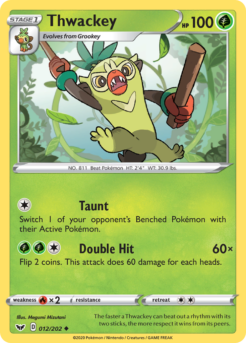
Sword & Shield
The faster a Thwackey can beat out a rhythm with its two sticks, the more respect it wins from its peers.
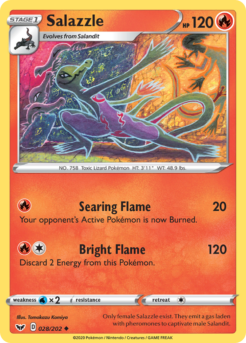
Sword & Shield
Only female Salazzle exist. They emit a gas laden with pheromones to captivate male Salandit.
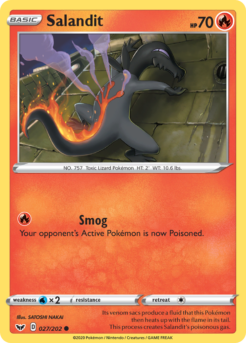
Sword & Shield
Its venom sacs produce a fluid that this Pokémon then heats up with the flame in its tail. This process creates Salandit's poisonous gas.
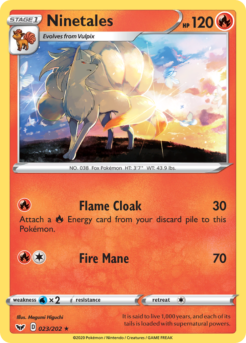
Sword & Shield
It is said to live 1,000 years, and each of its tails is loaded with supernatural powers.
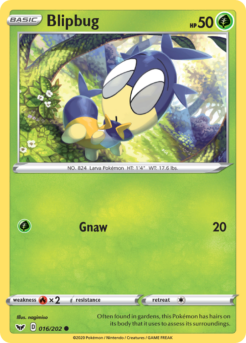
Sword & Shield
Often found in gardens, this Pokémon has hairs on its body that it uses to assess its surroundings.