




Inteleon


Its nictitating membranes let it pick out foes’ weak points so it can precisely blast them with water that shoots from its fingertips at Mach 3.

| Supertype | Pokémon |
|---|---|
| Subtype | Stage 2 |
| HP | 150 |
| Types | Water |
| Attack | Waterfall |
| Attack cost | Colorless |
| Artist | Saki Hayashiro |
| Rarity | Rare Secret |
| Pokédex | 818 |
| Evolves from | Drizzile |
Vendor Information
- Store Name: DutchGem
- Vendor: DutchGem
-
Address:
gekkestraat
179
2345GT Utrecht


Sun & Moon
It's still not very good at walking. Its Trainers should train this Pokémon to walk every day.

Scarlet & Violet
This Pokémon can pick up the scent of a Veluza just over 65 feet away and will hide itself in the sand.



Base
Stiffens its ears to sense danger. The larger, more powerful of its horns secretes venom.
Related products
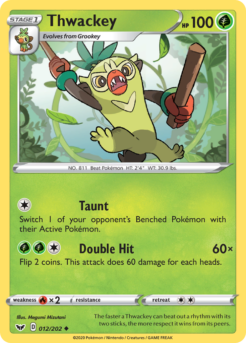
Sword & Shield
The faster a Thwackey can beat out a rhythm with its two sticks, the more respect it wins from its peers.
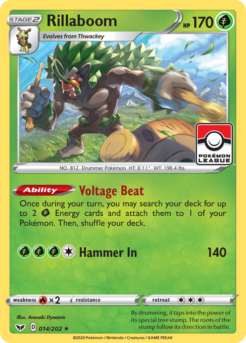
Sword & Shield
By drumming, it taps into the power of its special tree stump. The roots of the stump follow its direction in battle.
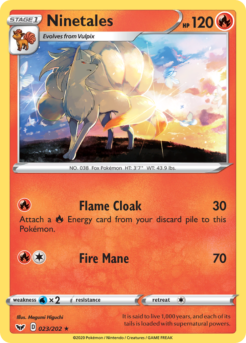
Sword & Shield
It is said to live 1,000 years, and each of its tails is loaded with supernatural powers.
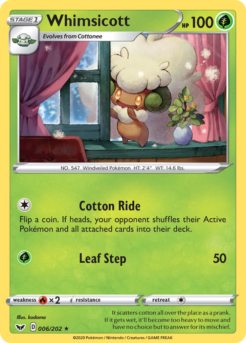
Sword & Shield
It scatters cotton all over the place as a prank. If it gets wet, it'll become too heavy to move and have no choice but to answer for its mischief.
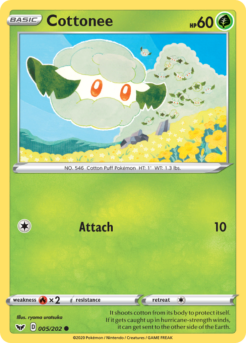
Sword & Shield
It shoots cotton from its body to protect itself. If it gets caught up in hurricane-strength winds, it can get sent to the other side of the Earth.

Sword & Shield
When it uses its special stick to strike up a beat, the sound waves produced carry revitalizing energy to the plants and flowers in the area.

Sword & Shield
The faster a Thwackey can beat out a rhythm with its two sticks, the more respect it wins from its peers.
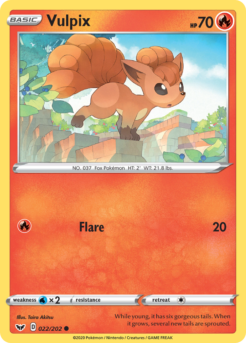
Sword & Shield
While young, it has six gorgeous tails. When it grows, several new tails are sprouted.