



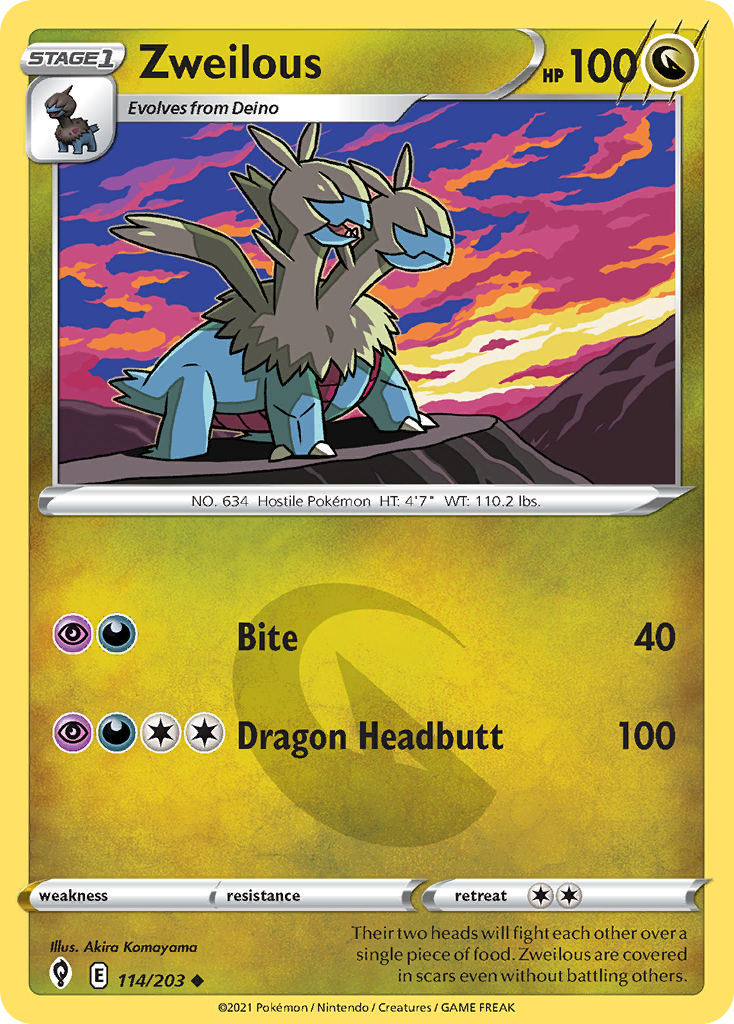
Zweilous
Their two heads will fight each other over a single piece of food. Zweilous are covered in scars even without battling others.

| Supertype | Pokémon |
|---|---|
| Subtype | Stage 1 |
| HP | 100 |
| Types | Dragon |
| Attack | Bite |
| Attack cost | Psychic |
| Artist | Akira Komayama |
| Rarity | Uncommon |
| Pokédex | 634 |
| Evolves from | Deino |
| Evolves to | Hydreigon |
Vendor Information
- Store Name: DutchGem
- Vendor: DutchGem
-
Address:
gekkestraat
179
2345GT Utrecht
Flashfire
A common sight in forests and woods. It flaps its wings at ground level to kick up blinding sand.

Paldea Evolved
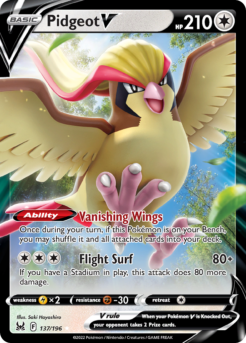
You may discard any amount of Water Energy from your Pokémon. This attack does 60 damage for each card you discarded in this way.
Evolving Skies
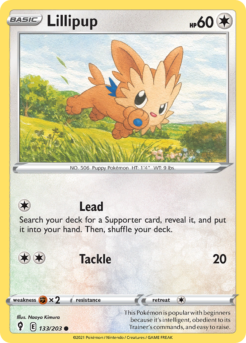
This Pokémon is popular with beginners because it's intelligent, obedient to its Trainer's commands, and easy to raise.
Scarlet & Violet
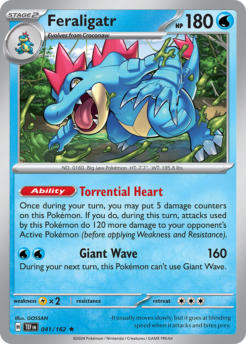
It usually moves slowly, but it goes at blinding speed when it attacks and bites prey.
Paradox Rift
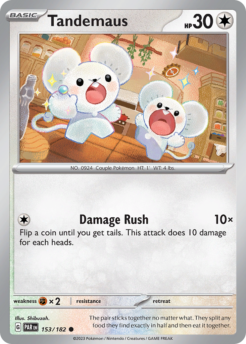
The pair sticks together no matter what. They split any food they find exactly in half and then eat it together.
Related products
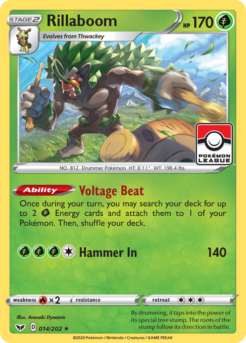
Sword & Shield
By drumming, it taps into the power of its special tree stump. The roots of the stump follow its direction in battle.
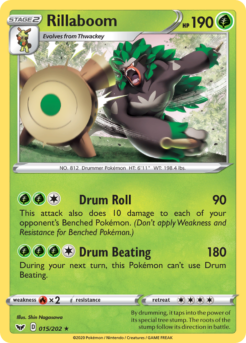
Sword & Shield
By drumming, it taps into the power of its special tree stump. The roots of the stump follow its direction in battle.
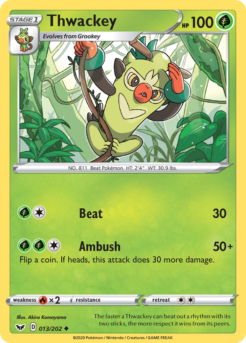
Sword & Shield
The faster a Thwackey can beat out a rhythm with its two sticks, the more respect it wins from its peers.
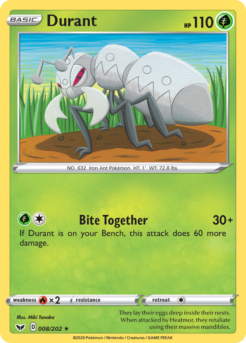
Sword & Shield
They lay their eggs deep inside their nests. When attacked by Heatmor, they retaliate using their massive mandibles.
Sword & Shield
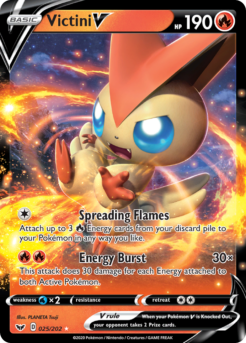
Attach up to 3 Fire Energy cards from your discard pile to your Pokémon in any way you like.
Sword & Shield
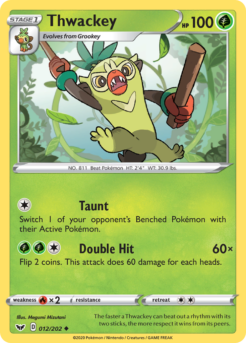
The faster a Thwackey can beat out a rhythm with its two sticks, the more respect it wins from its peers.
Sword & Shield
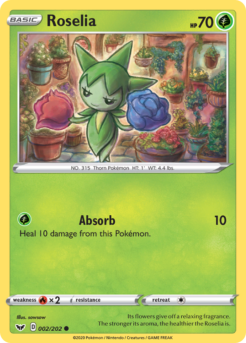
Its flowers give off a relaxing fragrance. The stronger its aroma, the healthier the Roselia is.
Sword & Shield
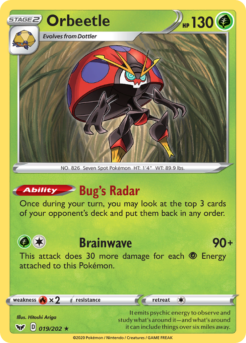
It emits psychic energy to observe and study what's around it—and what's around it can include things over six miles away.