



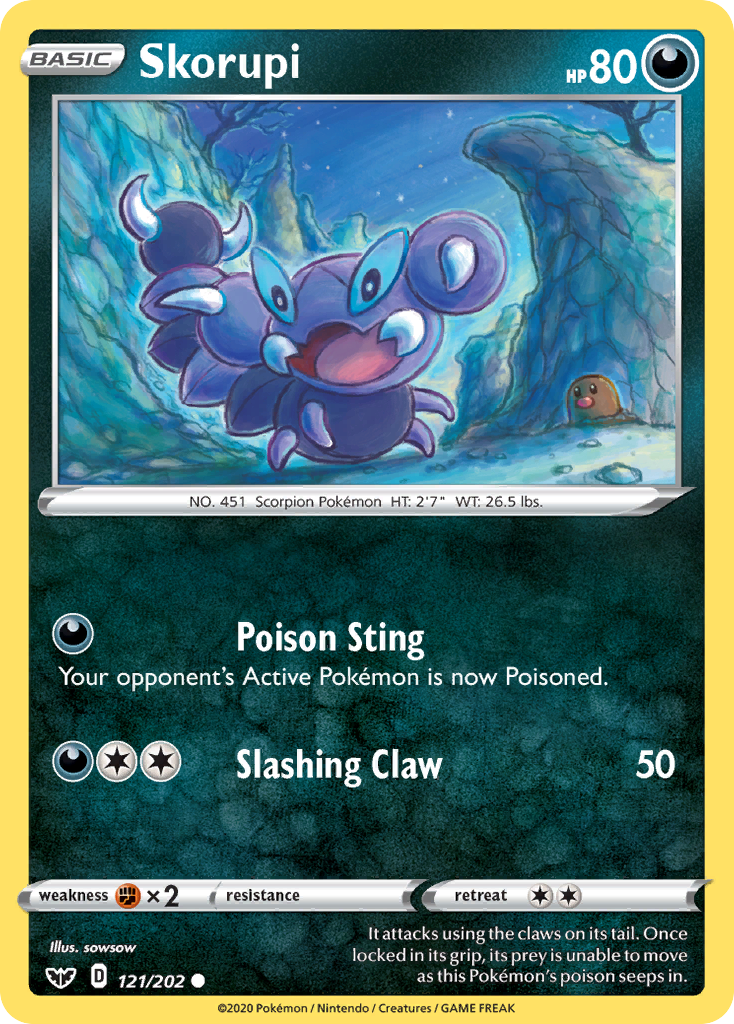
Skorupi
It attacks using the claws on its tail. Once locked in its grip, its prey is unable to move as this Pokémon’s poison seeps in.
Your opponent’s Active Pokémon is now Poisoned.
| Supertype | Pokémon |
|---|---|
| Subtype | Basic |
| HP | 80 |
| Types | Darkness |
| Attack | Poison Sting |
| Attack cost | Darkness |
| Artist | sowsow |
| Rarity | Common |
| Pokédex | 451 |
| Evolves to | Drapion |
Vendor Information
- Store Name: DutchGem
- Vendor: DutchGem
-
Address:
gekkestraat
179
2345GT Utrecht

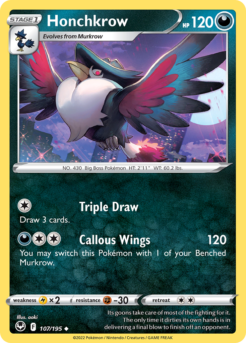
Silver Tempest
Its goons take care of most of the fighting for it. The only time it dirties its own hands is in delivering a final blow to finish off an opponent.
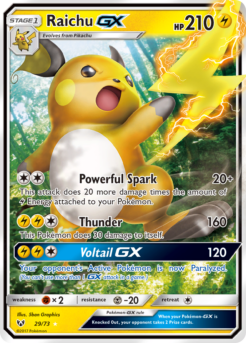
Shining Legends
This attack does 20 more damage times the amount of Lightning Energy attached to your Pokémon.
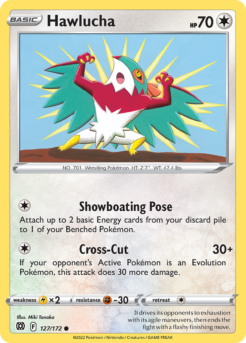
Brilliant Stars
It drives its opponents to exhaustion with its agile maneuvers, then ends the fight with a flashy finishing move.

Evolving Skies
This attack does 60 damage for each Energy attached to all of your opponent’s Pokémon.
Related products
Sword & Shield
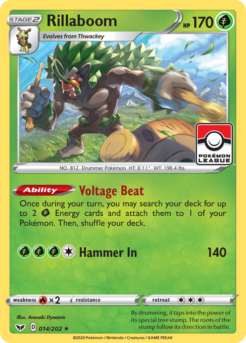
By drumming, it taps into the power of its special tree stump. The roots of the stump follow its direction in battle.
Sword & Shield
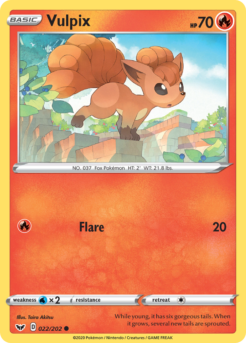
While young, it has six gorgeous tails. When it grows, several new tails are sprouted.

Sword & Shield
Attach up to 3 Fire Energy cards from your discard pile to your Pokémon in any way you like.
Sword & Shield
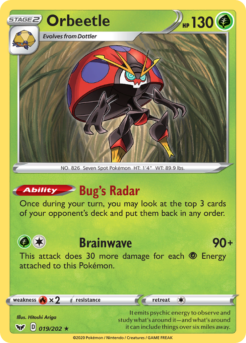
It emits psychic energy to observe and study what's around it—and what's around it can include things over six miles away.
Sword & Shield
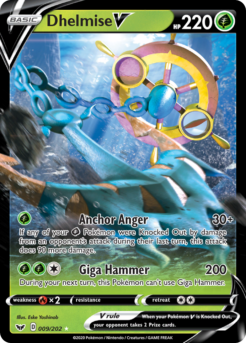
If any of your Grass Pokémon were Knocked Out by damage from an opponent’s attack during their last turn, this attack does 90 more damage.
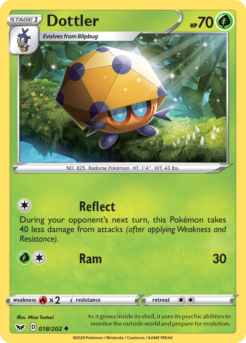
Sword & Shield
As it grows inside its shell, it uses its psychic abilities to monitor the outside world and prepare for evolution.
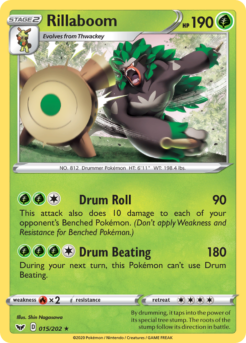
Sword & Shield
By drumming, it taps into the power of its special tree stump. The roots of the stump follow its direction in battle.
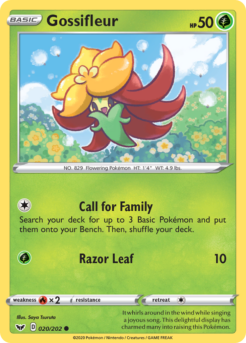
Sword & Shield
It whirls around in the wind while singing a joyous song. This delightful display has charmed many into raising this Pokémon.