



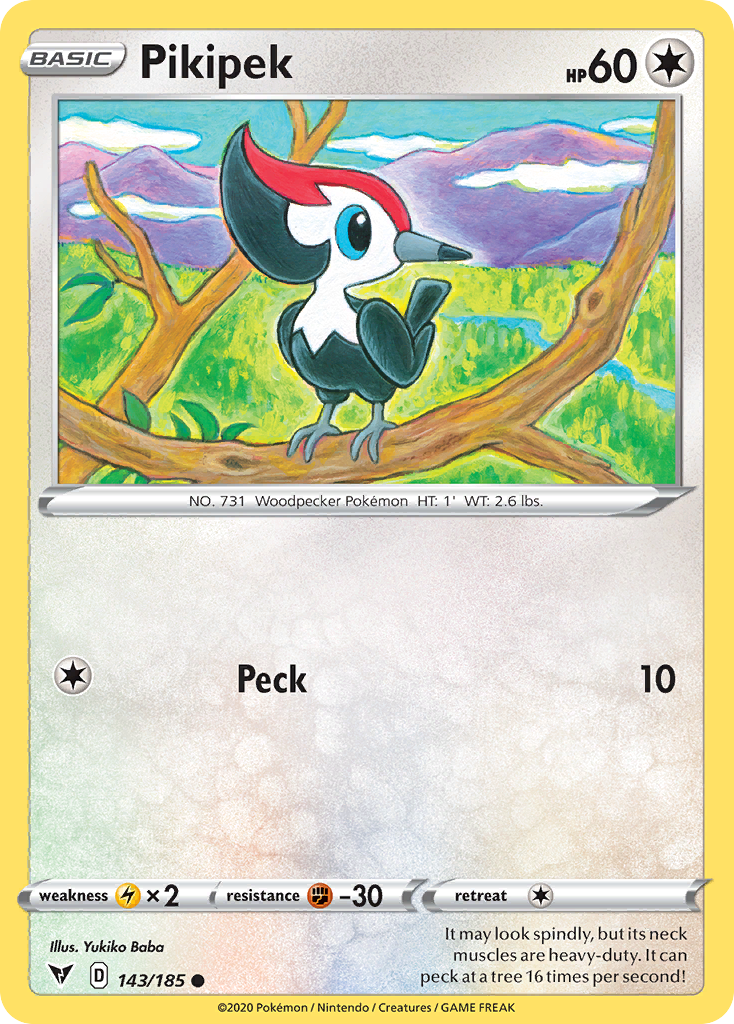
Pikipek
It may look spindly, but its neck muscles are heavy-duty. It can peck at a tree 16 times per second!
| Supertype | Pokémon |
|---|---|
| Subtype | Basic |
| HP | 60 |
| Types | Colorless |
| Attack | Peck |
| Attack cost | Colorless |
| Artist | Yukiko Baba |
| Rarity | Common |
| Pokédex | 731 |
| Evolves to | Trumbeak |
Vendor Information
- Store Name: DutchGem
- Vendor: DutchGem
-
Address:
gekkestraat
179
2345GT Utrecht
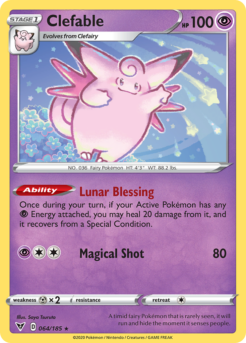
Sword & Shield
A timid fairy Pokémon that is rarely seen, it will run and hide the moment it senses people.
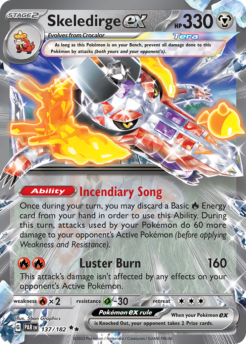
Paradox Rift
This attack’s damage isn’t affected by any effects on your opponent’s Active Pokémon.
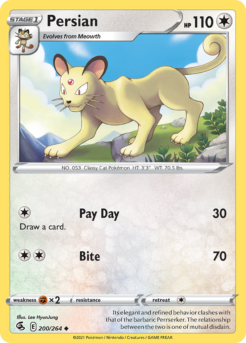
Fusion Strike
Its elegant and refined behavior clashes with that of the barbaric Perrserker. The relationship between the two is one of mutual disdain.
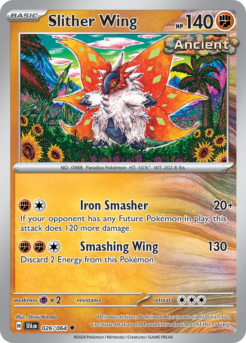
Scarlet & Violet
If your opponent has any Future Pokémon in play, this attack does 120 more damage.
Obsidian Flames
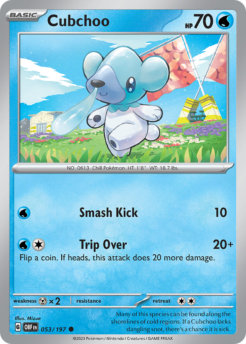
Many of this species can be found along the shorelines of cold regions. If a Cubchoo lacks dangling snot, there's a chance it is sick.
Related products
Sword & Shield
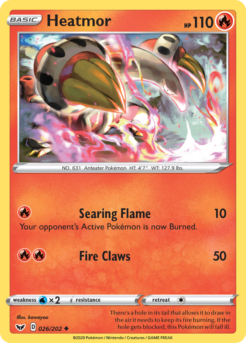
There's a hole in its tail that allows it to draw in the air it needs to keep its fire burning. If the hole gets blocked, this Pokémon will fall ill.
Sword & Shield
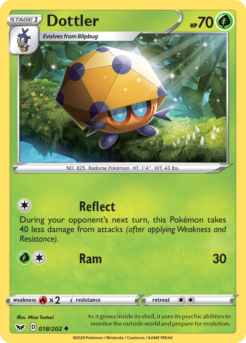
As it grows inside its shell, it uses its psychic abilities to monitor the outside world and prepare for evolution.
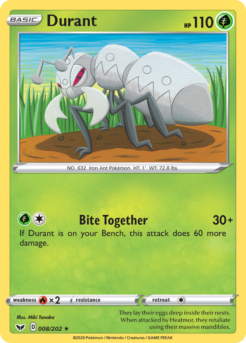
Sword & Shield
They lay their eggs deep inside their nests. When attacked by Heatmor, they retaliate using their massive mandibles.
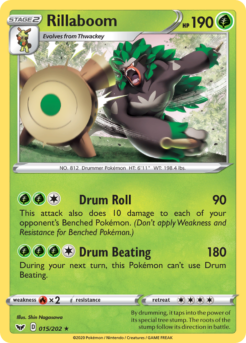
Sword & Shield
By drumming, it taps into the power of its special tree stump. The roots of the stump follow its direction in battle.
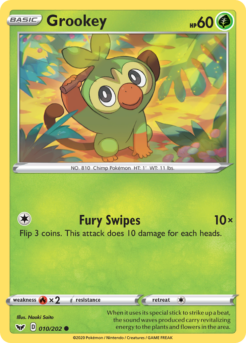
Sword & Shield
When it uses its special stick to strike up a beat, the sound waves produced carry revitalizing energy to the plants and flowers in the area.
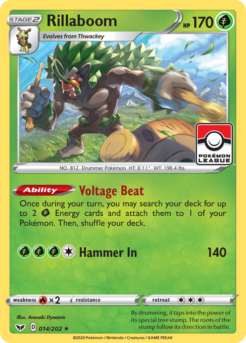
Sword & Shield
By drumming, it taps into the power of its special tree stump. The roots of the stump follow its direction in battle.
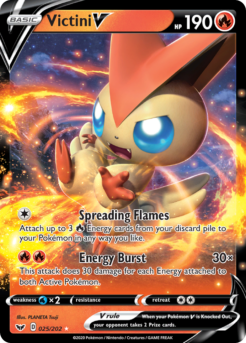
Sword & Shield
Attach up to 3 Fire Energy cards from your discard pile to your Pokémon in any way you like.
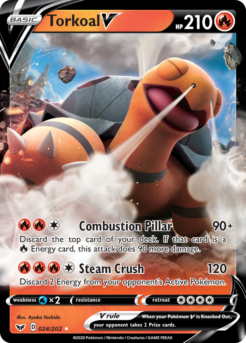
Sword & Shield
Discard the top card of your deck. If that card is a Fire Energy card, this attack does 90 more damage.