




Gloom
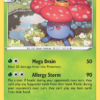

Its pistils exude an incredibly foul odor. The horrid stench can cause fainting at a distance of 1.25 miles.

Heal 30 damage from this Pokémon.
| Supertype | Pokémon |
|---|---|
| Subtype | Stage 1 |
| HP | 80 |
| Types | Grass |
| Attack | Absorb |
| Attack cost | Grass |
| Artist | Tomokazu Komiya |
| Rarity | Uncommon |
| Pokédex | 44 |
| Evolves from | Oddish |
| Evolves to | Vileplume |
Vendor Information
- Store Name: DutchGem
- Vendor: DutchGem
-
Address:
gekkestraat
179
2345GT Utrecht
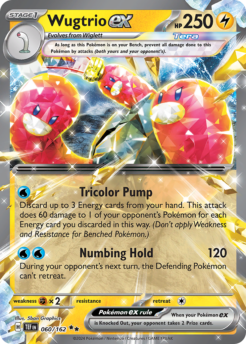
Scarlet & Violet
Discard up to 3 Energy cards from your hand. This attack does 60 damage to 1 of your opponent’s Pokémon for each Energy card you discarded in this way. (Don’t apply Weakness and Resistance for Benched Pokémon.)
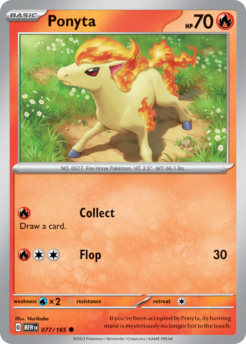
151
If you've been accepted by Ponyta, its burning mane is mysteriously no longer hot to the touch.
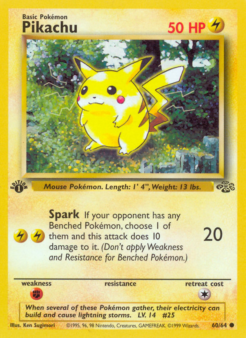
Base
When several of these Pokémon gather, their electricity can build and cause lightning storms.
Astral Radiance
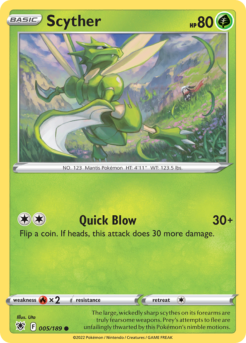
The large, wickedly sharp scythes on its forearms are truly fearsome weapons. Prey's attempts to flee are unfailingly thwarted by this Pokémon's nimble motions.
Related products
Sword & Shield
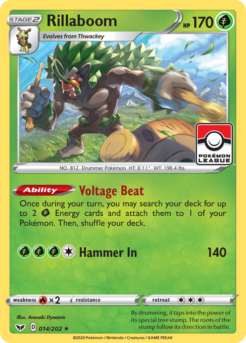
By drumming, it taps into the power of its special tree stump. The roots of the stump follow its direction in battle.
Sword & Shield
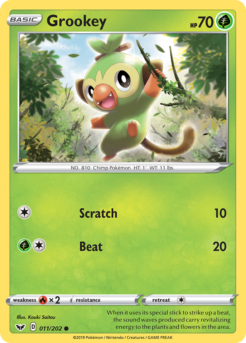
When it uses its special stick to strike up a beat, the sound waves produced carry revitalizing energy to the plants and flowers in the area.
Sword & Shield
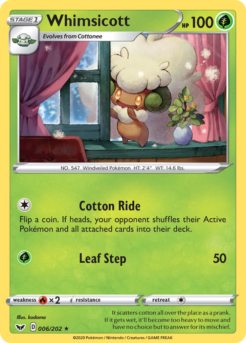
It scatters cotton all over the place as a prank. If it gets wet, it'll become too heavy to move and have no choice but to answer for its mischief.

Sword & Shield
Search your deck for up to 2 Pokémon, reveal them, and put them into your hand. Then, shuffle your deck.

Sword & Shield
Discard the top card of your deck. If that card is a Fire Energy card, this attack does 90 more damage.
Sword & Shield
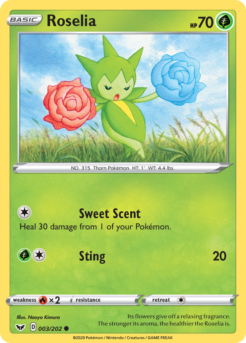
Its flowers give off a relaxing fragrance. The stronger its aroma, the healthier the Roselia is.
Sword & Shield
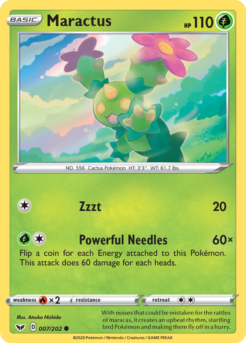
With noises that could be mistaken for the rattles of maracas, it creates an upbeat rhythm, startling bird Pokémon and making them fly off in a hurry.
Sword & Shield
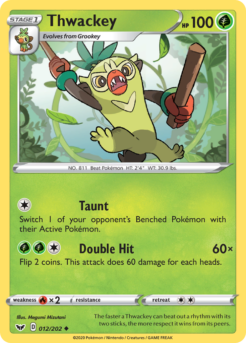
The faster a Thwackey can beat out a rhythm with its two sticks, the more respect it wins from its peers.