



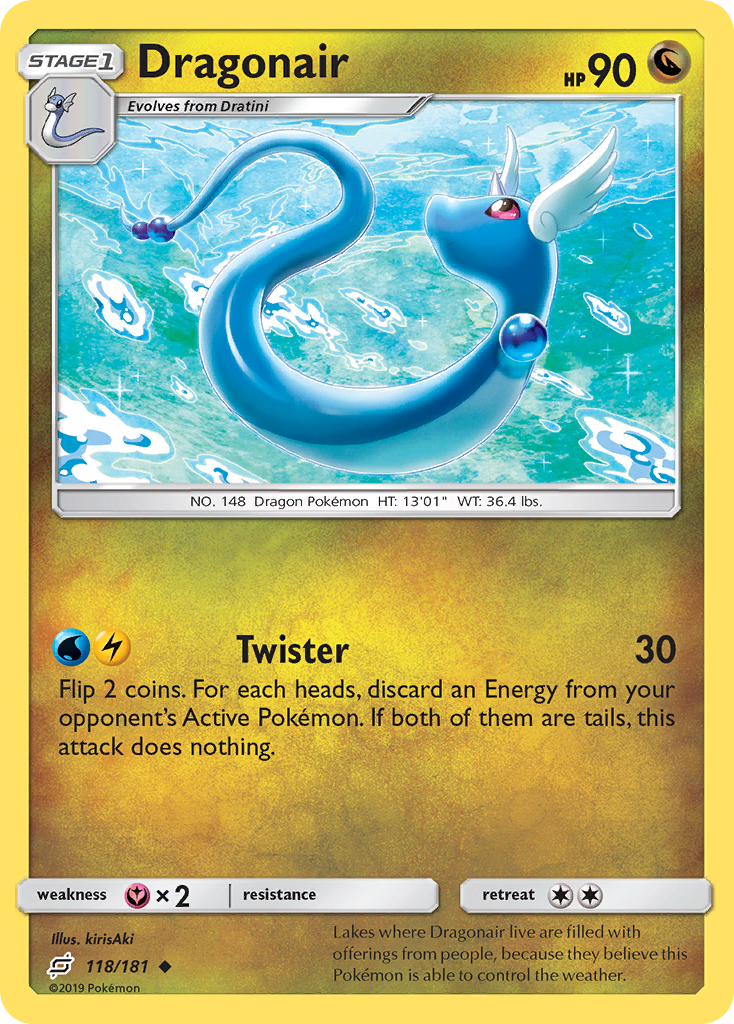
Dragonair
Lakes where Dragonair live are filled with offerings from people, because they believe this Pokémon is able to control the weather.

Flip 2 coins. For each heads, discard an Energy from your opponent’s Active Pokémon. If both of them are tails, this attack does nothing.
| Supertype | Pokémon |
|---|---|
| Subtype | Stage 1 |
| HP | 90 |
| Types | Dragon |
| Attack | Twister |
| Attack cost | Water |
| Artist | kirisAki |
| Rarity | Uncommon |
| Pokédex | 148 |
| Evolves from | Dratini |
| Evolves to | Dragonite |
Vendor Information
- Store Name: DutchGem
- Vendor: DutchGem
-
Address:
gekkestraat
179
2345GT Utrecht
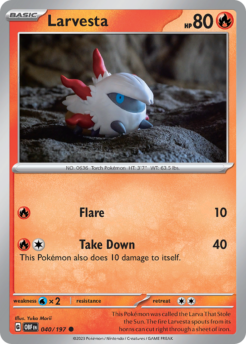
Obsidian Flames
This Pokémon was called the Larva That Stole the Sun. The fire Larvesta spouts from its horns can cut right through a sheet of iron.
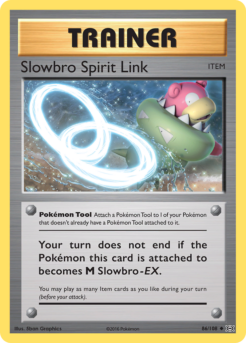
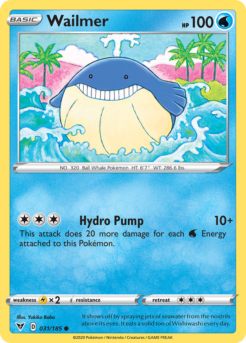
Sword & Shield
It shows off by spraying jets of seawater from the nostrils above its eyes. It eats a solid ton of Wishiwashi every day.
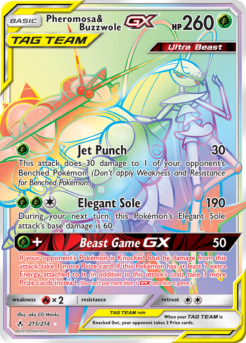
Sun & Moon
This attack does 30 damage to 1 of your opponent’s Benched Pokémon. (Don’t apply Weakness and Resistance for Benched Pokémon.)
Related products
Sun & Moon
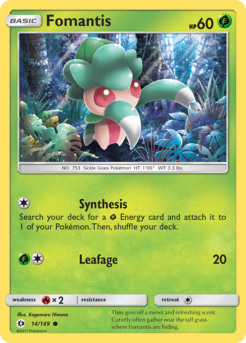
They give off a sweet and refreshing scent. Cutiefly often gather near the tall grass where Fomantis are hiding.
Sun & Moon
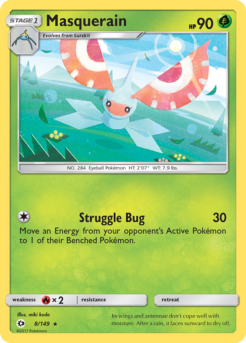
Its wings and antennae don't cope well with moisture. After a rain, it faces sunward to dry off.
Sun & Moon
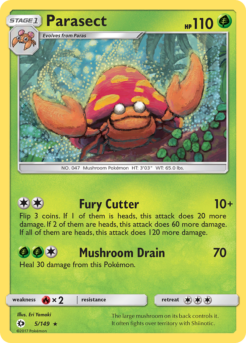
The large mushroom on its back controls it. It often fights over territory with Shiinotic.
Sun & Moon
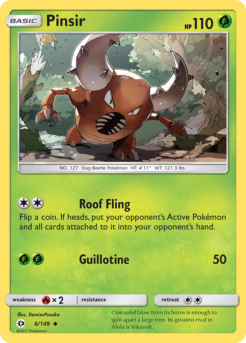
One solid blow from its horns is enough to split apart a large tree. Its greatest rival in Alola is Vikavolt.
Sun & Moon
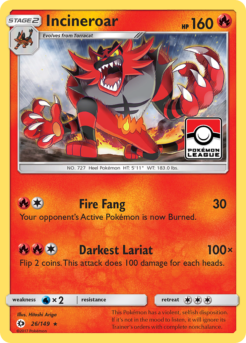
This Pokémon has a violent, selfish disposition. If it's not in the mood to listen, it will ignore its Trainer's orders with complete nonchalance.
Sun & Moon
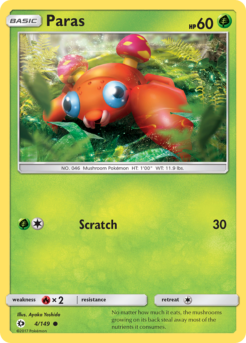
No matter how much it eats, the mushrooms growing on its back steal away most of the nutrients it consumes.
Sun & Moon
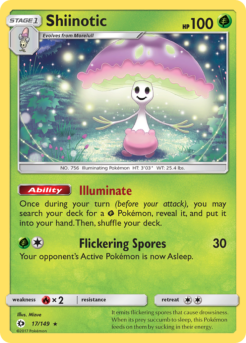
It emits flickering spores that cause drowsiness. When its prey succumb to sleep, this Pokémon feeds on them by sucking in their energy.
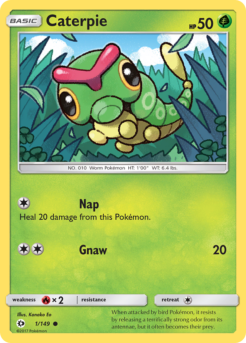
Sun & Moon
When attacked by bird Pokémon, it resists by releasing a terrifically strong odor from its antennae, but it often becomes their prey.