



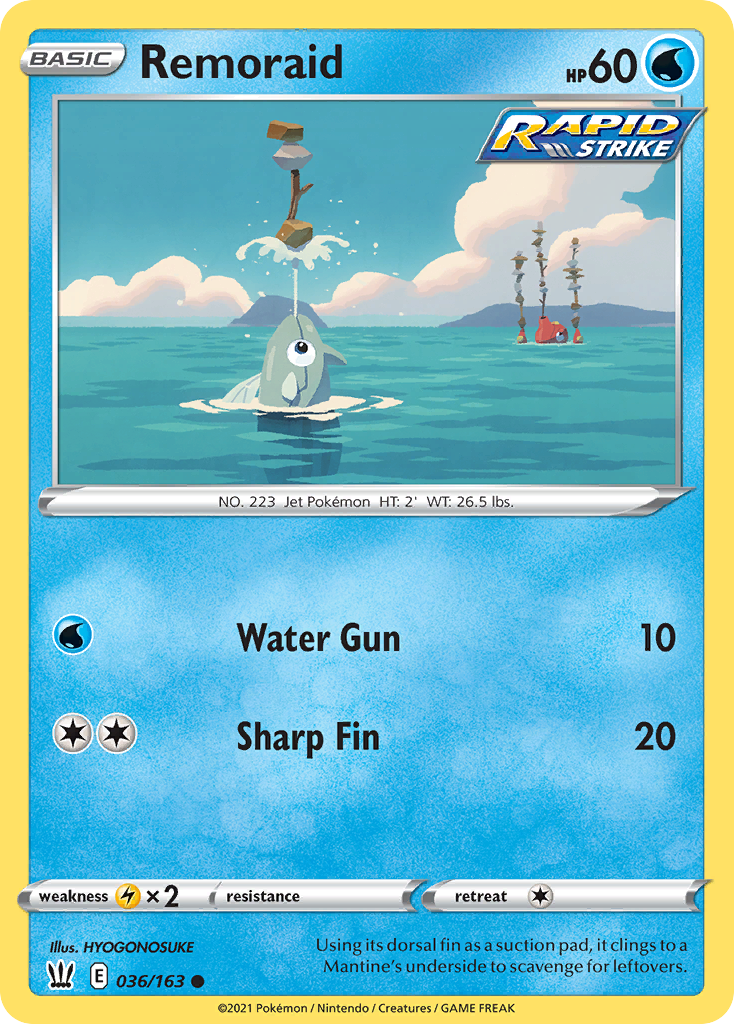
Remoraid
Using its dorsal fin as a suction pad, it clings to a Mantine’s underside to scavenge for leftovers.
| Supertype | Pokémon |
|---|---|
| Subtype | Basic |
| HP | 60 |
| Types | Water |
| Attack | Water Gun |
| Attack cost | Water |
| Artist | HYOGONOSUKE |
| Rarity | Common |
| Pokédex | 223 |
| Evolves to | Octillery |
Vendor Information
- Store Name: DutchGem
- Vendor: DutchGem
-
Address:
gekkestraat
179
2345GT Utrecht
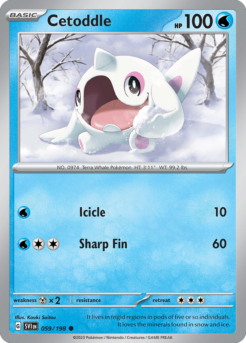
Scarlet & Violet
It lives in frigid regions in pods of five or so individuals. It loves the minerals found in snow and ice.
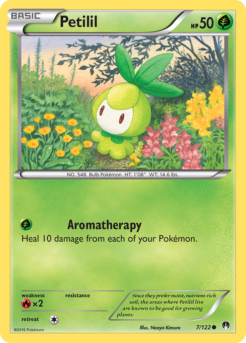
BREAKpoint
Since they prefer moist, nutrient-rich soil, the areas where Petilil live are known to be good for growing plants.
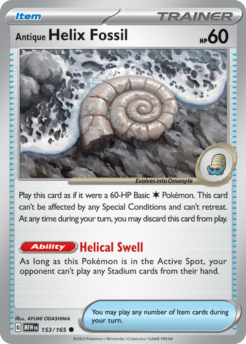
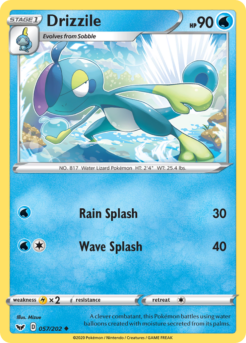
Sword & Shield
A clever combatant, this Pokémon battles using water balloons created with moisture secreted from its palms.
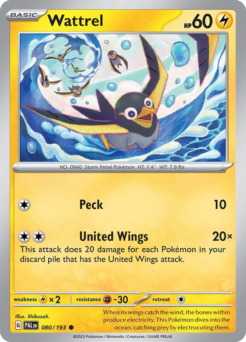
Paldea Evolved
When its wings catch the wind, the bones within produce electricity. This Pokémon dives into the ocean, catching prey by electrocuting them.
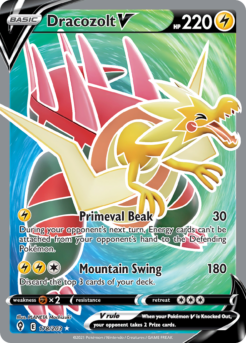
Evolving Skies
During your opponent’s next turn, Energy cards can’t be attached from your opponent’s hand to the Defending Pokémon.