



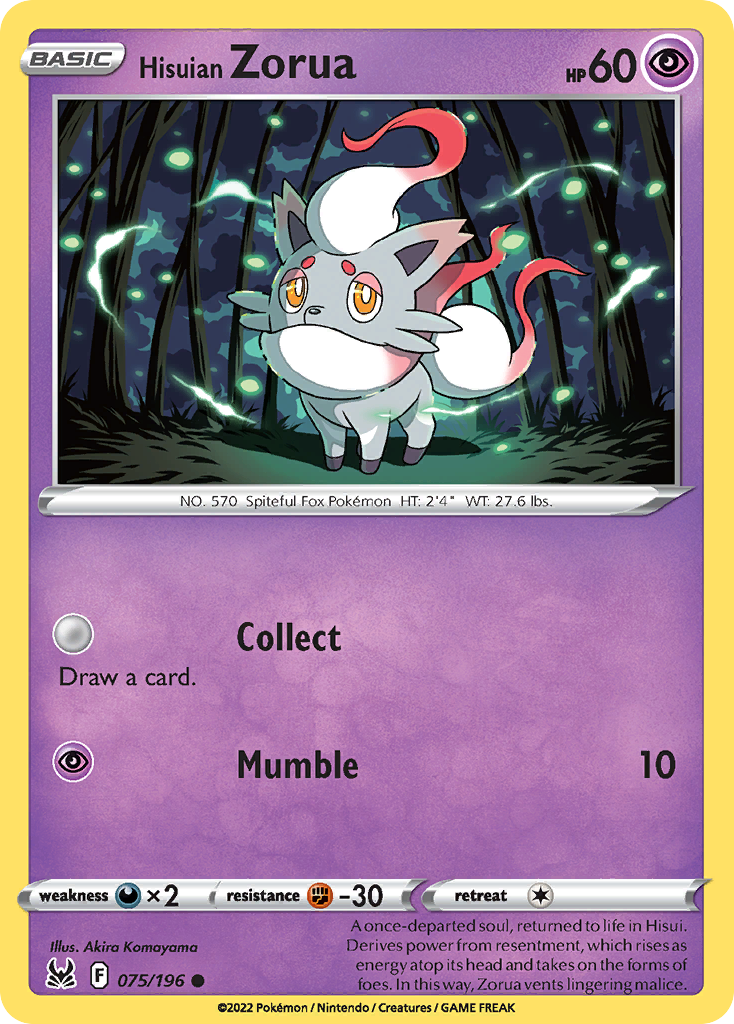
Hisuian Zorua


A once-departed soul, returned to life in Hisui. Derives power from resentment, which rises as energy atop its head and takes on the forms of foes. In this way, Zorua vents lingering malice.

Draw a card.
| Supertype | Pokémon |
|---|---|
| Subtype | Basic |
| HP | 60 |
| Types | Psychic |
| Attack | Collect |
| Artist | Akira Komayama |
| Rarity | Common |
| Pokédex | 570 |
| Evolves to | Zoroark |
Vendor Information
- Store Name: DutchGem
- Vendor: DutchGem
-
Address:
gekkestraat
179
2345GT Utrecht

Astral Radiance
When it is resolute, its body fills with power and it becomes swifter. Its jumps are then too fast to follow.
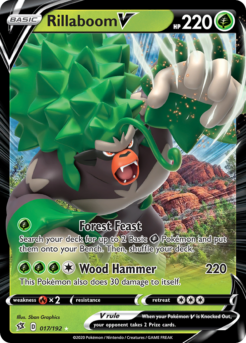
Rebel Clash
Search your deck for up to 2 Basic Grass Pokémon and put them onto your Bench. Then, shuffle your deck.

Paldean Fates
If the tail-biting Shellder is thrown off in a harsh battle, this Pokémon reverts to being an ordinary Slowpoke.
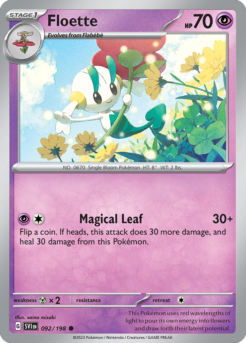
Scarlet & Violet
This Pokémon uses red wavelengths of light to pour its own energy into flowers and draw forth their latent potential.


BREAKpoint
It has mystical powers but doesn't recall that it has used them. That is why it always looks puzzled.
Podobne produkty
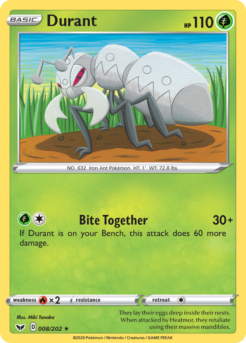
Sword & Shield
They lay their eggs deep inside their nests. When attacked by Heatmor, they retaliate using their massive mandibles.

Sword & Shield
The faster a Thwackey can beat out a rhythm with its two sticks, the more respect it wins from its peers.

Sword & Shield
When it uses its special stick to strike up a beat, the sound waves produced carry revitalizing energy to the plants and flowers in the area.

Sword & Shield
It whirls around in the wind while singing a joyous song. This delightful display has charmed many into raising this Pokémon.
Sword & Shield
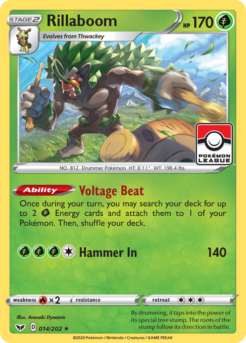
By drumming, it taps into the power of its special tree stump. The roots of the stump follow its direction in battle.
Sword & Shield
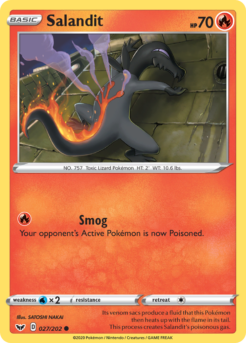
Its venom sacs produce a fluid that this Pokémon then heats up with the flame in its tail. This process creates Salandit's poisonous gas.
Sword & Shield
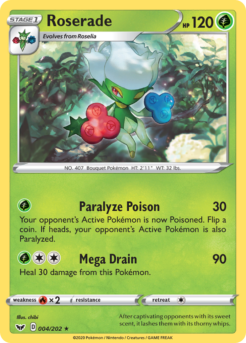
After captivating opponents with its sweet scent, it lashes them with its thorny whips.

Sword & Shield
A constant collector of information, this Pokémon is very smart. Very strong is what it isn't.