



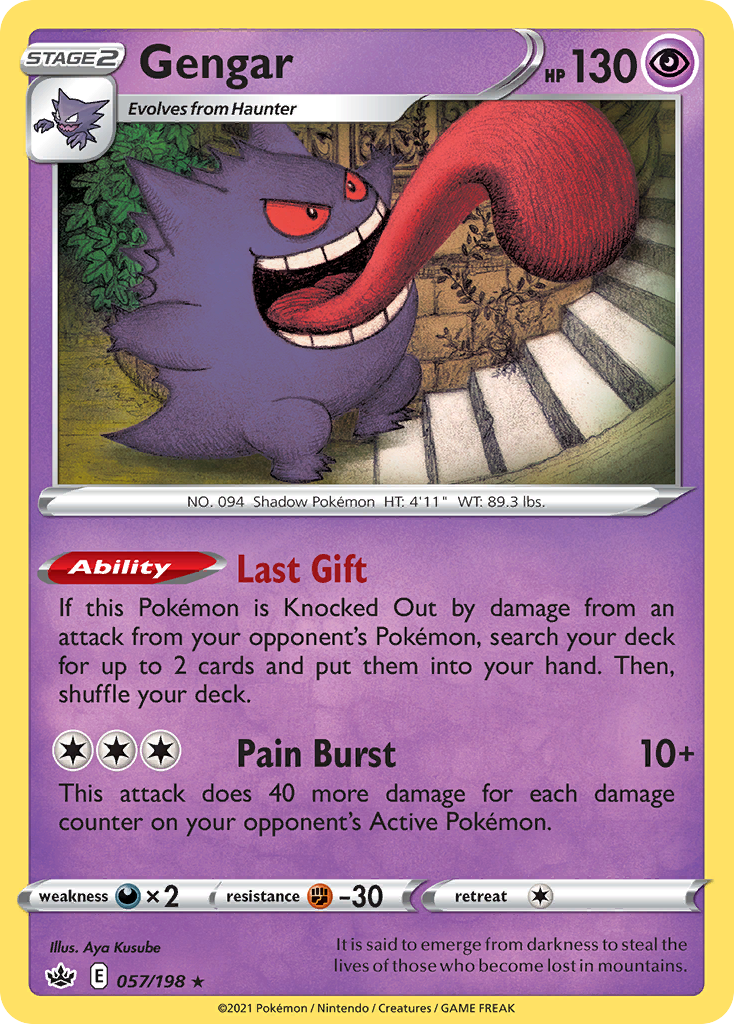
Gengar
It is said to emerge from darkness to steal the lives of those who become lost in mountains.
This attack does 40 more damage for each damage counter on your opponent’s Active Pokémon.
| Supertype | Pokémon |
|---|---|
| Subtype | Stage 2 |
| HP | 130 |
| Types | Psychic |
| Attack | Pain Burst |
| Attack cost | Colorless |
| Artist | Aya Kusube |
| Rarity | Rare Holo |
| Pokédex | 94 |
| Evolves from | Haunter |
Vendor Information
- Store Name: DutchGem
- Vendor: DutchGem
-
Address:
gekkestraat
179
2345GT Utrecht
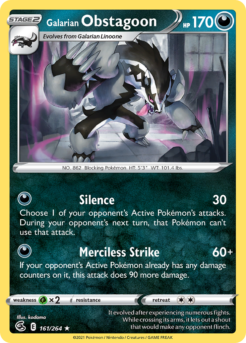
Fusion Strike
It evolved after experiencing numerous fights. While crossing its arms, it lets out a shout that would make any opponent flinch.

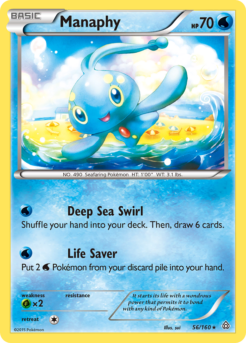
Primal Clash
It starts its life with a wondrous power that permits it to bond with any kind of Pokémon.
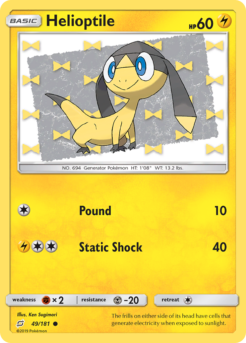
Sun & Moon
The frills on either side of its head have cells that generate electricity when exposed to sunlight.
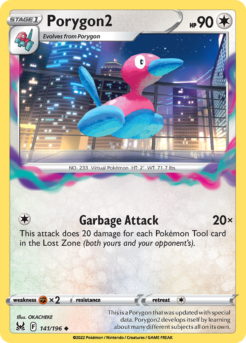
Lost Origin
This is a Porygon that was updated with special data. Porygon2 develops itself by learning about many different subjects all on its own.
Podobne produkty
Sword & Shield
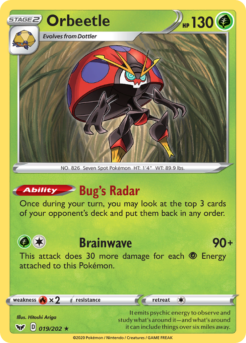
It emits psychic energy to observe and study what's around it—and what's around it can include things over six miles away.
Sword & Shield
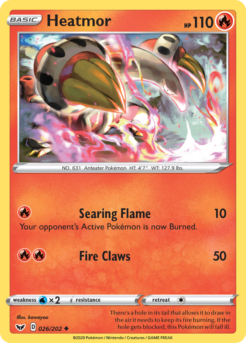
There's a hole in its tail that allows it to draw in the air it needs to keep its fire burning. If the hole gets blocked, this Pokémon will fall ill.

Sword & Shield
Attach up to 3 Fire Energy cards from your discard pile to your Pokémon in any way you like.
Sword & Shield
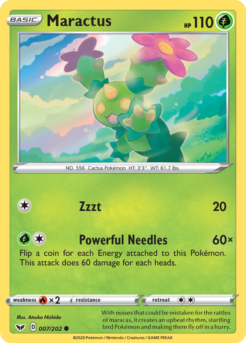
With noises that could be mistaken for the rattles of maracas, it creates an upbeat rhythm, startling bird Pokémon and making them fly off in a hurry.
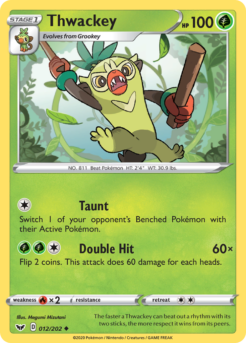
Sword & Shield
The faster a Thwackey can beat out a rhythm with its two sticks, the more respect it wins from its peers.
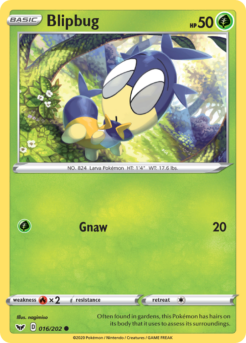
Sword & Shield
Often found in gardens, this Pokémon has hairs on its body that it uses to assess its surroundings.
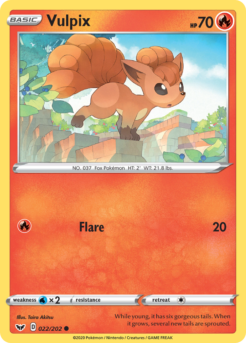
Sword & Shield
While young, it has six gorgeous tails. When it grows, several new tails are sprouted.
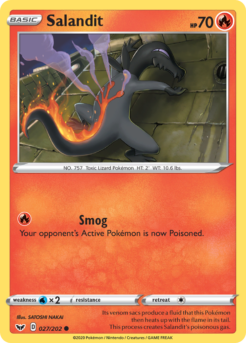
Sword & Shield
Its venom sacs produce a fluid that this Pokémon then heats up with the flame in its tail. This process creates Salandit's poisonous gas.