



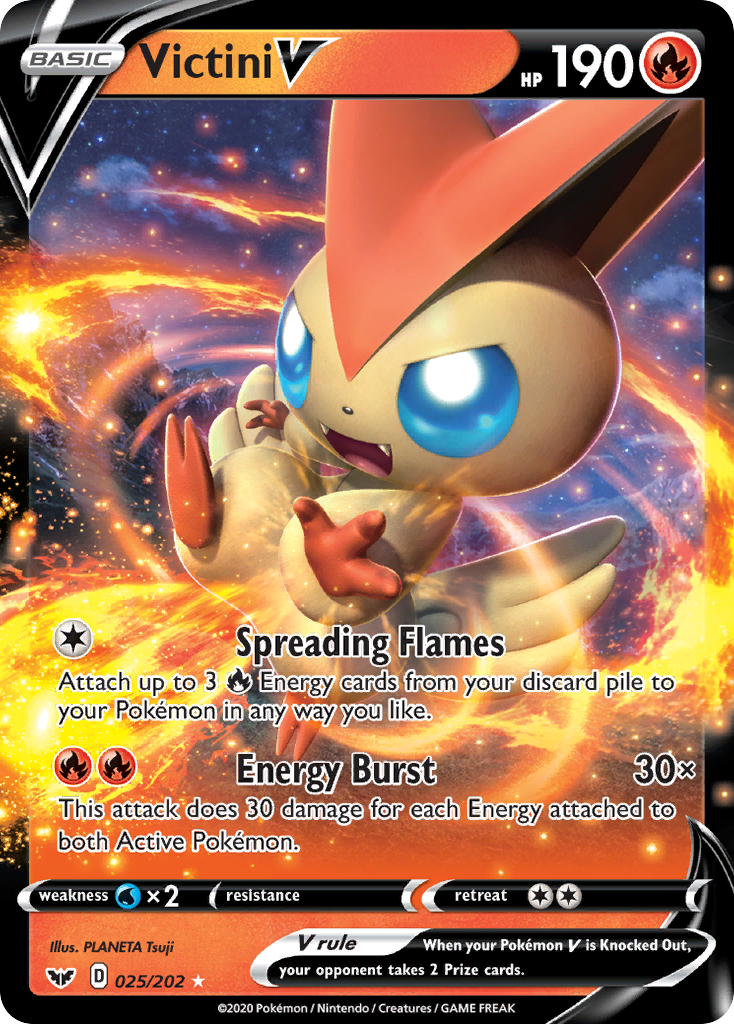
Attach up to 3 Fire Energy cards from your discard pile to your Pokémon in any way you like.
| Supertype | Pokémon |
|---|---|
| Subtype | Basic |
| HP | 190 |
| Types | Fire |
| Attack | Spreading Flames |
| Attack cost | Colorless |
| Artist | PLANETA Tsuji |
| Rarity | Rare Holo V |
| Pokédex | 494 |
Vendor Information
- Store Name: DutchGem
- Vendor: DutchGem
-
Address:
gekkestraat
179
2345GT Utrecht
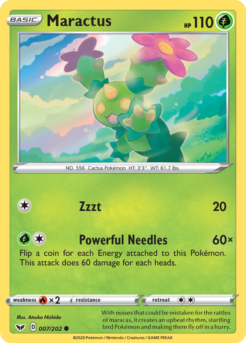
Sword & Shield
With noises that could be mistaken for the rattles of maracas, it creates an upbeat rhythm, startling bird Pokémon and making them fly off in a hurry.
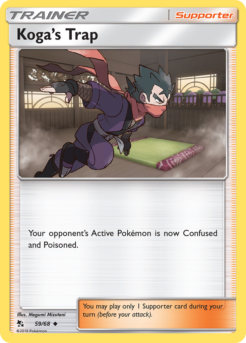
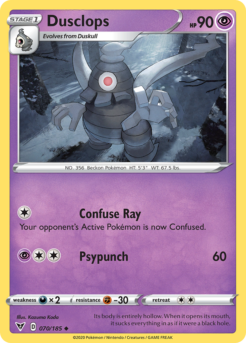
Sword & Shield
Its body is entirely hollow. When it opens its mouth, it sucks everything in as if it were a black hole.
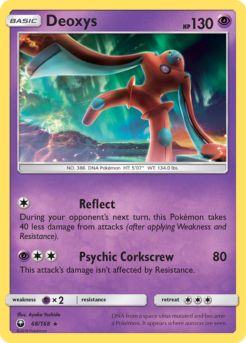
Celestial Storm
DNA from a space virus mutated and became a Pokémon. It appears where auroras are seen.
Podobne produkty
Sword & Shield
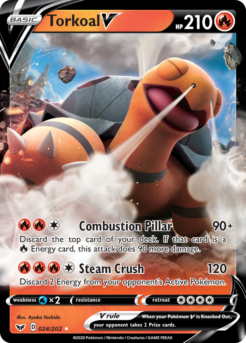
Discard the top card of your deck. If that card is a Fire Energy card, this attack does 90 more damage.
Sword & Shield
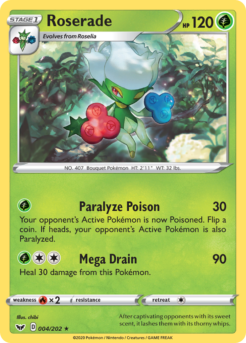
After captivating opponents with its sweet scent, it lashes them with its thorny whips.
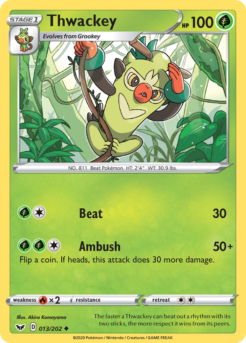
Sword & Shield
The faster a Thwackey can beat out a rhythm with its two sticks, the more respect it wins from its peers.
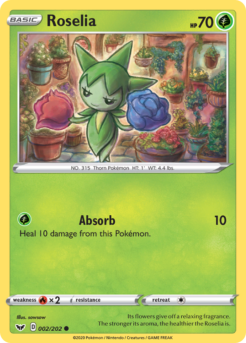
Sword & Shield
Its flowers give off a relaxing fragrance. The stronger its aroma, the healthier the Roselia is.
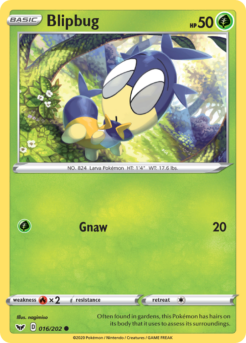
Sword & Shield
Often found in gardens, this Pokémon has hairs on its body that it uses to assess its surroundings.
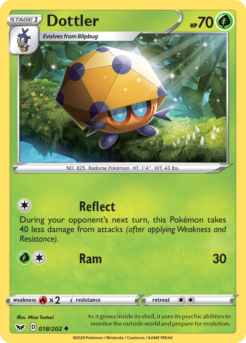
Sword & Shield
As it grows inside its shell, it uses its psychic abilities to monitor the outside world and prepare for evolution.
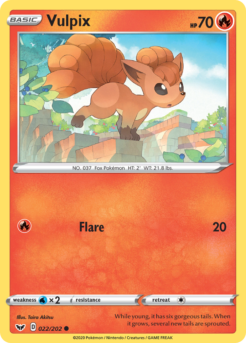
Sword & Shield
While young, it has six gorgeous tails. When it grows, several new tails are sprouted.
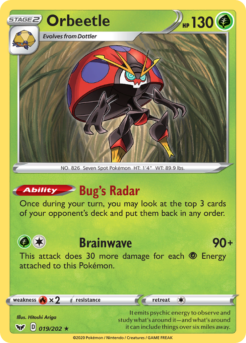
Sword & Shield
It emits psychic energy to observe and study what's around it—and what's around it can include things over six miles away.