



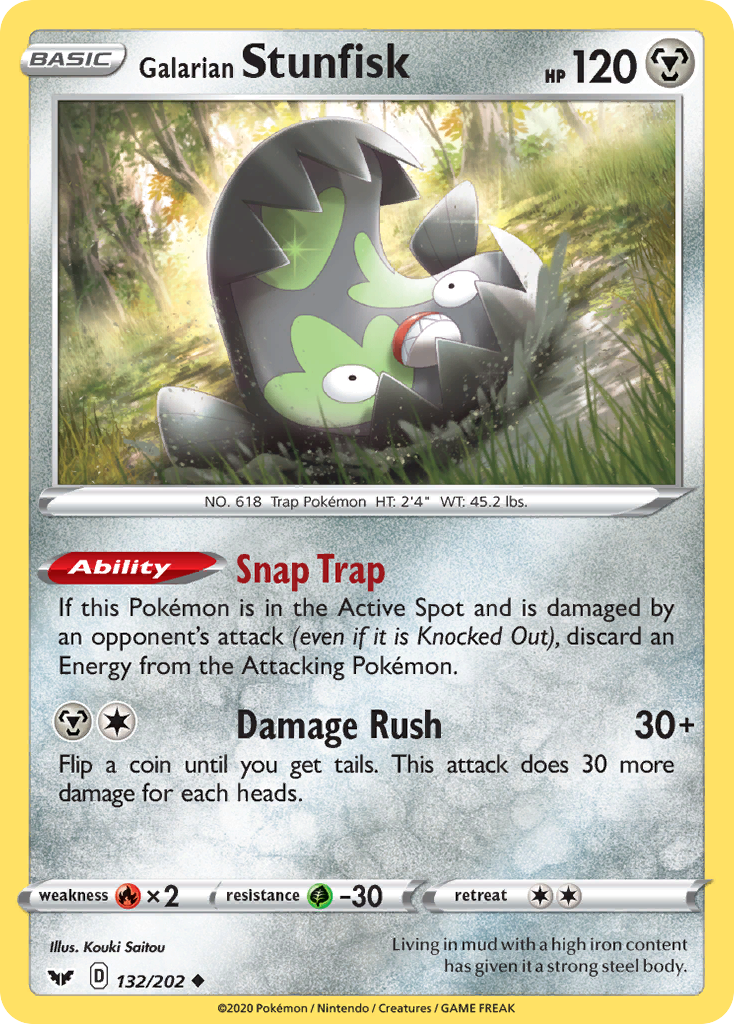
Galarian Stunfisk
Living in mud with a high iron content has given it a strong steel body.
Flip a coin until you get tails. This attack does 30 more damage for each heads.
| Supertype | Pokémon |
|---|---|
| Subtype | Basic |
| HP | 120 |
| Types | Metal |
| Attack | Damage Rush |
| Attack cost | Metal |
| Artist | Kouki Saitou |
| Rarity | Uncommon |
| Pokédex | 618 |
Vendor Information
- Store Name: DutchGem
- Vendor: DutchGem
-
Address:
gekkestraat
179
2345GT Utrecht
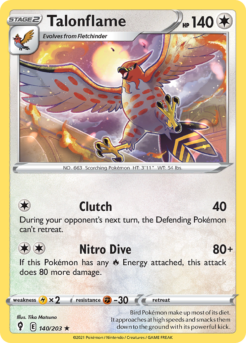
Evolving Skies
Bird Pokémon make up most of its diet. It approaches at high speeds and smacks them down to the ground with its powerful kick.
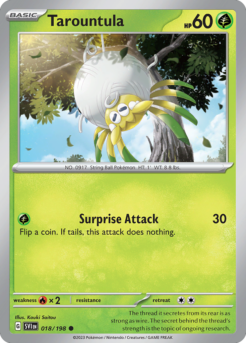
Scarlet & Violet
The thread it secretes from its rear is as strong as wire. The secret behind the thread's strength is the topic of ongoing research.
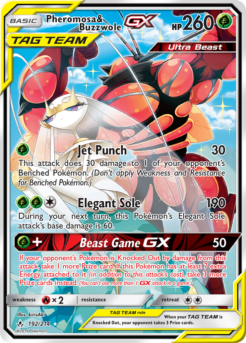
Sun & Moon
This attack does 30 damage to 1 of your opponent’s Benched Pokémon. (Don’t apply Weakness and Resistance for Benched Pokémon.)
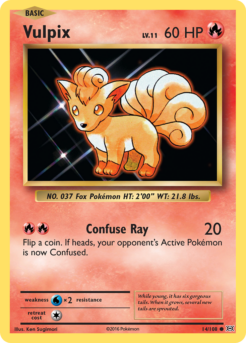
Evolutions
While young, it has six gorgeous tails. When it grows, several new tails are sprouted.
Paradox Rift
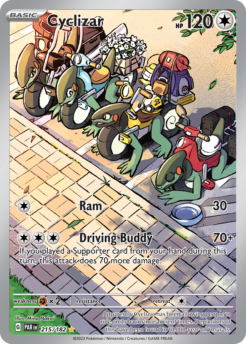
Apparently Cyclizar has been allowing people to ride on its back since ancient times. Depictions of this have been found in 10,000-year-old murals.
BREAKthrough
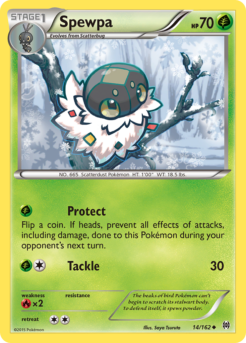
The beaks of birds can't begin to scratch its stalwart body. To defend itself, it spews powder.
Related products
Sword & Shield
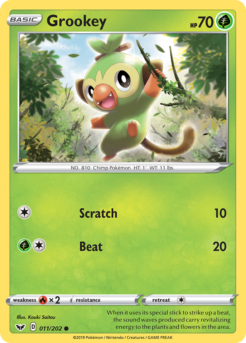
When it uses its special stick to strike up a beat, the sound waves produced carry revitalizing energy to the plants and flowers in the area.
Sword & Shield
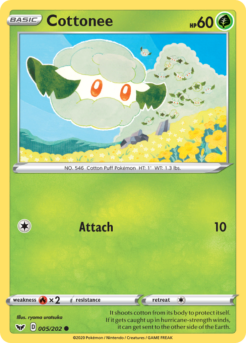
It shoots cotton from its body to protect itself. If it gets caught up in hurricane-strength winds, it can get sent to the other side of the Earth.
Sword & Shield
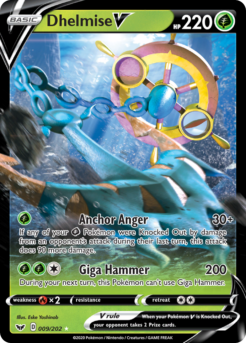
If any of your Grass Pokémon were Knocked Out by damage from an opponent’s attack during their last turn, this attack does 90 more damage.
Sword & Shield
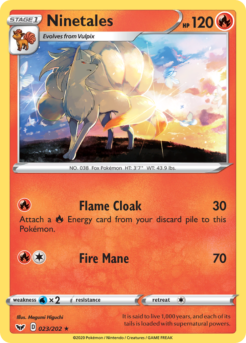
It is said to live 1,000 years, and each of its tails is loaded with supernatural powers.
Sword & Shield
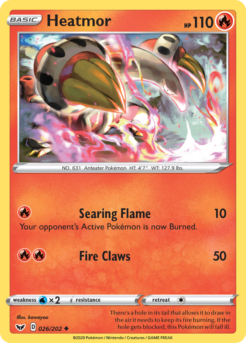
There's a hole in its tail that allows it to draw in the air it needs to keep its fire burning. If the hole gets blocked, this Pokémon will fall ill.
Sword & Shield
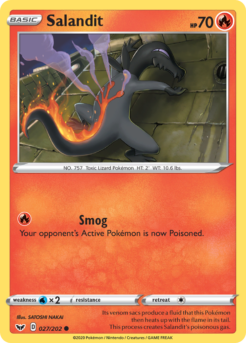
Its venom sacs produce a fluid that this Pokémon then heats up with the flame in its tail. This process creates Salandit's poisonous gas.
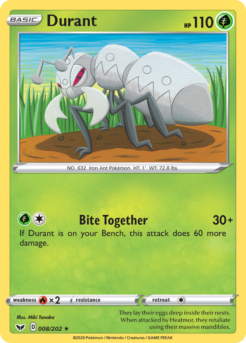
Sword & Shield
They lay their eggs deep inside their nests. When attacked by Heatmor, they retaliate using their massive mandibles.
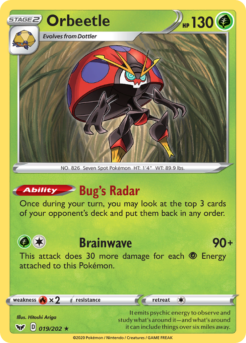
Sword & Shield
It emits psychic energy to observe and study what's around it—and what's around it can include things over six miles away.