



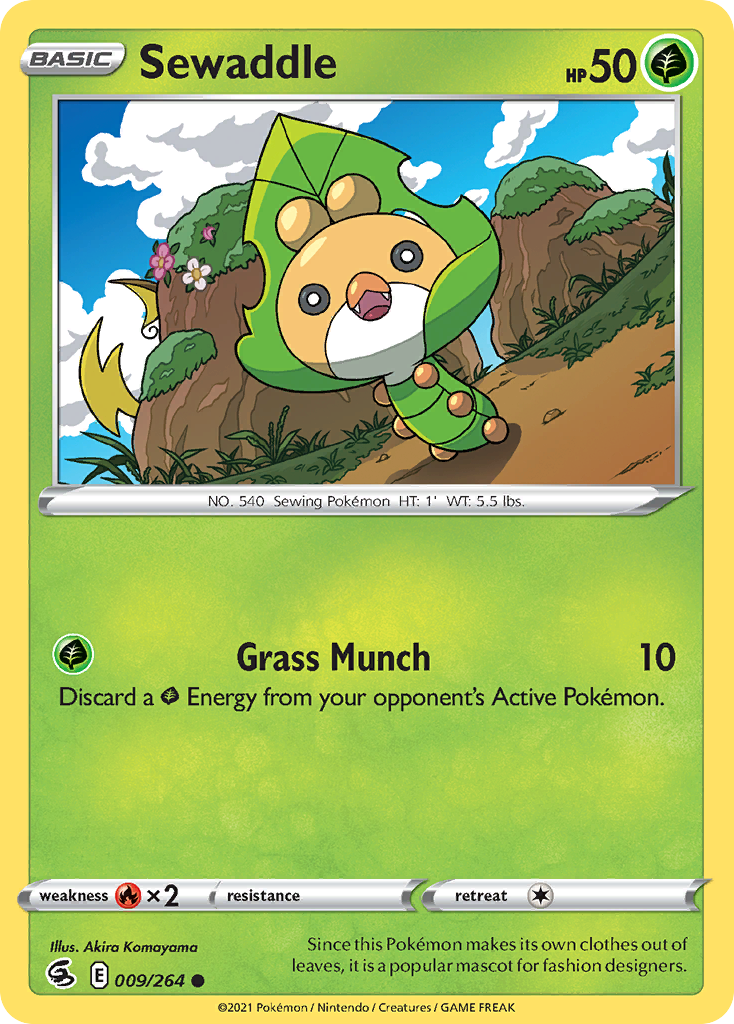
Sewaddle
Since this Pokémon makes its own clothes out of leaves, it is a popular mascot for fashion designers.
Discard a Grass Energy from your opponent’s Active Pokémon.
| Supertype | Pokémon |
|---|---|
| Subtype | Basic |
| HP | 50 |
| Types | Grass |
| Attack | Grass Munch |
| Attack cost | Grass |
| Artist | Akira Komayama |
| Rarity | Common |
| Pokédex | 540 |
| Evolves to | Swadloon |
Vendor Information
- Store Name: DutchGem
- Vendor: DutchGem
-
Address:
gekkestraat
179
2345GT Utrecht
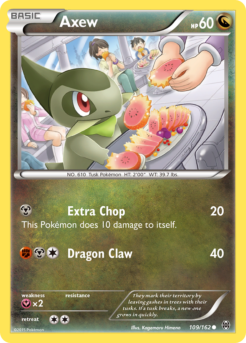
BREAKthrough
They mark their territory by leaving gashes in trees with their tusks. If a tusk breaks, a new one grows in quickly.
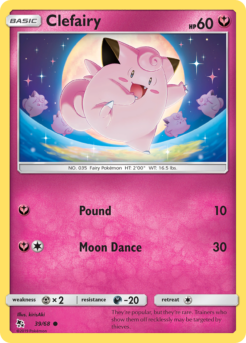
Hidden Fates
They're popular, but they're rare. Trainers who show them off recklessly may be targeted by thieves.
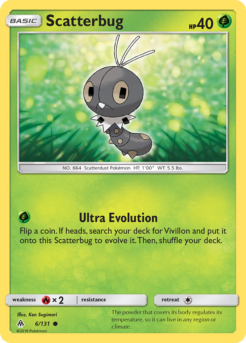
Forbidden Light
The powder that covers its body regulates its temperature, so it can live in any region or climate.
Sun & Moon
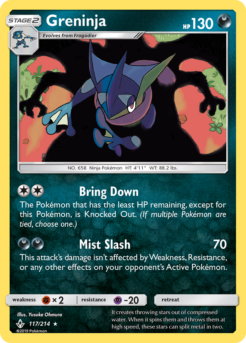
It creates throwing stars out of compressed water. When it spins them and throws them at high speed, these stars can split metal in two.
Related products
Sword & Shield
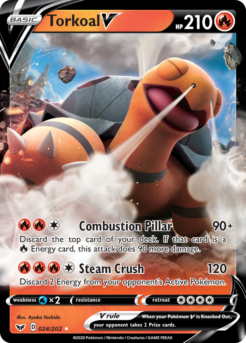
Discard the top card of your deck. If that card is a Fire Energy card, this attack does 90 more damage.
Sword & Shield
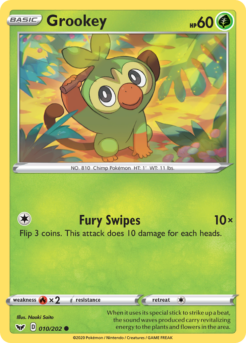
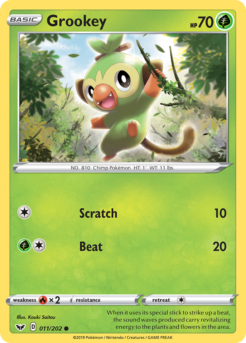
When it uses its special stick to strike up a beat, the sound waves produced carry revitalizing energy to the plants and flowers in the area.
Sword & Shield
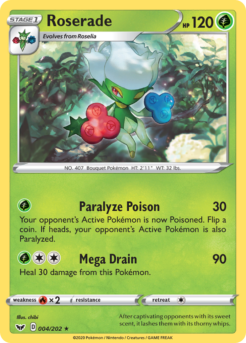
After captivating opponents with its sweet scent, it lashes them with its thorny whips.
Sword & Shield
When it uses its special stick to strike up a beat, the sound waves produced carry revitalizing energy to the plants and flowers in the area.
Sword & Shield
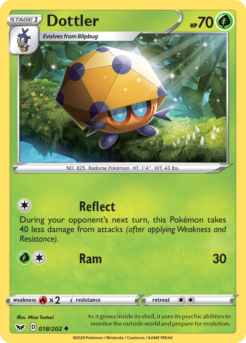
As it grows inside its shell, it uses its psychic abilities to monitor the outside world and prepare for evolution.
Sword & Shield
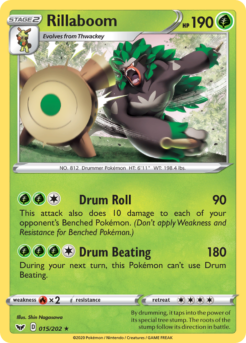
By drumming, it taps into the power of its special tree stump. The roots of the stump follow its direction in battle.
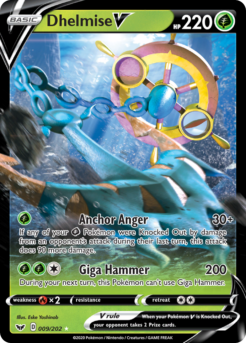
Sword & Shield
If any of your Grass Pokémon were Knocked Out by damage from an opponent’s attack during their last turn, this attack does 90 more damage.
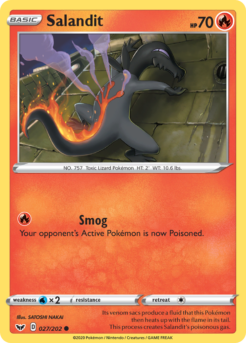
Sword & Shield
Its venom sacs produce a fluid that this Pokémon then heats up with the flame in its tail. This process creates Salandit's poisonous gas.