



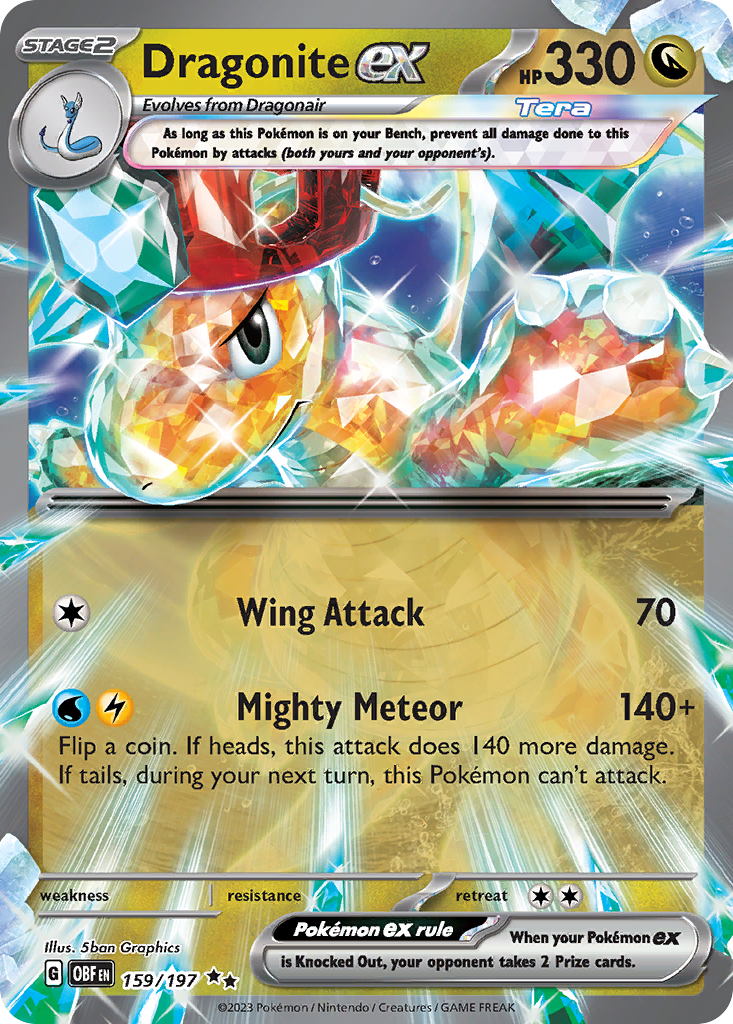
| Supertype | Pokémon |
|---|---|
| Subtype | Stage 2 |
| HP | 330 |
| Types | Dragon |
| Attack | Wing Attack |
| Attack cost | Colorless |
| Artist | 5ban Graphics |
| Rarity | Double Rare |
| Pokédex | 149 |
| Evolves from | Dragonair |
Vendor Information
- Store Name: DutchGem
- Vendor: DutchGem
-
Address:
gekkestraat
179
2345GT Utrecht
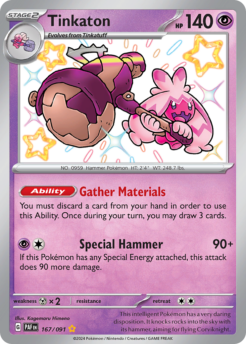
Paldean Fates
This intelligent Pokémon has a very daring disposition. It knocks rocks into the sky with its hammer, aiming for flying Corviknight.
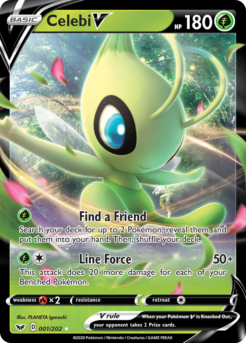
Sword & Shield
Search your deck for up to 2 Pokémon, reveal them, and put them into your hand. Then, shuffle your deck.
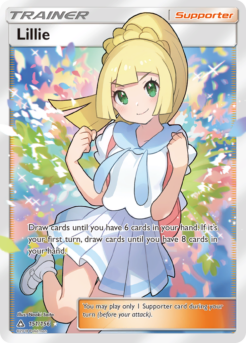
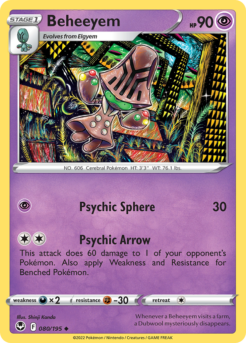
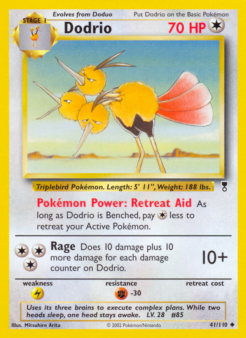
Base
Uses its three brains to execute complex plans. While two heads sleep, one head stays awake.
Related products
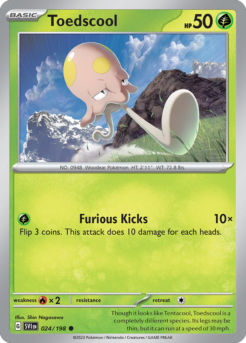
Scarlet & Violet
Though it looks like Tentacool, Toedscool is a completely different species. Its legs may be thin, but it can run at a speed of 30 mph.
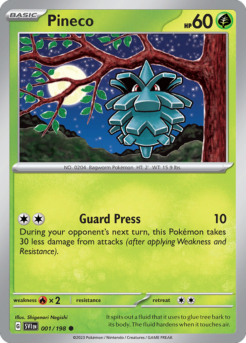
Scarlet & Violet
It spits out a fluid that it uses to glue tree bark to its body. The fluid hardens when it touches air.
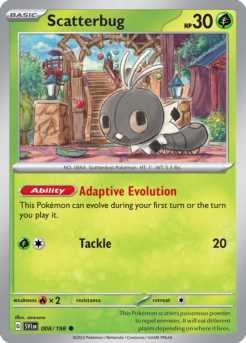
Scarlet & Violet
This Pokémon scatters poisonous powder to repel enemies. It will eat different plants depending on where it lives.
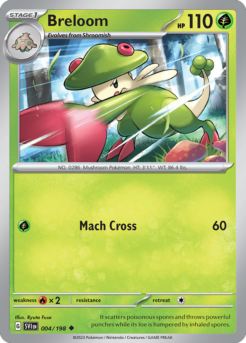
Scarlet & Violet
It scatters poisonous spores and throws powerful punches while its foe is hampered by inhaled spores.
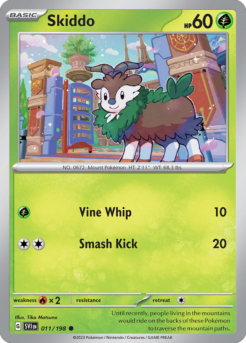
Scarlet & Violet
Until recently, people living in the mountains would ride on the back of these Pokémon to traverse the mountain paths.
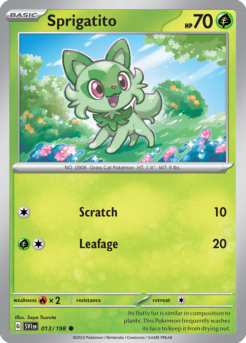
Scarlet & Violet
Its fluffy fur is similar in composition to plants. This Pokémon frequently washes its face to keep it from drying out.
Scarlet & Violet
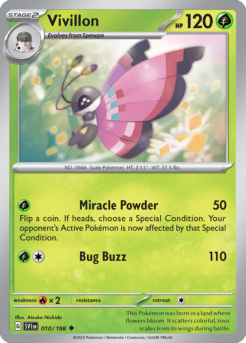
This Pokémon was born in a land where flowers bloom. It scatters colorful, toxic scales from its wings during battle.
Scarlet & Violet
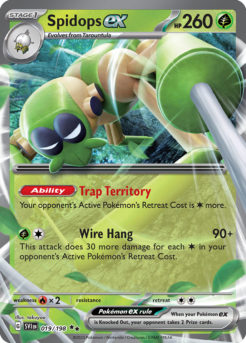
The thread it secretes from its rear is as strong as wire. The secret behind the thread's strength is the topic of ongoing research.