



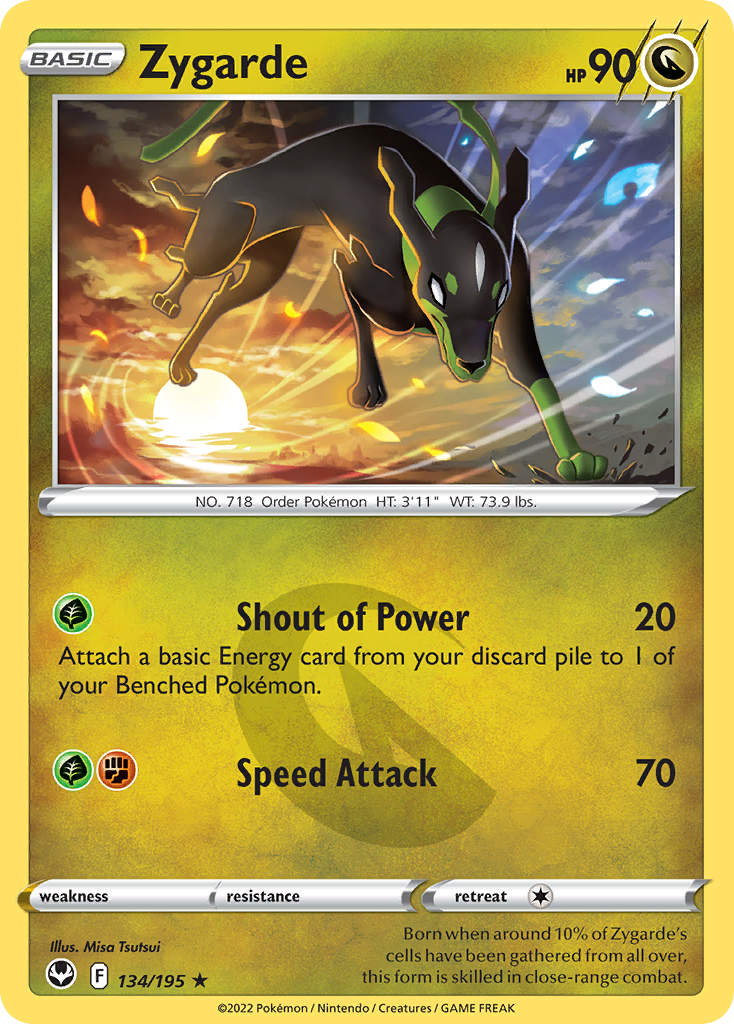
Zygarde
Born when around 10% of Zygarde’s cells have been gathered from all over, this form is skilled in close-range combat.
Attach a basic Energy card from your discard pile to 1 of your Benched Pokémon.
| Supertype | Pokémon |
|---|---|
| Subtype | Basic |
| HP | 90 |
| Types | Dragon |
| Attack | Shout of Power |
| Attack cost | Grass |
| Artist | Misa Tsutsui |
| Rarity | Rare |
| Pokédex | 718 |
Informatie verkoper
- Shopnaam: DutchGem
- Verkoper DutchGem
-
Adres:
gekkestraat
179
2345GT Utrecht
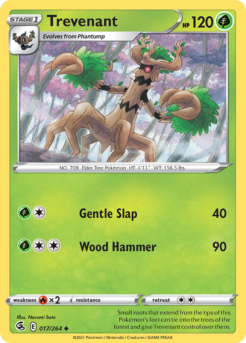
Fusion Strike
Small roots that extend from the tips of this Pokémon's feet can tie into the trees of the forest and give Trevenant control over them.
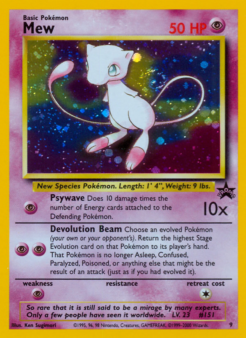
Base
So rare that it is still said to be a mirage by many experts. Only a few people have seen it worldwide.
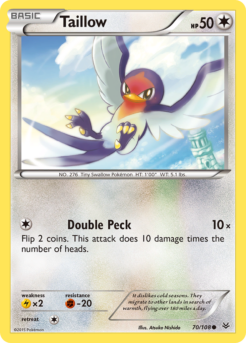
Roaring Skies
It dislikes cold seasons. They migrate to other lands in search of warmth, flying over 180 miles a day.
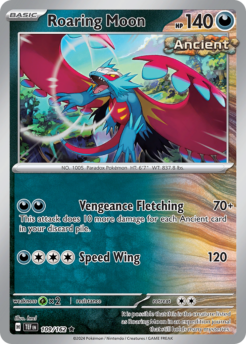
Scarlet & Violet
It is possible that this is the creature listed as Roaring Moon in an expedition journal that still holds many mysteries.
Sword & Shield
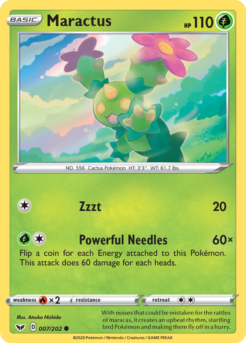
With noises that could be mistaken for the rattles of maracas, it creates an upbeat rhythm, startling bird Pokémon and making them fly off in a hurry.
Gerelateerde producten
Sword & Shield
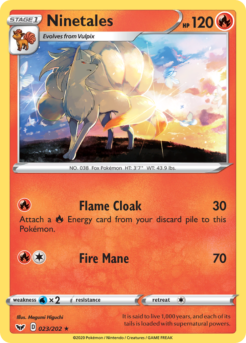
It is said to live 1,000 years, and each of its tails is loaded with supernatural powers.
Sword & Shield
With noises that could be mistaken for the rattles of maracas, it creates an upbeat rhythm, startling bird Pokémon and making them fly off in a hurry.
Sword & Shield
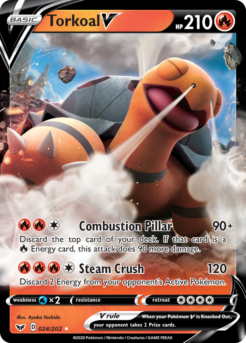
Discard the top card of your deck. If that card is a Fire Energy card, this attack does 90 more damage.
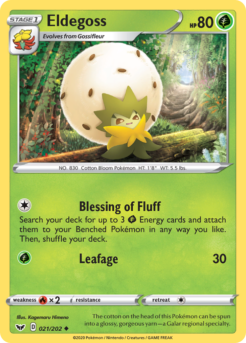
Sword & Shield
The cotton on the head of this Pokémon can be spun into a glossy, gorgeous yarn—a Galar regional specialty.
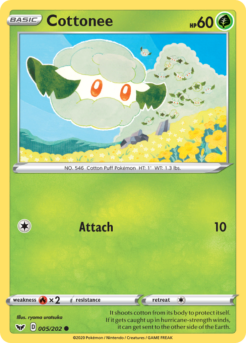
Sword & Shield
It shoots cotton from its body to protect itself. If it gets caught up in hurricane-strength winds, it can get sent to the other side of the Earth.
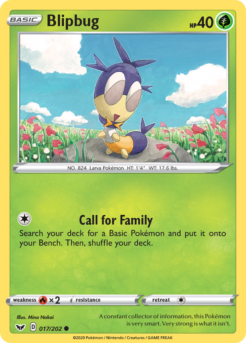
Sword & Shield
A constant collector of information, this Pokémon is very smart. Very strong is what it isn't.
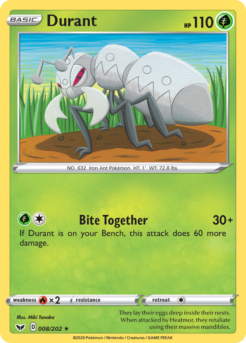
Sword & Shield
They lay their eggs deep inside their nests. When attacked by Heatmor, they retaliate using their massive mandibles.
Sword & Shield
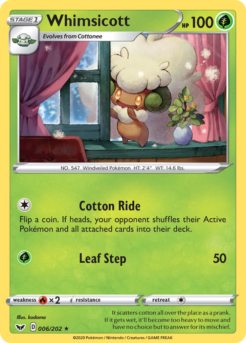
It scatters cotton all over the place as a prank. If it gets wet, it'll become too heavy to move and have no choice but to answer for its mischief.